
Free will
few words, nothing heavy

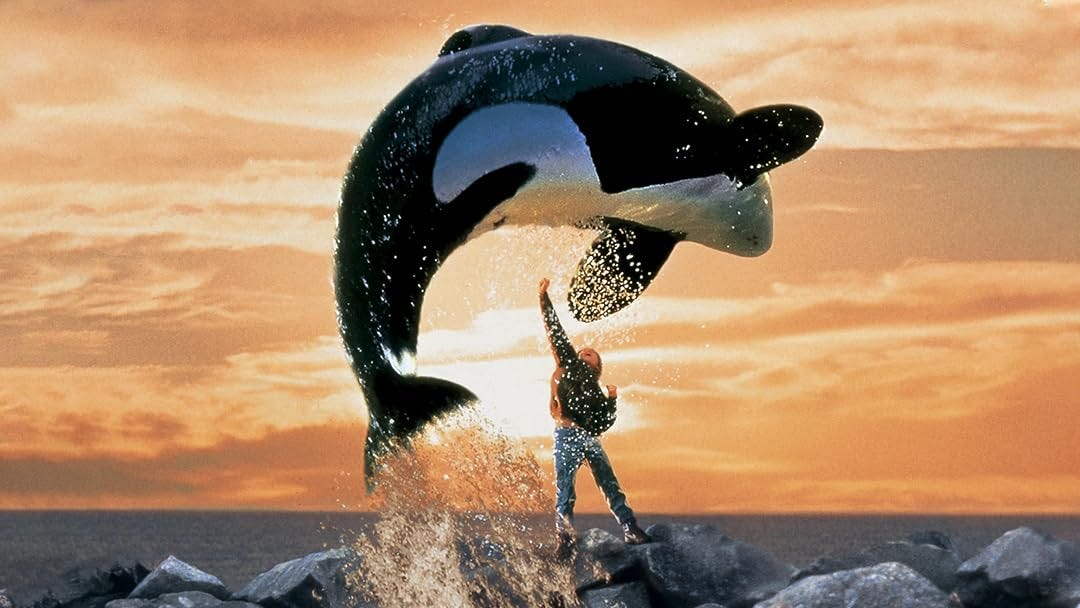
The Stanford Encyclopedia of Philosophy is one of my favorite online resources. I recommend to to any and all. It has an entry on the topic of “free will,” one of those unnecessarily tortured subjects like the nature-nurture controversies which accompany it. The debates reoccur like a cold virus, season after season after season.
The reason these debates refuse to die is—as Stanford says early—the gravity of the consequences that attach to the debates. The debates are tangled up with metaphysics, ethics, and law—the latter of which deals in matters of crime and punishment, and therefore life and death.
So, free will or no free will?
Any time such a debate continues with no apparent resolution in sight, it means one of two things—perhaps both at once. Either the debaters are operating on what MacIntyre identified as terminally incommensurable premises with no language of transmissibility, or the terms of the debate are premised on one or more false dichotomies.
(Or perhaps the concept of free will is . . . leaky.)
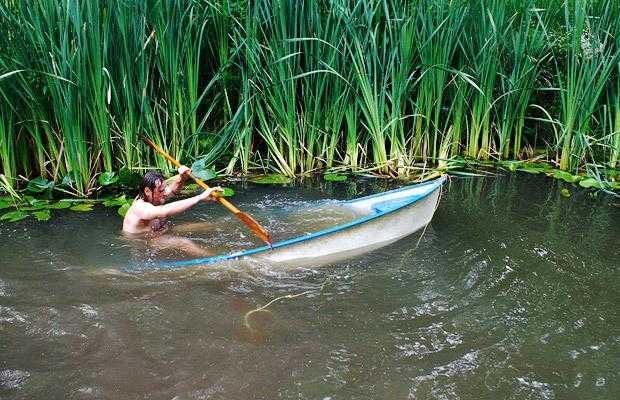
Once upon a time, this was a religious question. I suppose in some respects it still is and always will be. If God is omnipotent and omniscient, can any of us as God’s creatures truly exercise “free will”? How can we be judged by God if we have no “free will”? You get the picture.
I’m going to back up here to will—just that, before all the “free” stuff. What the dictionary tries to boil down to three related things: will is (1) the mental faculty by which one deliberately chooses or decides upon a course of action, (2) diligent purposefulness; determination, and (3) self-control; self-discipline.
The will aims at something, so it is preceded by desire. (Here’s my little e-book on Desire.) A person, for whatever reason, wants something. Without an object of desire, the will cannot exist—and so I’m going to say that direction, aim, telos, is constitutive of will without being will’s totality.
If you dissect a human being, that person is already dead (or better be). If you try to fit will into the dictionary boxes above, you rob it of its vitality. The three definitions of will above are different uses of the word. But when we take into account that desire—which aims the will at something—is potentially infinite, a bottomless pit so to speak, unless one also exercises his or her will against certain desires, which is a choice conditioned by self-discipline, all three uses of the word are in operation at once.
Desires can be shaped, provoked, manufactured. They can be attractions and aversions. They can bubble up from one’s “unconscious.” Ask any Lacanian, and he or she will point you to a strange little chart that maps this spooky terrain.
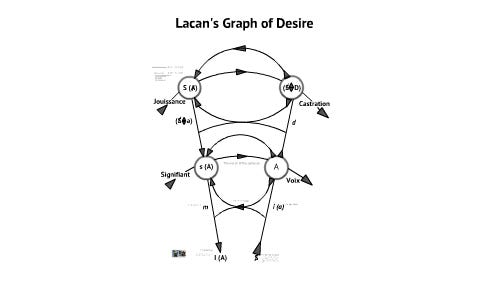
If we know not the origin of desire, are our choices free? But we digress . . . sort of. (Lacan was describing Lacan.)
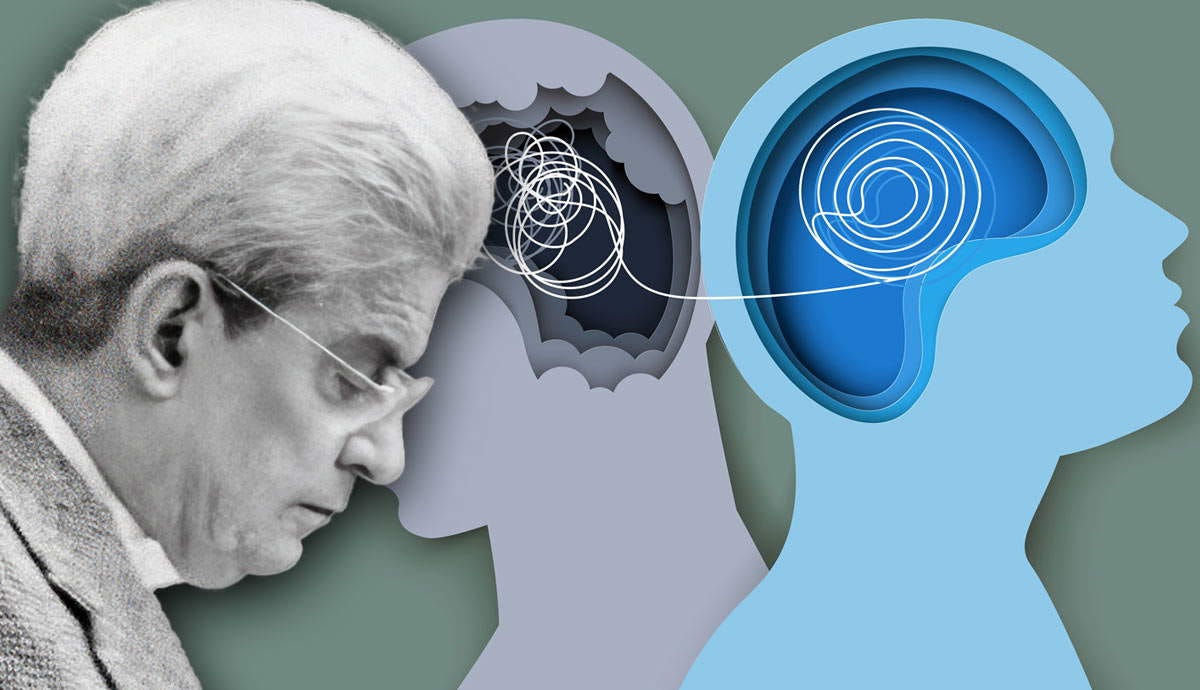
My own little old-man test when encountering leaky subjects like “free will” is to ask myself, “Self, does this leaky subject exist on its own prior to an actual subject? As in a person-subject?” If the answer is no—which in this case it is—then I take that leaky subject out of the water and patch it up by re-attaching it to the person-subject. There is, in no case anywhere ever, a free-floating will. Even God’s will, however conceptualized, still has a personalized subject. There is my will and your will and his will and her will, but never just will—”free” or not. In fact, the noun will can make one forget for a moment that will is also a verb. Instead of my will and your will and his will and her will, we might better think in terms of I will and you will and he wills and she wills.
This may strike some as a strange thing to say, given that I’ve also repeated the claim that each instantiation of individual consciousness participates in a universal consciousness that precedes each instantiation—but let’s not be sidetracked. Consciousness is not synonymous with will, even though will presupposes consciousness.
Willing—as in I will and you will and he wills and she wills (Oh Lord, I just gave myself a Little Feat earworm*)—implies intent. I penned a little thing last year about Elizabeth Anscombe—well-know philosopher of intent—with regard to crime fiction, to which I’m terminally addicted. Crime—however defined—and its adjudication always revolves around questions of intent.
Manslaughter is homicide without the element of intent.
Sorry, I didn’t intend to back into your car.
The road to hell is paved with good intentions.
Intent is a term pregnant with moral philosophy, psychology, and law—with desire, will, and ethics; but it’s also pregnant with literature, that is, with human weaknesses and limitations. We can intend to do things without fully appreciating the likely consequences. We can take intentional actions on behalf of desires over which we’ve lost control . . . or desires we don’t even recognize.
I might be of such a disposition that I can say intentionally say something obnoxious without realizing that it’s obnoxious, and therefore without intending it to be obnoxious. It may be the only way, given my disposition, history, and formation, that I know how to state what I believe to be the truth. (This is actually kind of true . . . for me.)
“disposition, history, and formation”
We all know how different people are from one another based on these factors. How one can be “willful,” another “weak-willed,” another who was “given the advantages of a good upbringing,” another whose upbringing aimed him or her at problems early, another “unable to let go of the past,” and so forth. Which is why this “free” business is kind of like walking through the boonies and suddenly stepping off into a boot-sucking mudhole. I mean, what the hell does “free” even mean?

By now, you can see that “free will, yes or no” is a non-starter. It’s like those questions I used to mess with my grandkids: “How far is it to the moon? True or false.” Or, “What’s the difference between a duck?” (Answers respectively: “All of the above,” and “One of it’s feet are both the same.”)
Will is just conditioned by too many things to be treated of independently, and “free” is one of the most elastic and abusable words in the English language. Are you free because you can do what you want? Or can having what you want make you a slave to your desires, unfree? Another old man test: ask the questions, free from what? and free to do what?
What kind of freedom? What kinds of things condition that freedom?
The existentialists said we always have a choice, even if one of those choices is suicide. They described freedom as kind of terrible. Stark-ass people, existentialists. Oh, and they’re always talking about themselves . . . because how does this terrible freedom operate with the variously disabled, the schizophrenic, in the face of ignorance? Each person is him- or herself one of the conditions of choice or freedom. Engels said that freedom is the recognition of necessity. More stark-ass shit, but no doubt certain kinds of knowledge or lack thereof condition the degree to which this or that form of “freedom” can be exercised.
On the other end of the spectrum are hardcore determinists, who claim that at some level we’re all on autopilot (except themselves, godlike somehow). Deep down everything is running like a machine and our consciousness of choice is itself illusory.
I give this stuff pretty short shrift, not only because it’s bullshit on its face—something even a child knows better than to believe . . .
. . . but also because it’s one of those horizon propositions. Like the horizon, you can never get there, because (1) it begs the question and (2) it’s inherently non-disprovable. As soon as one challenges this thesis with facts, the reply—a sophistic regression—is that the determining mechanism operates at the next yet undiscovered level. In some ways, it reminds me, in an impressionistic and not analogical way, of the theological doctrine of predestination . . . which puts us back in the leaky boat of “free will.”
I’m going to make breakfast now. I hope this clears things up.
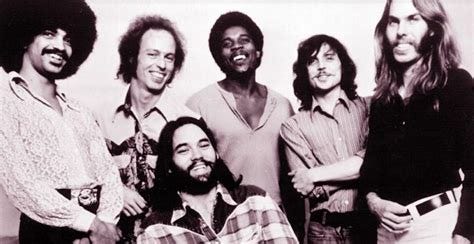
*I’ll leave you with the lyrics to Little Feat’s “Willin’,” written by the late Lowell George.
I been warped by the rain
Driven by the snow
I'm drunk and dirty, don't you know
And I'm still... willin'
And I was out on the road late at night
I seen my pretty Alice in every headlight
Alice, Dallas Alice
I've been from Tucson to Tucumcari
Tehachapi to Tonapah
Driven every kind of rig that's ever been made
Driven the back roads
So I wouldn't get weighed
And if you give me weed, whites, and wine
And you show me a sign
I'll be willin'... to be movin'
Well, I've been kicked by the wind
Robbed by the sleet
Had my head stoved in
But I'm still on my feet
And I'm still... willin'
I smuggled some smokes
And folks from Mexico
Baked by the sun
Every time I go to Mexico
And I'm still...
And I been from Tucson to Tucumcari
Tehachapi to Tonapah
Driven every kind of rig that's ever been made
Driven the back roads
So I wouldn't get weighed
And if you give me weed, whites, and wine
And you show me a sign
I'll be willin'... to be movin'
Peace, y’all.
Speaking of free will and desire (together):
"Ro-o-o-o-ll another one
Just like the other one.
You've been holdin' on to it
and I sure would like a hit.
Don't Bogart that joint, my friend,
pass it over to me.
Don't Bogart that joint, my friend,
pass it over to me."
You got me goin' Brother -
"I been warped by the rain
Driven by the snow
I'm drunk and dirty, don't you know
And I'm still... willin'
....
Well, I've been kicked by the wind
Robbed by the sleet
Had my head stoved in
But I'm still on my feet
And I'm still... willin'"
- Lowell George