
Trumponomics
with Goethe quotes

Humans fear reason, but they ought to fear stupidity— for reason can be hard, but stupidity can be fatal.
—Goethe
After researching for this long form whatever-it-is, I may take a six-month sabbatical in a cave with nothing but eighteenth century fiction. There was so much I needed to know, and I’m not altogether happy to have learned it.
Back in August, Molting published “A non-economist on the US, China, tariffs, and Trump,” in which we analyzed the US-China trade war dynamic, given what we knew then. If you, dear reader, have the time and the inclination, a re-read of that preceding long-form article can serve as an on-ramp for this one. It’s not absolutely necessary, so let me not oblige you.
I’ll start by saying that our 79-year-old Chief of State is having a very good year in some respects, and also a very bad one.
The Good, the Bad, and the Ugly
The panic-mongers would have you believe that he’s on the cusp of becoming America’s führer, but I’ll be making the case that he’s not a would-be dictator, but the doddering head of a grubby criminal enterprise that exists only on account of bipartisan opportunism and abject political cowardice. Our so-called constitutional republic has never practiced truth in advertising, because it’s based on bribery and graft. How the fuck do people think we got here?
Politically, as the world is beginning to understand, Tump is a schlmiel—a bungler who’s a danger to himself and others—whose born-rich stupidity is amplified now by the signs of creeping dementia.
“I worked inside GOP circles through Trump’s takeover of the party, his initial downfall, and his resurgence in 2023–2024. At every step along the way, I rationalized, compartmentalized, and found excuses to stay tethered to the party, even as I grew to believe it was undermining the foundations of our constitutional republic.”
—Miles Bruner, October 20, 2025
His ICE raids and legal violations, his international tantrums, and the military occupations of US cities, are alarming, especially given the apparent impotence of any political “opposition” to stop him. I’ll be arguing that this is the Trump magic show—a bag of tricks designed for the misdirection of a credulous public—combined with a desperate old megalomaniac’s vain desire for dead-immortality, some legacy that will hover over his bones in some tacky, ostentatious tomb covered in pigeon shit.
The paradox of being a certain kind of sociopath is that they thirst for recognition from the very people that they really, really don’t give a fuck about. Trump, I’m quite sure, is as miserable as he is evil. He has the tortured mind of a thief . . . or a pimp, always on the lookout, hyper-vigilant, a hungry bottomless hole at his core.
His outrages have been cruel, and he’ll have a great deal to answer for at the foot of the great white throne; but his stunts haven’t in any substantial way succeeded in intimidating the American popular opposition. This isn’t Pinochet rounding up thousands and putting them in stadiums or having them tossed out of helicopters. That won’t happen in the US, because for better or worse, there are half a billion privately owned guns in our houses. The Trump way is to push until there’s push back. The minute there’s that, he runs off to bully a more defenseless victim.
This cowardly and sadistic witlessness is being met—most appropriately and effectively in my view—by ridicule. The schlock troops are being met by cartoon-animal costumes, cavorting clowns, giant puppets, video lampoons, and dancing flash mobs. Abroad, he’s a punch line, a buffoon, a bad case of chlamydia while they wait for the doxycycline to kick in.
There is nothing in the world more shameful than establishing one’s self on lies and fables.
—Goethe
Trump and his family are having a good year financially. Trump’s special brand of klepto-capitalism is paying big dividends . . . and we’ll burrow into that. Now that his slavish party has helped him clear away pesky obstacles, like the separation of powers, and chosen to co-sign anything their tinpot Duce demands, the Trump Family Grift is raking in the cash.
From a political economy perspective, however, Trump is making one unforced error after another, which has caught him in a trap of his own making. The bad news is that we’re all caught with the bastard. He’s like his own pandemic—the America disease.
The question is, how much more damage will he and his party do before eight decades of unchecked desire finally sends him to meet his maker?
Precautions and Train Tracks
“Precaution is better than cure.”
—Goethe
I’ve been a vocal critic of capitalism for more decades than I like to remember, and of neoliberalism—the form of capitalism that Trump is now dismantling. It’s failures, especially in its uniquely American guise, led directly to the election of Trump . . . two times . . . with the body politic thus weakened, the disease took hold.
Now, I’m no fan of neoliberalism; but in addition to critiquing capitalism as a vastly destructive form of social organization, I’ve also long advocated the precautionary principle, by which I mean taking sufficient time to dispassionately think through the probable and possible consequences of any given action before deciding whether or not to do it. The question is not “Could I?” but “Should I?”
One doesn’t simply “smash” a questionable form of social organization, then replace it by decree. This is why anarcho-punks and their ilk are fucking idiots. I get it guys—I’m nearly three-quarters of a century old, and there are still days when I just want to break shit. But, now we’ve had two Trump presidencies, most of us can see where “just break some shit” politics gets you.
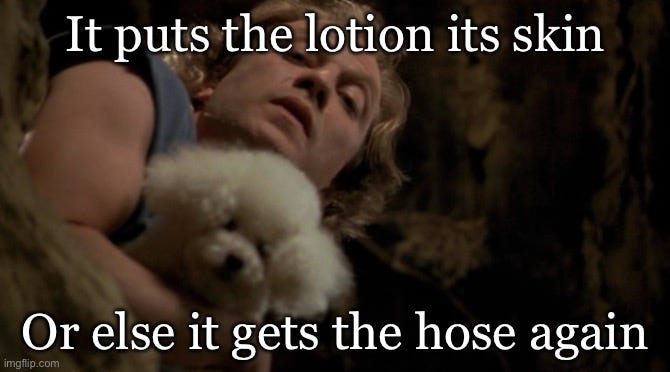
America’s troublesome child needs to go back in the basement. He needs the hose.
We’ll start with supply chains—something everyone understands. Every household relies on supply chains—comestibles, fuel, clothing, power, water, hardware, furniture, appliances, etc.
In my own “best of all possible worlds,” we’d live in mostly locally-sourced, non-growth, mixed rural-urban enclaves, where commodification of land and labor is prohibited, and the subsidiary boundaries of governance correspond to watersheds. We’d have enough mutually-beneficial trans-regional trade to improve our lives without destroying our environment. We’d calmly and rationally discuss and implement measures that reduce our vulnerabilities and increase our resilience. It would be a lovely place, with well-adjusted people who labor pacifically by day, and by night play languishing games of chess and read to contented children.
In the world as it is, I’m eating oatmeal that was grown 600 miles west of here, from a bowl and spoon that were manufactured in China. I’m pecking at a laptop computer that’s made of cobalt from the Democratic Republic of Congo, iron from Brazil, palladium from Botswana, gold from Costa Rica, copper from Chile, selenium from the Philippines, zinc from Peru, silver and antimony from Mexico, chromium, manganese, and platinum from South Africa, and aluminum, arsenic, barium, cadmium, lead, and mercury from china. My work desk is made from forklift pallet wood—a DIY project—that was harvested in Canada. My clothes were made in Honduras, Indonesia, Bangladesh, and Egypt. I can’t tell you where my glasses were made, because when I take them off, I can’t read the little fucking stamp.
Misanthropes are wrong, but they have the best sense of humor.
—Goethe
(^^^ Yeah, okay, total lie . . . Goethe never said that . . . but he should’ve.)
You get the picture on this supply chain thing. We all did after the pandemic, when these chains were fragmented, and container ships loitered for weeks in great herds off the coast of Los Angeles and Long Beach.
Like it or not, the world after the Carter-Reagan years—the epoch of neoliberal globalization—has self-organized to adjust itself to the powers, policies, procedures, and practices of this neoliberal order. This self-organization reaches all the way down to when you wash your ass in the shower with a bar of British soap, made from Canadian canola, Indonesian palm oil, Wyoming alkali, Swiss fragrance, and Singaporean glycerin.
We’ll be back to supply chains, naturally, but for now I’m just saying, this is but one of the myriad ways in which we’re now riding along the neoliberal tracks. Before you get off one track and one train, you have to transition by degrees to new networks on new tracks with new trains. You don’t just come in with C-4 and blow up the fucking tracks as the trains approach. Unless you’re a jackass or a vandal . . . or a slumlord who’s ascended to the Oval Office.
Funny Money Fuckery
A man sees in the world what he carries in his heart.
—Geothe
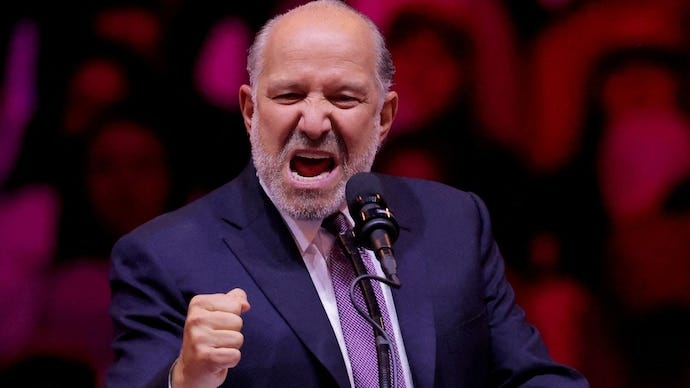
Before he won the last election, Trump’s transition team already included a guy named Howard Lutnick—a bombastic and thoroughly disagreeable ogre of a man who became a billionaire by assisting criminal enterprises all across the globe. I’m putting up a $500,000 reward for anyone who walks up to Lutnick in public and slaps the cowboy shit out of that motherfucker. (Okay, another lie. I don’t really have $500,000.)
Most people haven’t heard of a company called Tether. We’re going to correct that, whether you like it or not. The abstract is: Tether is a cryptocurrency scam, the most profitable in the world right now. It also has more connections to international organized crime than a possum has fleas—one among many being the Chinese mafia in Cambodia, who trades in guns, dope, and slaves (who the fuck knew?). Backing up now . . .
We’ll start with Cantor Fitzgerald, of which Howard Lutnick is the CEO. Cantor is a Wall Street “financial services” firm operating in 20 countries. It was once headquartered at the World Trade Center, where—when it was demolished by American-trained Salafists in 2001—CEO Lutnick’s first move was to cancel the checks of more than 700 employees . . . before the rescue efforts even began.
Priorities, amirite?
Moving on to Tether, this is how Lutnick got into the money laundering business. He did it “legally.” He is, by the way, now Trump’s Secretary of Commerce, and still the CEO of Cantor.
Let’s begin with digital currencies.
I’m an old fart, so I like using paper money, and in a pinch a credit or debit card. Younger folks are already comfy with QR codes and Venmo and even crypto, but I’m going to assume some readers are not. I had to fight my way into Stripe to get a few bucks through this platform, and I used PayPal some years ago to get paid by a content mill. I was getting paid with dollars, though, not fucking Bitcoin.
In older forms of paperless exchange, you had a bunch of middlemen, each of them taking his or her penny. My Visa card has an originating bank and some processing company somewhere, and each takes its bit. Sometimes a merchant will add a credit card service charge. When I use Stripe, my treasured paid subscribers give me $X, Stripe takes .0Y $X. and I get $X minus .0Y.
There are two kinds of digital currencies: central bank and cryptocurrency. The advantage of digital currency is that it uses blockchain technology. Blockchain is a virtual ledger that cuts out the middlemen. You have to do a bunch of pain-in-the-ass prep, like getting digital wallets and whatnot, but once you’re set up, the exchange is both seamless and—if you know how—invisible.
Central Bank Digital Currencies (CBDCs) are just national currencies. A digital euro or yuan or yen is exchangeable with a paper one.
A cryptocurrency is denominated differently from the national fiat currency. A Bitcoin is not a dollar and neither is a stablecoin. The difference between these two is that the Bitcoin (or a host of other “shitcoins”) is not backed by anything except greed, stupidity, and mass psychosis.
Stablecoins are cryptocurrencies issued by non-governmental enterprises, but backed by an actual national currency, of which sufficient quantities are allegedly held in the enterprises reserves to be exchangeable (ostensibly) on demand with, say, dollars or yen or Euros or yuan.
The difference between stablecoins and regular currencies is that private company issuance. In the case of stablecoins, the company does take its little service cut.
Okay, so (Nutlick’s) Tether issues a stablecoin called the USD₮, and it issues “tokens” backed by various currencies and gold. If you want to know who owns Tether, best of luck to ya, because no one to my knowledge has ever found out.
Tether also backs its tokens and coins with US treasuries—dollar debt issued by the Unites States government. Tether needs a “custodial” service for those billions in treasuries, and that custodial enterprise is named Cantor Fitzgerald: CEO, Howard Nutlick.
Summarizing overgenerally, Tether is the accounting service, and Cantor is the bank. Tether takes interest, and Cantor charges fees. But . . . for what?
Cryptocurrencies have created a trillion dollar economic sector built entirely around the exploitation of carefully engineered gambling addictions in a rigged system that cheats its customers in every way that it can.
Cryptocurrencies are the objects of worship in a bizarre internet cult
Cryptocurrencies are demonic.
—Michel de Cryptadamus
Who’s money is getting moved around and to where?
Well, with two degrees of separation between anonymously held Tether’s customers and the eyes of the law—American and international—the answer is, anyone and anywhere.
Investigators have found one answer as to the who—criminals.
Did I mention that Tether—whose ownership is secret and whose employees apparently number in the tens ← also anonymous—is the biggest firm in history never to have undergone a single government audit. A UN report last year estimated that in 2023, Tether conducted, at a minimum, $17 billion in illegal trades. ← This is very conservative, cuz really . . . we just don’t fucking know.
Profitability like this didn’t escape the notice of New York grifter Donald Trump, who’ll jump on a lucrative scam like a duck on a junebug. It’s his only real talent (though the Washington rumor mill has it that he can also shit his own name on the floor . . . he likes that contrast with the Calacatta marble).
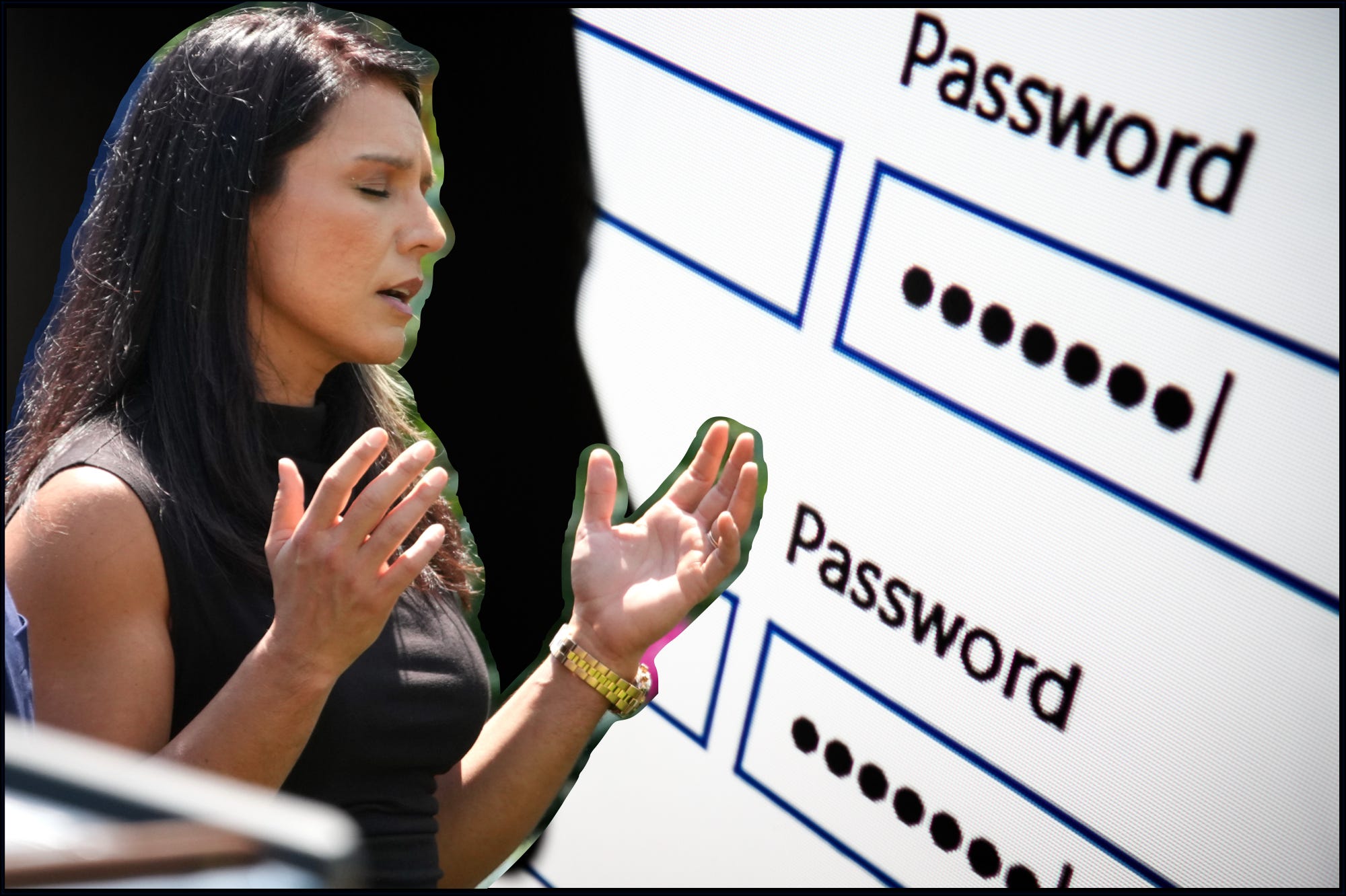
Trump’s post-election team included Vice President J.D. Vance—a bitcoin bull, Transportation Secretary Sean Duffy—who holds more than $1 million in cryptocurrency and stock in several crypto companies, and Secretary of the Treasury Scott Bessent—who has half a million in BlackRock crypto. Director of Central Intelligence John Ratcliffe is a former advisor to Paradigm, a crypto venture capital firm. Director of National Intelligence (←ha! it’s a joke, get it? Intelligence?) Tulsi Gabbard, who loves her some woowoo shit like her Science of Identity Foundation cult, holds no fewer than five cryptocurrencies in her expanding portfolio.
Secretary of Defense Pete Hesgeth (who would have known better if he were sober, lost his ass in the 2022 Celsius crypto-crash and went bankrupt—Celsius was run by the Russian and Israeli mafias, and their CEO, Alexander Mashinsky, just got sent up for 12 years—expect a Trump pardon soon.)
The wet-brained sack of febrile diarrhea, pictured below, is now running the United States Armed Forces . . . pray fervently.

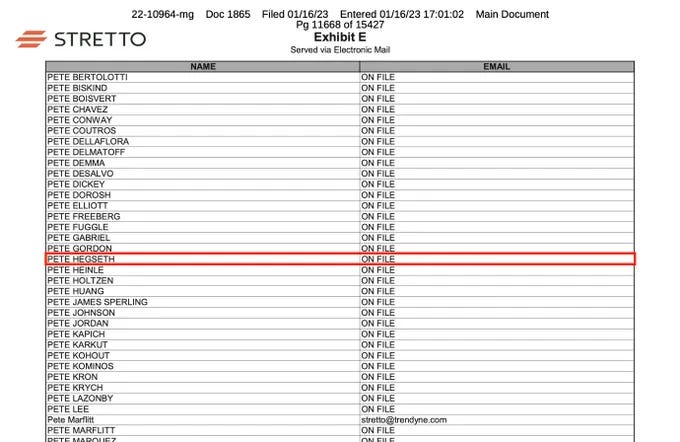
Hesgeth’s bankruptcy filing ^^^
Speaking of pardons, you may have heard that The Donald recently cut loose Changpeng Zhao. Pay attention (you may even want to take notes), because this labyrinth just gets more labryinthian.
Changpeng Zhao ran an outfit called Binance—the largest cryptocurrency exchange service on Planet Earth. Zhao is an old friend of fellow convict Sam Bankman-Fried, who in 2023 was taken into custody in the Bahamas, because he’s run the biggest cryptoscam in history through an outfit called FTX. Bankman-Fried made the Bernie Madoff error—he robbed really rich, really powerful people, who lost their sense of humor after they discovered that the discomfort in their collective ass was Sam’s dick. His buddy, Zhao—CZ for short—is a Canadian counterpart. His conviction was for . . . drum roll please . . . money laundering (applause in background).
Hold Binance in your mind—you can memory associate it with the pop singer, just switch up some letters.
Foxes and Henhouses
We will burn that bridge when we come to it.
—Goethe
In September 2024, The Trump Organization founded World Liberty Financial—a crypto company. The Trump boyz—Eric and Don Jr.—own 60 percent of it, with other owners including Zachary Folkman—CEO of Date Hotter Girls (no, I did not make that shit up) with connections to Tel Aviv and the Caymans; Chase Herro—former entrepreneur of marijuana and colon cleanses (didn’t make that shit up either); and Zack Witkoff—son of Trump’s US Special Envoy, a fantastically unqualified real estate developer named Steve Witkoff.
Zach got hitched to actress Sophi Knight in 2022 at Mar-a-Lago. In attendance were the Orange Shitgibbon himself and Florida Governor Ron DeSantis ← Ron, who enjoyed being humiliated by Trump sooo much that he went on to blow The Donald at every opportunity. (slurp, slurp, gag, slurp)
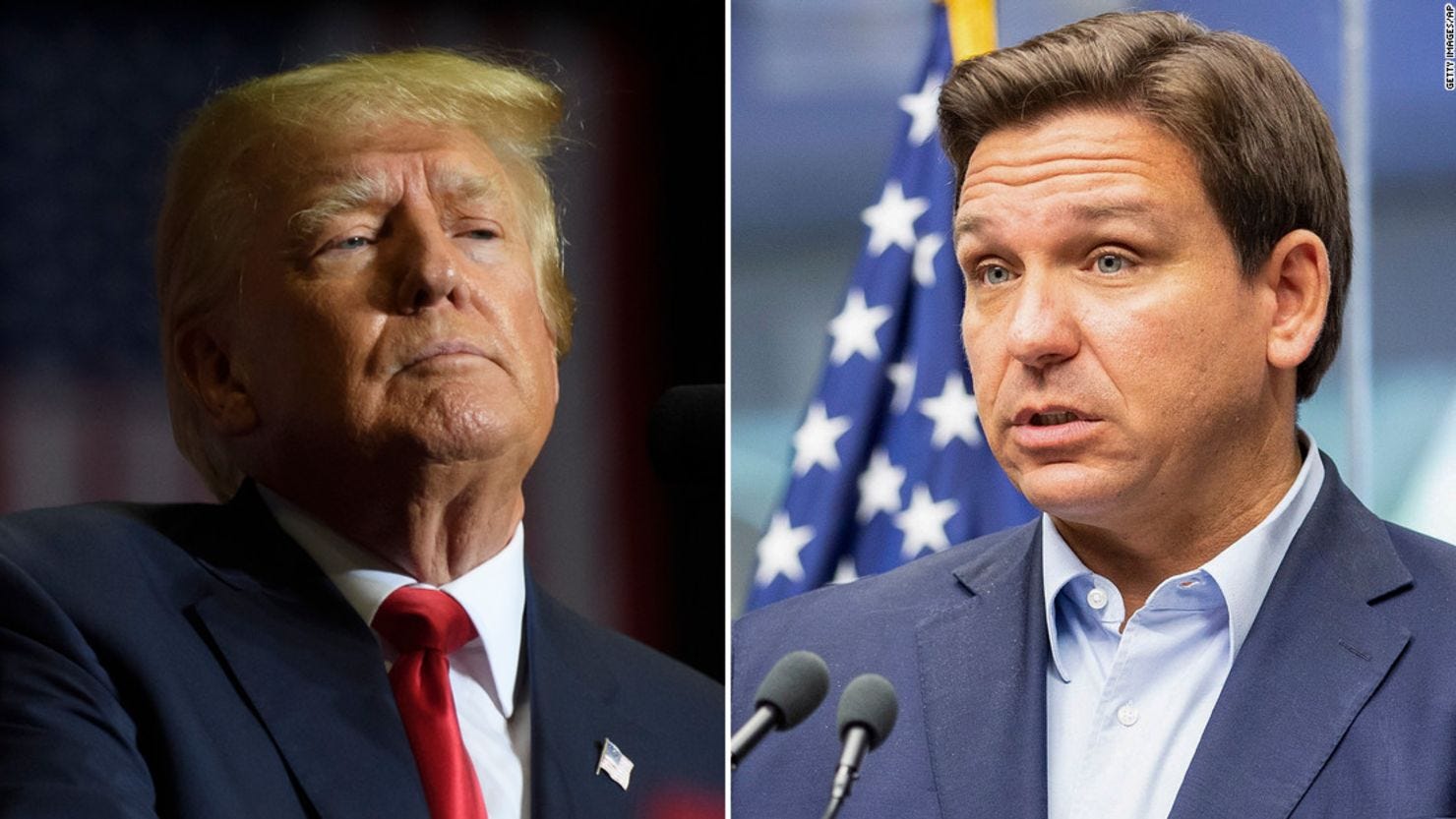
“You know what to do, Ronny.” ^^^ “Yesh, mashter . . . shwallow.” ^^^
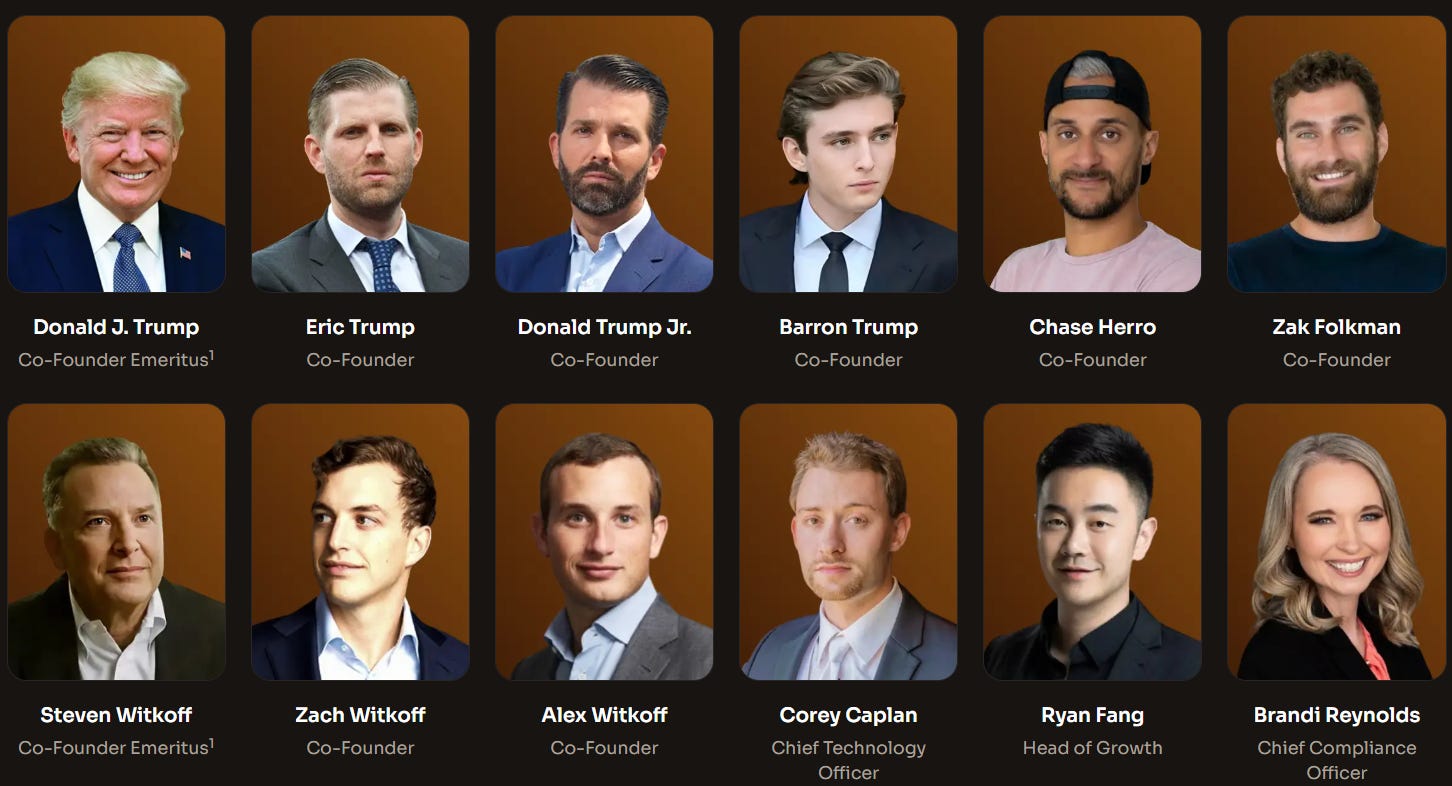
World Liberty Financial ^^^
Chase Herro once said, “You can literally sell shit in a can, wrapped in piss, covered in human skin, for a billion dollars if the story’s right, because people will buy it.”
(^^^ Didn’t make that shit up, either.)
Now Trump had called crypto “a scam” in 2021, but then slimy cryptobros (like Herro^^^) pumped $25 million into Trump’s political campaign in exchange for Trump attending a crypto conference in Nashville where he promised to deregulate crypto and put together the first “crypto national strategic reserve.”
Hold “strategic reserve” in your mind, too—the mnemoic might be . . . strategic reserve. Just think of a four-star General who politely refuses to speak.
Okay, so Trump’s gene-pool proxies and their exceedingly creepy counterparts put together World Liberty Financial—which needed a crypto exchange. That exchange would be . . . another drum roll please (feeling my inner John Bonham, y’all) . . . Binance.
Okay, wrong pic ^^^
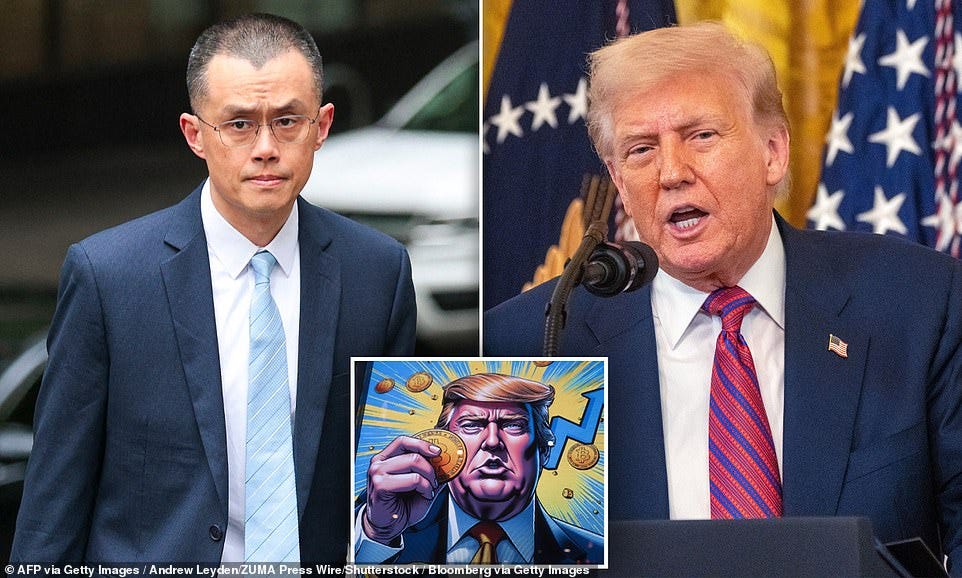
By September 2025, TrumpFam had already raked in $5 billion—with a fucking B—through World Liberty Finance. Now Ye of the House of Constitutional Legalisms might be thinking . . . emoluments—a fifty-cent word for slimy political fucks who profit from their office (SPFWPFTO). It turns out, however, that SPFWPFTO-ism is a bipartisan phenomenon.
Just as Democrats would not prosecute him for violations of the emoluments clause, because they were overwhelmingly doing the exact same fucking thing, they will not touch Trump’s cryptoscam, because they’re getting paid by the “industry.” (New York’s Democratic Mayor Eric Adams was indicted for a whole fucking menu of crypto-frauds, in addition to taking plain vanilla bribes.)

Sam Bankman-Fried being “industrious” ^^^
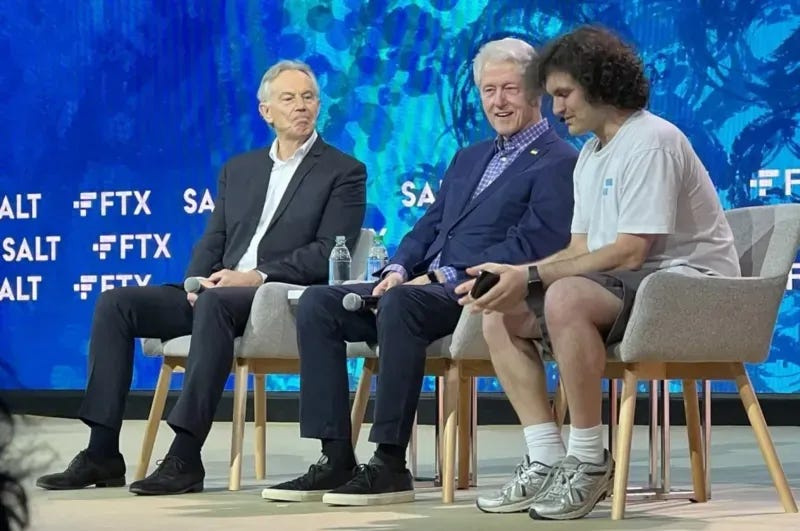
Sam Bankman-Fried getting along with everybody ^^^
The Zhao pardon begins to clarify.
It didn’t hurt that Binance’s lobbyist—to whom they paid $450,000 in one month—was Checkmate Government Relations, run by Ches McDowell, Don Jr.’s hunting pal. Then again, who knows what Zhao knows about TrumpFam’s crypto ventures?

^^^Birds-of-prey male bonding: Chez, Don Jr, and that measles-is-caused-by-cat-litter guy ^^^
Trump’s pardon of Zhao is the latest in string of crypto-pardons. Before Zhao, there were Arthur Hayes, Benjamin Delo and Samuel Reed—all cryptoscammers. He also granted clemency to Ross Ulbricht—the guy who ran Silk Road, a dark web Bitcoin dope exchange.
Oh yeah, Trump’s “Pardon Tzar” is Alice Marie Johnson, who has not one iota of legal qualification, but who had her own life sentence for cocaine trafficking commuted then pardoned. Kind of a Dope-Dealers-R-Us thing . . . send a million bucks to the Trump Fund and speak with Alice . . . she’ll hook your ass up.
Trump—true to his word for a change—cut the regs on Crypto, then pushed through regs that benefit stablecoin. Now World Liberty Financial is issuing a memecoin called $TRUMP. Motherfucker loves putting his name on shit. Not to be outdone by her philandering spouse, Melania launched the $MELANIA memecoin, which is already under investigator as a pump-and-dump scheme. Never fear, Trump will fight it all the way to his personal Supreme Court.
So, long story short, the Trump family have conservatively amassed more than $6 billion through World Liberty Financial since The Donald re-occupied the White House.
A few members of Congress spoke up, but the majority have remained mute. Why? you may ask . . . and I shall answer.
If Goldman Sachs is a vampire squid, crypto exchanges are a blood drinking succubus straight from hell.
—Michel de Cryptadamus
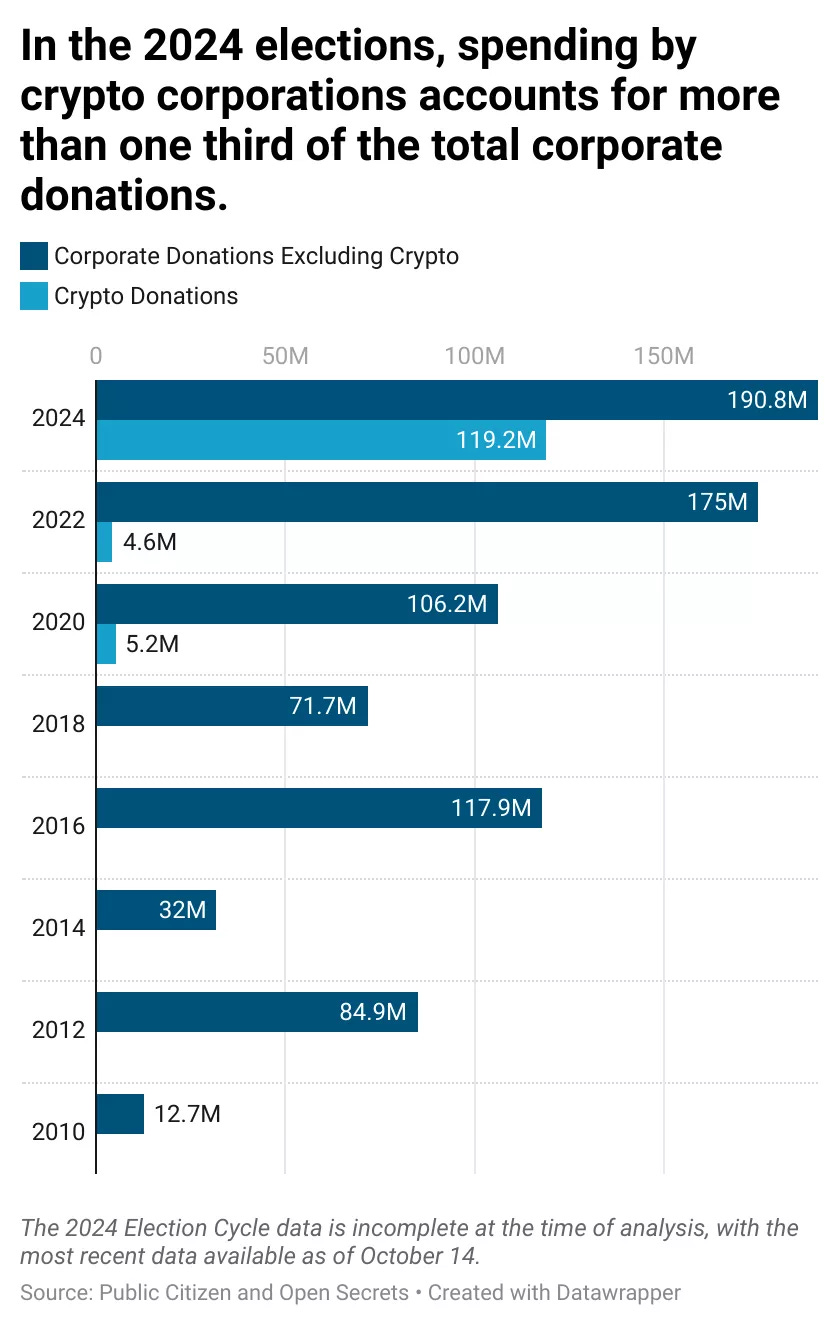
If you want to know why cryptoscamming—which is right now setting up the economy for a mega-crash (we’ll explain)—hasn’t been reined in, look no further than campaign contribution records. In 2024, crypto interests—hiding behind various fronts—contributed more than a third of all corporate money to federal political campaigns. This is why Trump knows he can get away with using crypto as a personal enrichment device.
If you want to know why neither party did jack shit after the infamous 2022 Terra-Luna “run,” here’s your answer.
Pro-crypto super PACs have emerged as influential players in the political landscape contributing $119 million, nearly half of all corporate money contributed, $310 million. This is a significant escalation, as their spending is nearly 5 times higher compared to what the industry has invested in the 2022 election cycle and 20 times more than the amount spent in 2020. Most of the donations have been directed towards the super PAC Fairshake. Funded by major cryptocurrency firms and advocates, the PAC is committed to support candidates that “provide blockchain innovators the ability to develop their networks under a clearer regulatory and legal framework.” Accordingly, this is important for “the broader open blockchain economy... to grow [up] to its full potential... in the United States.”14 This influx of spending highlights the growing influence of the crypto industry in shaping the U.S. political landscape. (Ala’a Kolkaila, “Crypto-Oligarchy And Its Impact on U.S. Electoral Outcomes,” Harvard Kennedy School)
Treasury Privatization
Friction might seem like a bad thing, because we love when shit goes fast; we’re a culture of impatience—but try driving your automobile without it.
—Goethe (naw, that was actually me)
Treasuries—these are loans to the US government. Most of them are issued inside the US, but around a quarter of them are issued to foreigners—especially foreign central banks, who stack them in their reserves as a hedge against runs on their own currencies. Which tells you something—the dollar is used because it’s still the currency in which most of the world’s exchanges are conducted, making it a better bet than other currencies (this is changing, but far from fully changed), because no one want to sell down the value of their own bank reserves—a very neat trick.
On the other hand, those who hold treasuries are owed dollars by the US government—the value of the loan with a dollop of interest. With me so far?
People are holding these IOUs because they are dollars, an ostensibly trustworthy currency. Once they were backed by gold, then they were backed by petroleum, and now they are backed by sheer mass and a coerced faith. That store of free-ranging value in your wallet works because it’s backed by the US government.
Enter stablecoins, a cryptocurrency that is backed by the dollars which are backed by the state.
The largest issuer of stablecoins is . . . (more drum rolls, please) . . . Tether.
In July, Tether had around $125 billion in treasuries as its reserve; by now that is probably more than $150 billion and growing. So Tether, and other big stablecoin outfits, are US government creditors. These anonymous money-laundering miscreants have big claims on the US Treasury.
Meanwhile, Tether has an annual transaction value of $27 trillion (with a fucking T).
For every dollar’s worth of transaction, stablecoin issuers collect their fee (somewhere between 0.1% to 3%, depending on the type of transaction).
Pretty simple, right?
Okay, leaving Tether for now, let’s go to World Liberty Financial. Before we do, let’s compare trading volumes. (I really hate math.)
Annual global dollar transactions are in the vicinity of $1.6 quadrillion (with a fucking Q).
World Liberty Financial’s USD1 stablecoin (one currency in the projected strategic reserve basket) is issuing paltry sums this year, but . . . remember that these cryptocurrencies are backed by Treasuries.
Trustworthy, right?
I mean, some banks already use them. Right now, stablecoin companies are the world’s 17th biggest purchasers of (now $37 trillion) US debt (Uncle Sam now pays mas o menos $700-750 billion each year on debt interest alone—we’re basically borrowing to pay interest on what we borrowed to pay interest → ad infinitum).
Meanwhile, the Federal Reserve (US Central Bank) earns a little interest on cash it holds, which is invested (sometimes in not such great instruments, but that’s another story involving “leverage”). (Look up seigniorage.)
So all this value is moving around, but until crypto, specifically stablecoins, the speed of moving it around was attenuated by procedural friction—lost of different people involved in the process. Friction might seem like a bad thing, because we love when shit goes fast; we’re a culture of impatience—but try driving your automobile without it. Put a pin in “friction.”
The US system is a global system because of dollar hegemony. Because dollars are used in the majority of international transactions, and because most central banks hold dollar assets (treasuries) as a hedge, the US can get away with a lot of shit.
First, we don’t have to produce much. Because everyone needs dollars, we can work a lot of non-factory jobs, while the rest of the world produces things to get dollars.
Second, we can run maniacal government debts, because everyone is caught holding dollars and no one is going to force a default. If you owe the bank $100, you have the problem. If you owe the bank $100,000,000, the bank has the problem.
Third, we can finance—using debt—an insane and insanely corrupt military-industrial complex, because we can print as many fucking dollars as we want (or so it would seem).
Fourth, we can export the inflation of printing shitloads of dollars that are chasing the opposite of shitloads of goods, by parking the excess dollars in foreign banks.
Fifth—and this is a Trump thing now—we can use dollar hegemony to twist the arms of every other country that relies too heavily on exports to the US or owes Wall Street—via the IMF—their firstborn for the next twenty generations.
It’s a good deal for the US (if the rich in the US are the US), and kind of shit for a lot of others, but . . . as we said staring out . . . this is the system and has been since the 1970s. Everyone has adapted to it, and with neoliberal globalization, it’s become the basis for a world economic system . . . which you don’t just tear the fuck out of because you fail to grasp the precautionary principle.
Stablecoins—which are exchangeable for dollars one-to-one, because they’re backed by treasuries (US debt), and which are gaining traction because they have overcome a lot of procedural friction—are now performing the same function, for those who use them, and until something triggers a run, as surrogate central banks.
So the fees associated with issuance are not going to the public’s government, now, they are going into the private pockets of issuers. It’s a privatization of central banking. They’re getting interest on the treasuries, as well as the process and issuance fees. Good deal, eh?
Oh yeah, they’re also investing their extra billions in any kind of transaction they want, including trends that equate a tulip with the value of a four-bedroom condo, or pump-and-dump schemes that deepfuck other more credulous investors.
There’s very little evidence that Aqua 1 Foundation exists at all.
—Jacob Silverman
TrumpFam is now in on the action, but from a position that makes the world’s best insider traders look like Fagan’s baby pickpockets. TrumpFam runs the US government, with a Supreme Court that’s removed the brakes, and a Congress on which they already have more shit than a pig farm. Look up United Arab Emirates, Aqua 1 Foundation, and Trump. It’s a sordid tale that explains how TrumpFam came to own the fastest growing stablecoin in existence, USD1.
(Oh yeah, in the linked story, the $2 billion “investment” was transferred through Binance.)
World Liberty Finance is now going full steam ahead to lock in point of sales systems, so people can buy shit using WLF tokens on their smartphones. Turns out, Trump’s deregulation of crypto wasn’t just some quid pro quo, but laying the pavement for his own family to construct an Amazon-like monopoly.
Here’s the thing about Trump, now that the checks and balances have utterly broken down. He is in a position where he can move these “markets” up and down with a fucking tweet.
All the fools who still cleave to the narrative that his “flightiness” is a tactic to unbalance his adversaries are missing the big picture. Trump is a greedy fucking reptile; and he’s using his ability to blast markets up and down so he and his pals can take advantage by pumping and dumping. It’s insider trading, directed by the White House. And he’s using stablecoin so his den-of-vipers family can monopolize the entire US economy.
Friction includes regulation and oversight.
—Goethe (not really)
One of his bills was to prohibit the Fed (the US Central Bank) from issuing its own (friction-reduced) digital currency. In July, a spineless, venal US Congress “passed the Anti-CBDC Surveillance State Act, prohibiting the Federal Reserve from issuing or testing a digital dollar without Congressional approval.” The Genius Act transferred stablecoin oversight from the FED to Treasury, putting it under Trump’s control. The Clarity Act shifted oversight from the SEC to the Commodity Futures Trading Commission (CFTC), which is best known for not regulating shit and allowing serial speculative bubbles to blow up in the American people’s face. Game. Fucking. Over.

You know what he wants you to look at? Tantrums over a Canadian ad, or some outrage by his ICE Gestapo. “Look there, not here!”
How many of us know about Trump’s latest insane tweet? How many of us know about the Genius Act, the Clarity Act, and the Anti-CBDC Surveillance State Act?
Case closed.
We said that Trump is winning and losing all at once. Later, we’ll talk about the debt-inflation-liquidity crisis. For now, we’ll summarize in the words of MIT economist Dr. Hovno Seděje, “We’re way the fuck up shit creek.”
Trump, winning ^^^
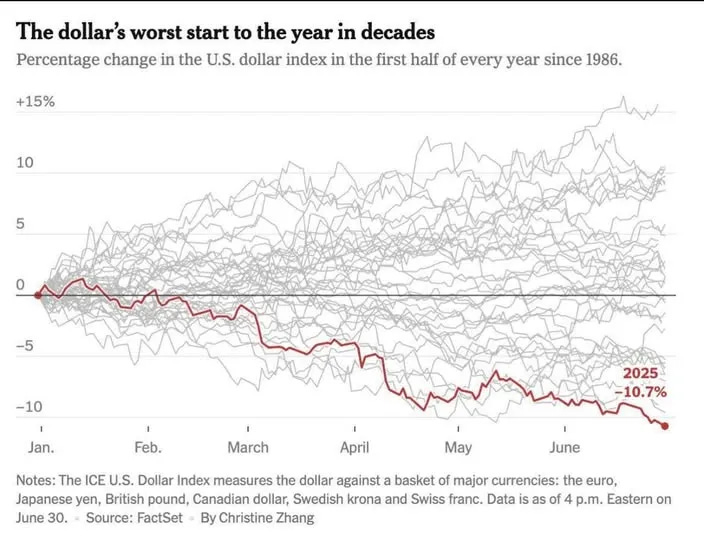
The dollar is crashing. If fewer and fewer foreign investors and governments want treasuries . . . oh woe is us . . . who shall step in to buy US debt? Three guesses, and the first two don’t count.
Stablecoin’s teleological horizon is to make a profit on every dollar printed. What causes more dollars to be printed? More debt. What drives interest rates up on dollar issues? Well . . . instability. What has Trump done? Ramped up debt to world-historic levels, and destabilized . . . every fucking thing.
Après moi le déluge.
What if???? . . . what if we create a strategic reserve of Bitcoin?
Not stablecoin, but Bitcoin . . . a crypto “currency” with no backing whatsoever?
In March this year, the Orange Shitgibbon signed an executive order to develop the “Strategic Bitcoin Reserve” and “Digital Asset Stockpile.” The cryptobros had grand mal orgasms. They were about to do what Defense contractors have been doing for decades—milking the public like a prize Holstein.
(Reminder: In 2021, Trump called crypto a scam and a threat to national currencies. )
Of course, these cryptocurrencies being the kind with nary a drop of actual material backing, nor the backing of a central bank, are like thousands of tiny speculative hand grenades handed out across the country to sugar-drunk brats at Chucky Cheese birthday binges.
The five “strategic currencies” (← my dying fucking ass!) are Bitcoin, Ethereum, XRP, Solana and Cardano. On the day the Orange Shitgibbon signed the order, cryptocurrencies jumped like kangaroos on meth, which tells us what we need to know about the government investing in what “Michel de Cryptadamas” describes:
Cryptocurrencies have created a trillion dollar economic sector built entirely around the exploitation of carefully engineered gambling addictions in a rigged system that cheats its customers in every way that it can.
Cryptocurrencies are the objects of worship in a bizarre internet cult.
Cryptocurrencies are demonic.
These ^^^ are entirely speculative instruments that wax and wane with the moods of the mentally ill. Un-backed crypto obeys the cartoon law of gravity. They haul ass like a hapless coyote, pass over a chasm where they momentarily defy gravity, whereupon they look down and see empty space and think, “Oh fuck!”

Which makes them ideal for a President who can shit his own name on the floor. He can tweet the pump then harvest the dump.
Where will the money come from? You guessed it . . . you. And me. The government established of the people, by the people, and for the people. He started with seized assets, and claimed the scheme wouldn’t cost a thing—we’ll just finance it with legal plunder. But in short order, he started talking about liquidating Treasury assets. (Actually, seized assets are public funds, too, so . . .)
Trump claims this will back the falling dollar, with no explanation whatsoever . . . because he can’t explain . . . because, in the words of Duke economist Dr. Ifyny Eichass, “It’s bullshit.” This scheme has had and will continue to have the exact opposite effect.
These are speculative assets, and as such, they are subject to a panic-crashes. Exposing not only the national currency, but the preferred international currency, to this danger undermines the very thing Trump says he wants to do internationally—protect dollar hegemony. (One might suspect that this is just another insider trading “deal” between him and his crypto circle jerk.)
Crypto is the new pandemic, spreading among the well-to-do like pinworms in a kindergarten.
Obama’s chief neoliberal economist, Larry Summers, now sits on the board of several crypto companies. Crypto scams link such lovely confederates as Steve Bannon, Jeffrey Epstein (RIH), Ehud Barak, and Peter Thiel. (Two Nazis and two Jews walk into a bar . . .)
I guess the main thing I should emphasize here—again!—is that unbacked crypto loses value, not by the spoonful, but by the Seawise Giant tanker-load. It loses value because it’s original value is based on mass mental illness and credulity. From this first step, imagine now that $1 trillion worth of appropriated tax money gets sunk into something called the “strategic reserve,” the point of this perfidious name being to associate crypto in your mind with refined petroleum and gold—actual tangible stuff.
Their real value is in pumping them to the gullible, then dumping them for the cash-out. Crypto “exchanges”: Their information has been shown to be 90 percent what the Princeton economist Dr. Helminth Histolytica calls “shit someone made up.”
America’s Backyard
Starting in September 2025, Trump ordered the USS Gerald R. Ford—the most advanced carrier in the US Navy—to move all the way from the Mediterranean Sea to the waters off of Venezuela to murder 66 unarmed boaters with nary a shred of evidence or due process, claiming they were narcotics traffickers.
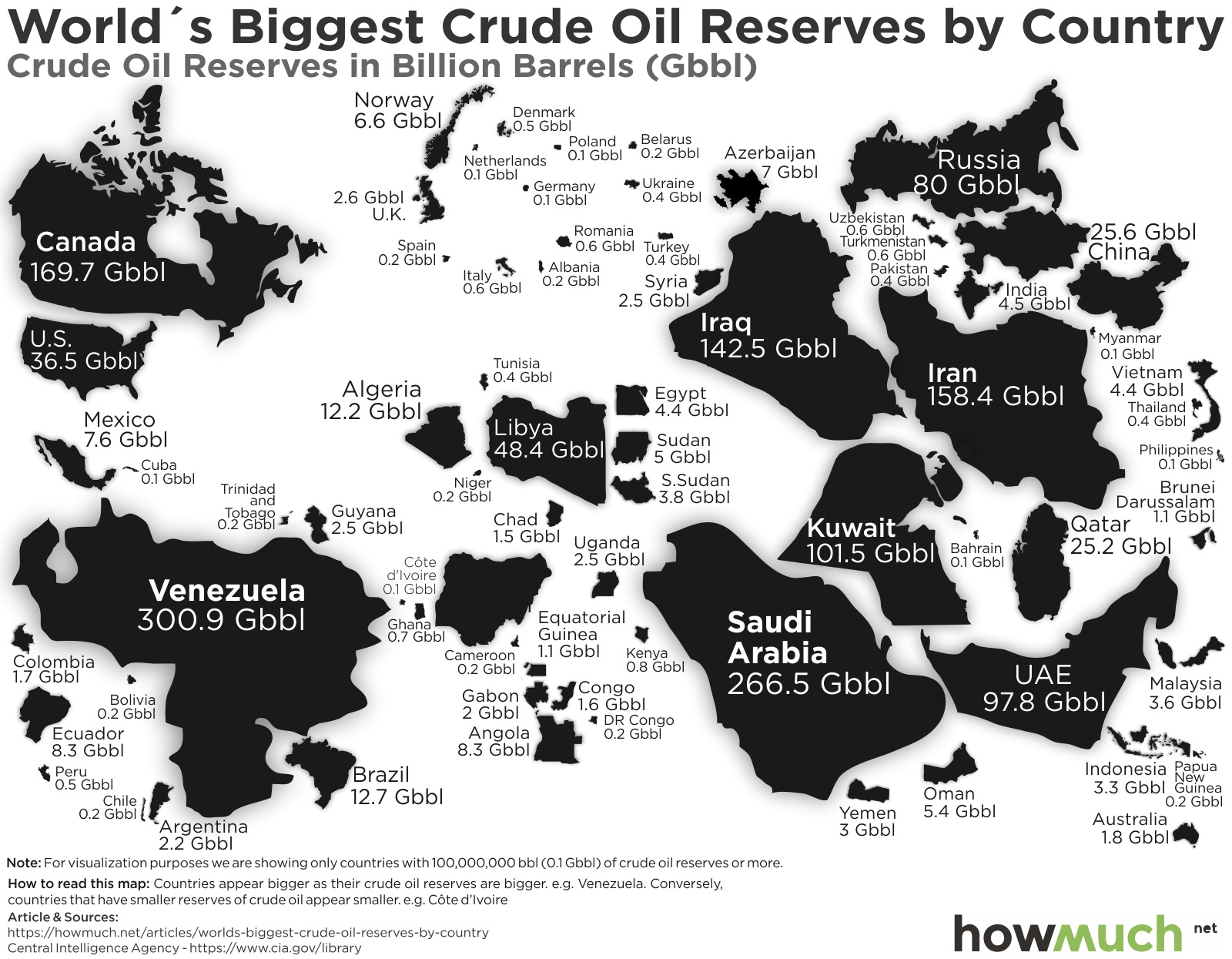
If you want to know what’s going on with Venezuela, it’s the same old shit. Venezuelans have the misfortune of living on top of America’s oil. Like 303 billion barrels of it—the largest remaining proven reserves in the world. Trump’s not sure what to do, so he just murders boaters, but he fantasizes about regime change—something the US has been up to every since Hugo Chavez was elected . . . and the US has failed every time.
Nothing to see here, move along ^^^
Nothing new here really . . . the US has been attacking the Venezuelan government and economy every since the Venezuelans had the temerity to elect socialist Hugo Chavez and the Venezuelan government in turn had the temerity to nationalize the oil and turn its profits toward internal development.
I actually worked for a bit in Venezuela as a military advisor back in 1992, if I recall correctly. Chavez was a popular officer who’d just been jailed for trying to overthrow the admittedly corrupt American-puppet government, and the military was actually pretty supportive of the attempt. Nonetheless, there I was, training Venezuelans and sinking a hefty portion of my per diem into roasted chickens, arepas, and Polar beer at night along the lively streets of Cumana.

^^^ The horror, the horror
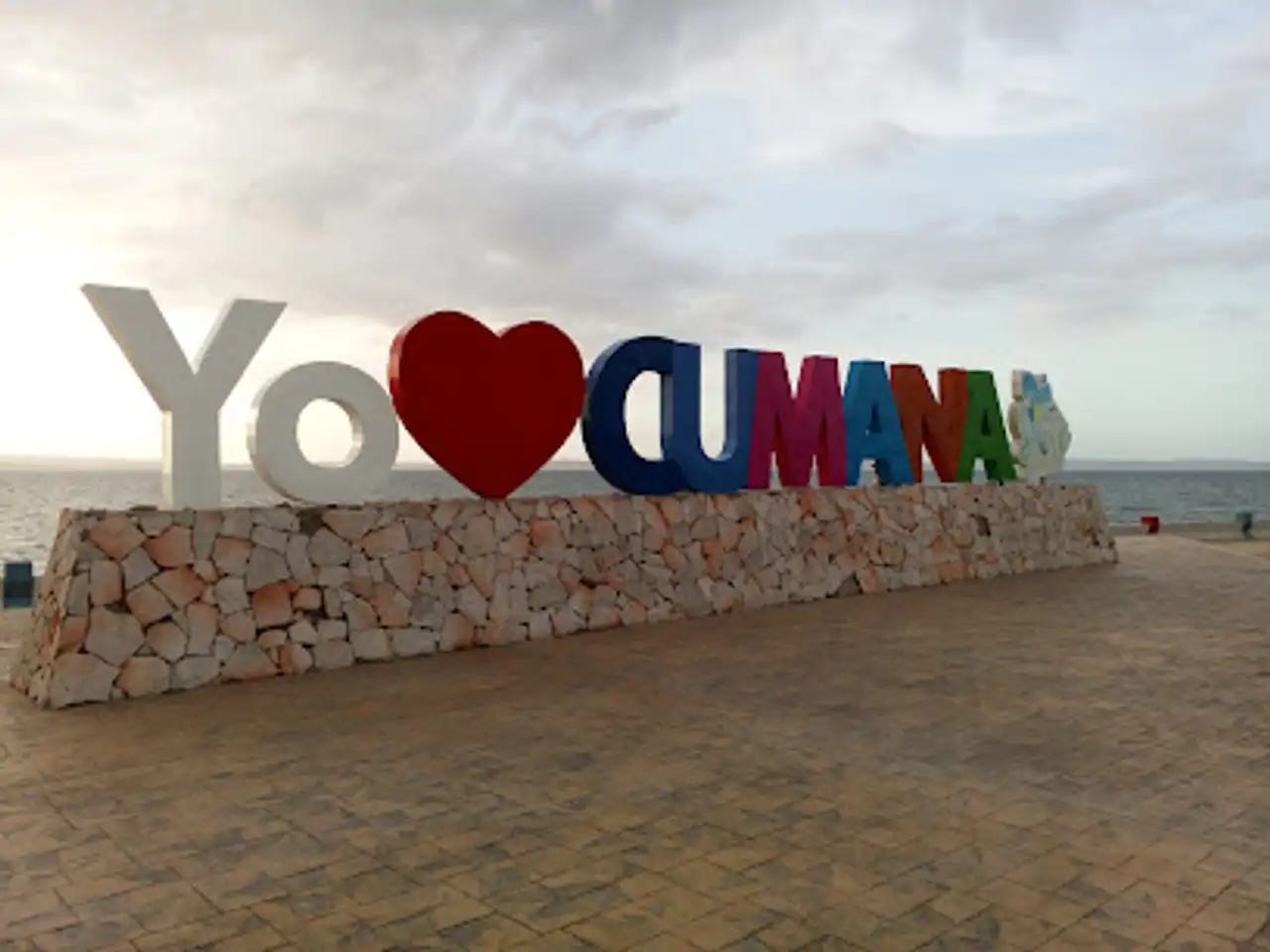
The students there were routinely demonstrating, and the government was firing teargas a them and roughing them up. I was impressed by the Venezuelans and their military. Both are proud, smart, tough, and a little bit sassy. Based on my limited experience there, and on how the military responded to multiple coup attempts against the Chavistas by the US, I’m going out on a limb and saying that any attempt of the US to invade Venezuela will be met by ferocious resistance every step of the way, and fail like that pothead in Mrs. Rauch’s advanced algebra class.
(This year, China Concord Resources Corp invested $1 billion to develop the Lago Cinco and Lagunillas Lago oilfields in Venezuela.)
Trump’s thinking is magical. He does illegal shit he can get away with, and imagines that somehow his actions will be the pebble tossed in the pool that will ripple out into some fantasy result after which he’ll be worshiped. This is the only conceivable reason I can give for the cruel stupidity of killing a few boaters in the Caribbean at the cost of, like, $30 billion . . . that, and that it serves as a distraction from . . . I dunno, the Epstein files and Trump’s domestic scams?
As with all Presidents, Latin America is on his mind. It’s always been a place where the US could use its corrupt and murderous colonial surrogates to extract value and export poverty and violence.
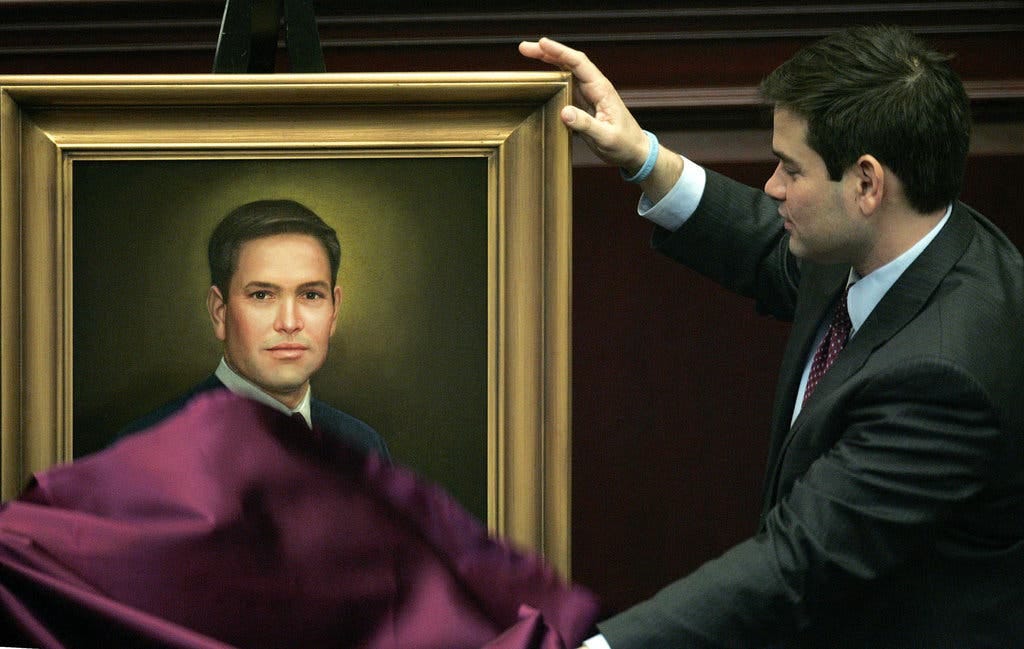
Actually, I can think of another reason Trump is going after Venezuela—it has close ties to Cuba; and Trump’s Secretary of State is Marco Rubio, a Miami gusano-rico. Gusanos are captives of a mass psychosis that focuses their minds on one thing and one thing only: raising the ghost of Fulgencio Batista to lead an army of Miami ricos back the island where they can massacre the filthy communists who took their grandparent’s casinos. (Rubio got caught lying that his parents “fled” the Castro regime—he was legend-building for a campaign—when the truth was that they’d already immigrated to Miami well before the Cuban Revolution.)
Rubio aside, let’s now return to Tether—Howard Lutnick’s organized crime G-4—and Celsius—yes, the Russian/Israeli mafia outfit that bankrupted Trump’ dipsomaniacal Secretary of Defense. Celsius sued Tether (and the Netanyahu family, btw) in a bizarre internecine legal action in August 2024. Apparently, Celsius believes they were ripped off by Tether, et al. (It’s been said we live in the age of irony.)
Nutlick and Tether return now . . . because this labyrinth keeps folding in on itself like five generations of sister-fucking Hapsburgs.
When ideas fail, words come in very handy.
—Goethe
Let’s talk about Argentina.

The Argentina story—which is just a shade too complex for many everyday folks—is actually a peek into the Trump administration’s core system—klepto-capitalism.
In December 2023, Argentina, having its own Trumpian electoral meltdown, seated the batshit crazy Javier Milei as Argentina’s President. He called himself an anarcho-capitalist, which is sort of styled on the works of the living-dead cult leader, Ayn Rand.

Milei’s flamboyant display of a chainsaw symbolized how he was going to clearcut government programs as the remedy to all of Argentina’s already formidable economic ills. Long story short, shit didn’t go well.
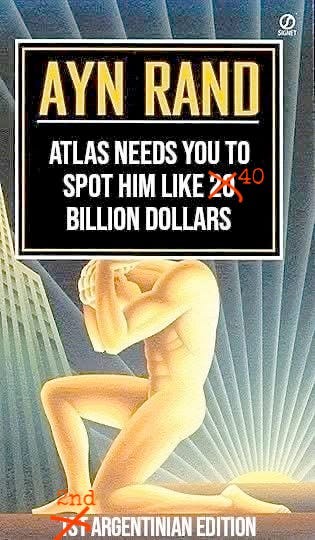
And so the US parachuted in with $20 billion in a “currency swap.” Trump is anticipating another $20 billion soon from his Wall Street courtiers . . . because Javier Milei’s libertarian economic policies caused the value of the peso to drop like a shot mallard.

But why, you may ask, would the average American, much less the US government, give a hoot in hell about Argentina’s economic woes—sorry to be short, but while I empathize with Argentinians, half of whom have been reduced to poverty now, I’m channeling the probable attitude of any American who may be facing economic ruin . . . like American beef producers.
Beef? you ask. Well, yes. In addition to the bailout of Blackrock, Fidelity, and Discovery Capital Management Argentina (which we’ll explain momentarily), there’s a bailout on order for Tether. Yep, the company soooo closely connected to Trump’s freebooting Secretary of Commerce Howard Lutnick—former next-door neighbor of Jeffery Epstein. Hang with me a minute, because these outfits lay a lot of false trails.
Tether owns a company called Adecoagro, an Argentinian agri-corporation that sells animal feed; that is, it feeds Argentinian beef. So Tether—Nutlick’s baby—has a big stake in Argentinian beef.
The problem, of course, is that Americans produce beef, but they’ve just been competitively debilitated by huge tariffs on fertilizer from Canada, increasing cattle-feed production costs, a tax that’s passed on from grain producers to beef producers—then the greedy retailers stick you for even more because they can blame it on inflation—and so you pay seven fucking dollars for a pound of high-fat ground to cook in the kids’ spaghetti.
Never fear, you’ll soon get a break with beef from Argentina, where there’s no such rise in production costs because, with all their problems, including Milei’s insanity, they still don’t shit all over their trading partners in some delusional trade war.
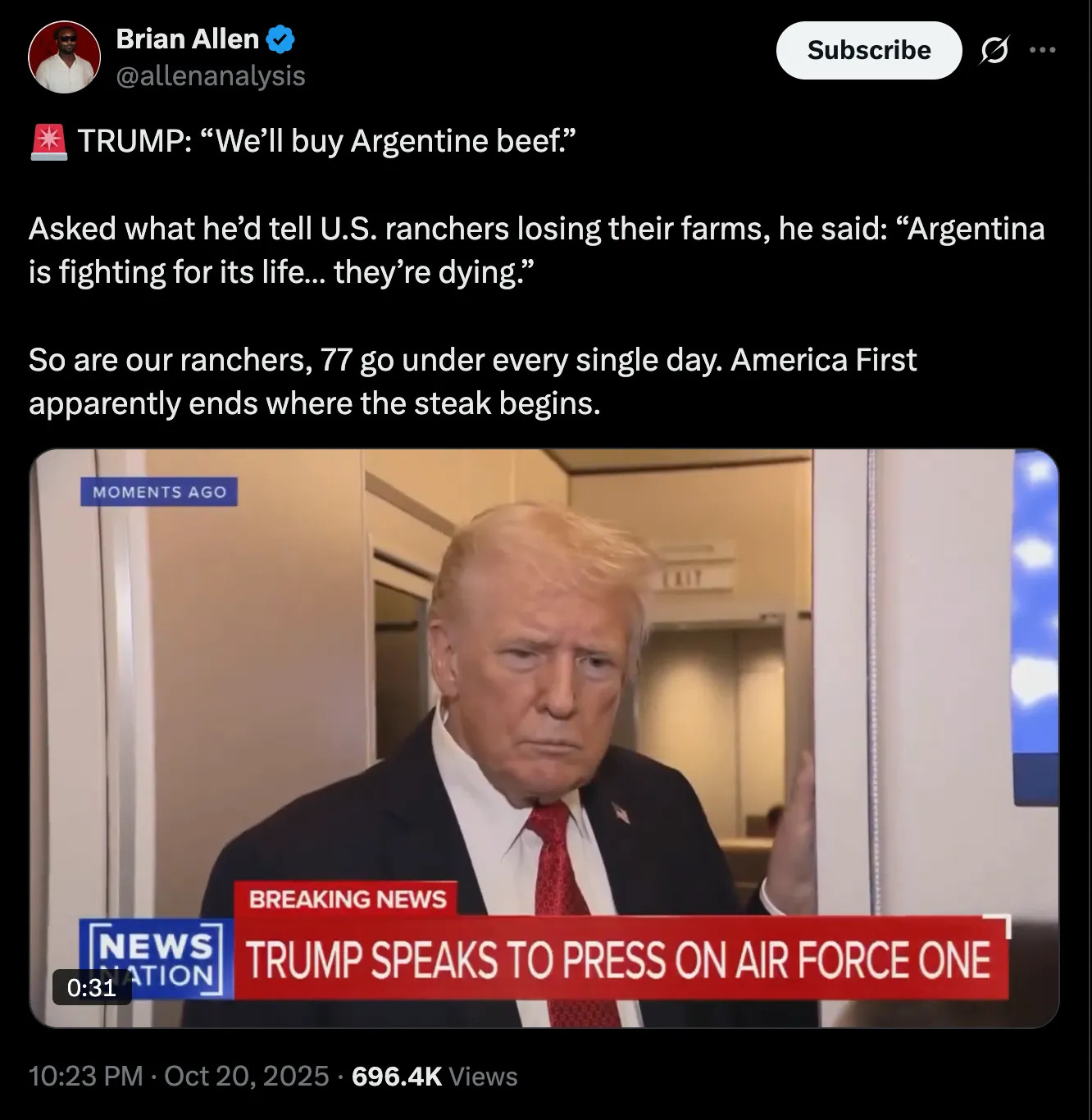
As Trump is trying to buy Argentinian beef, Milei contracted to sell 1.5 million tons of soybeans to China to fill the gap left by the cutoff of American farmers as casualties in Trump’s idiotic tariff war.
Beef is in Nutlick’s wheelhouse, and bonds are in Secretary of the Treasury Scotty Bessent’s.
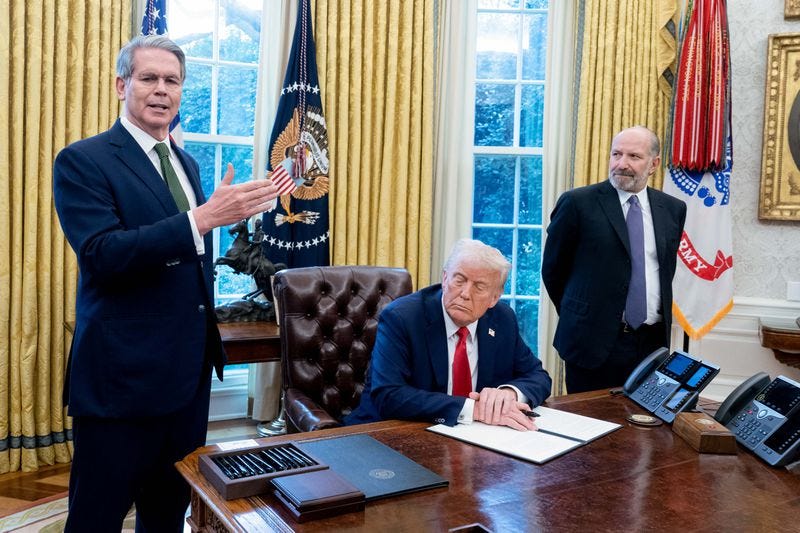
^^^Bessent → Shitgibbon → Nutlick
Billionaire hedge fund manager Rob Citrone, head of Discovery Capital Management, and close friend of Scotty Bessent, was heavily invested in Argentinian bonds, and when the peso nosedived, Robby boy was about to lose his shirt.
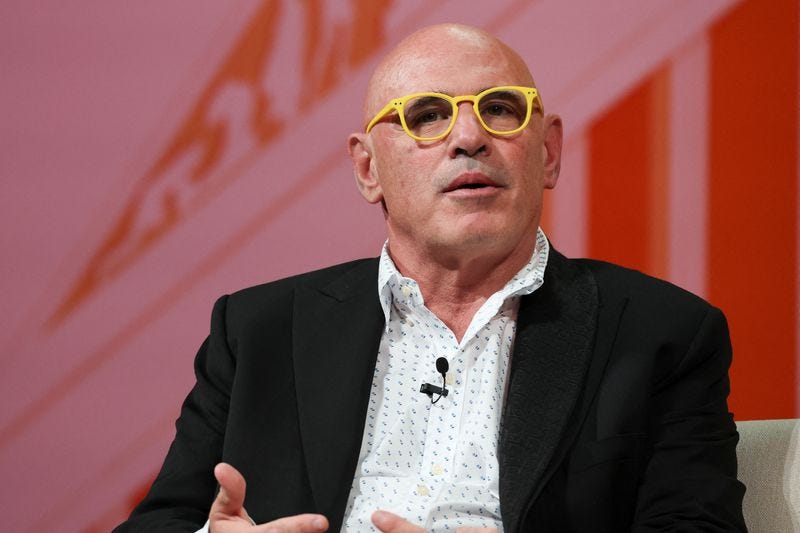
^^^ Citrone, wearing his daughter’s glasses
Instead, Citrone—who was in talks with Bessent days before the bailout was announced—now stands to make a multi-billion dollar windfall. It pays to be on the inside . . . to have the American taxpayer on standby as your golden parachute.
Citrone first met Milei at Mar-a-Lago, when they were both guests of Donald Trump. The bright side is that Argentina will be shed of a bunch of rich assholes. They’re using the fresh dollars to cash out and move the fuck away from Javier Milei.
Did we mention that Milei was caught up in his own cryptoscam last February? It was called “the $LIBRA cryptocurrency scandal,” and it was declared by Forbes to have been the biggest crypto theft in crypto’s brief history—$4.6 billion.
Dollars have helped Blackrock, Fidelity, Tether, and Discovery Capital Management Argentina, because of dollar hegemony.
Dollar hegemony is the sole remaining basis of America’s international power—minus using a trillion-dollar military to murder poor people. The basis of dollar hegemony is people wanting/needing dollars. The basis of wanting/needing dollars is stability and the preservation of purchasing power.
We’ll explain how we got here further along, but the hot and the cold of it is diminishing demand means diminishing power, which also means the rich are the only ones with lifeboats. Up that proverbial creek, the rich have paddles . . . you and I are—in the words of Stanford economist Dr. Culero Jodido—“stuck like a motherfucker.”
At any rate, looking at Argentina—apart from bailing out Trump, the Trump cabinet, and its friends—there is a strategic aspect to the bailout currency swap as well.
Argentina is an export economy. Exports have been contracting . . . a lot. At the same time that their trade surplus was shrinking, Milei made the Trumpian move of firing shitloads of public workers and sinking them into poverty. This rippled through the domestic sector as falling consumer demand—that’s when your tienda or your little restaurant goes bust, and larger firms have to reduce production and lay off workers. So, if you can’t circulate enough money in either the foreign or domestic market, what happens? Well, in addition to the bad shit happening to plain folks, the wealthy speculative parasite (WSP) sector gets pretty bearish.
Two weeks before the election, Milei had tanked in the polls.
America shows up with a currency swap/bailout. The WSP sector goes all bullish again, even as they’re packing their bags for beach homes in the Dominican Republic. Milei stands for re-election during this pink cloud punctus and wins. But Milei has been remade into the servant of the US (Okay, he kinda was already, given that Argentina had since 2018 been carrying a $45 billion debt from Wall Street Washington’s loan shark the IMF.
The US, ever since Obama’s China pivot, has had sand in its ass crack about China’s growing influence in Latin America—long considered America’s vassal continent.
The truth is, the US can’t compete with China’s exports . . . they just can’t. China has a better economic and social service infrastructure, which means it’s people can work for less and still enjoy a higher standard of living, and China is about a light year ahead of the US in developing its energy grids, which run far more cheaply and efficiently than America’s decaying and predatory behemoth. We’re saving China in Argentina for last, so hold that thought as we follow through on elections and debts.
The bailout was a pump-and-chump election. Bailout wins election—bailout indentures Milei to the US.
When Milei won the recent election, after being down for weeks, Argentinian dollar-bonds took off like a Titan missile. The casino was open! Yeehaw! This portends the total dollarization—pace Panama—of the Argentine economy.
In the near term, the peso will be exchanged—as Salvdoran colónes were when I was “working” there in the civil-war eighties—using street-corner mafia money changers who will double the official exchange rate and further tank the peso. (This was sort of going on already, contributing to the peso devaluation, because everyday purchases were in pesos, whereas buying property and cars and so forth was being done with dollars.)
Milei—who once crowed with his chainsaw—is now a dog caged in the dollar hegemony kennel. These currency swaps are not freebies. The interest is going onto Argentina’s dollar-debt ledger, so for the average Argentinian . . . welcome back to the old Latin America, owned by America and plagued with poverty. Soon, you’ll all be able to work in US-owned Argentinian mines—sold by Argentina to begin paying off that $65 (or soon to be $85) billion debt.
The IMF, by the way, accepts payments only in US dollars.
Speculators will be making out like horny teens under the bleachers. (Milei’s Finance Minister used to work for JP Morgan, after all.) “Plus ça change, plus c’est la même chose.”
Maria Jose Haro Sly of Johns Hopkins ←real person, a consultant with the International Development Bank, calls Argentina a “riches to rags economy.”
But not so fast, Mr. President!
The background of the background here is China. Everyone knows about China buying Argentinian soy, but soy producers are a tiny fraction of the Argentine market. In April this year, China did an $18 billion (equivalent) currency swap with Argentina as part of a larger cooperative project incorporating Argentina into China’s Belt and Road Initiative. That first $18 billion constituted 43 percent of the Argentine Central Bank reserves! Chinese swaps would come to represent 80 percent of reserves and form the basis of what was left of Argentinian economic stability.
China is now Argentina’s biggest trading partner (China is eyeing lithium, too, as well as gold). China invested heavily in the Belgrano Cargas Railway and infrastructure for lithium, gold, and copper mines. China is financing the radio telescope near El Leoncito, which is the most powerful in South America. China is selling EVs into Argentina and looking at investments in the Argentine auto production sector. Prior to Milei’s first election, Argentina was already looking hard at BRICS membership. China is the biggest importer of Argentinian soy (60%) . . . and beef! (80%) Where IMF money is largely used by Argentinian ricos for speculation, Chinese loans are all connected to brick-and-mortar projects.
Getting clearer?
Not for me either.
US moves there are a three-for-one: bailing out US investors, asserting dollar hegemony through neoliberal debt peonage, and countering Chinese influence; but I seriously doubt Milei will be dumping his yuan.
Let’s talk CELAC (not a gastrointestinal disorder).
The Community of Latin American and Caribbean States (CELAC) is comprised of 33 states.
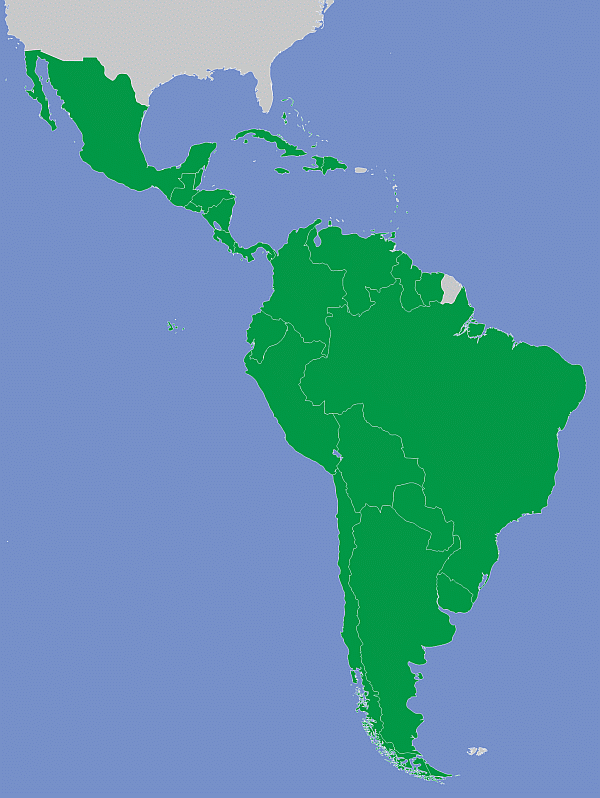
Whoa! Fuck! ^^^ That’s a lot!
The fourth China-CELAC Forum was held in May 2025. China offered a $9.2 billion credit line, the currency swap for Argentina, infrastructure development, 500 teaching scholarships, and 100 collaborative initiatives on “agricultural production, scientific and technological innovation, poverty alleviation, sustainable development, defense collaboration, and anti-corruption efforts.” Colombia signed up for the Belt and Road Initiative. Brazil, Argentina, and Bolivia all signed bilateral trade agreements, fellow BRICS member Brazil signing 33 total. Behind the scenes, a deal was worked for Brazil to ship Venezuelan oil to China. Argentina, Brazil, Chile, Peru, and Uruguay all received visa exemptions for travel to China. Colombia has an outstanding petition to join the New Development Bank (formerly known as the BRICS Development Bank). Talks continue about joint ventures.
What motivated this uptick in interest for the fourth convention? More than a century of being treated like American vassals . . . but Trump’s babosadas was a catalyst and accelerant.
Trump’s insane tariffs on Brazil have hurt the US more than Brazil and alerted the surrounding states that Trump is not only an idiot, but too unpredictable to rely on for anything the foreseeable future. If Milei criticized Melania’s dress tomorrow, there might be an aircraft carrier off Samborombón Bay next week.
The whole word, in fact, knows that the US is not now, and never will be again, a reliable actor, because even if Trump succumbs to congestive heart failure next year, the US has proven it can elect more fucking jackasses like Trump.
As we said, the world can’t uncouple from the US-centric system overnight, but everyone is looking for the door; and right now the biggest door is China.
Dollars and War on the FED
Sowing is not as difficult as reaping.
—Goethe
Trump’s wealth is in dollars—the currency of the American state—the strength of which is predicated on dollar hegemony. Dollar hegemony serves as the buffer for all manner of structural weakness in the US economy. We can run up debts everyone knows we can’t repay, e.g., or print money like the aforesaid drunk monkeys then export the inflation.
Once upon a time, those were petro-dollars—that is, all oil trades were in dollars, and so the currency was backed by black gold instead of yellow. That power was likewise backed by US military supremacy, because 11 naval carrier groups prowled the world’s seas to ensure petrol’s safe distribution.
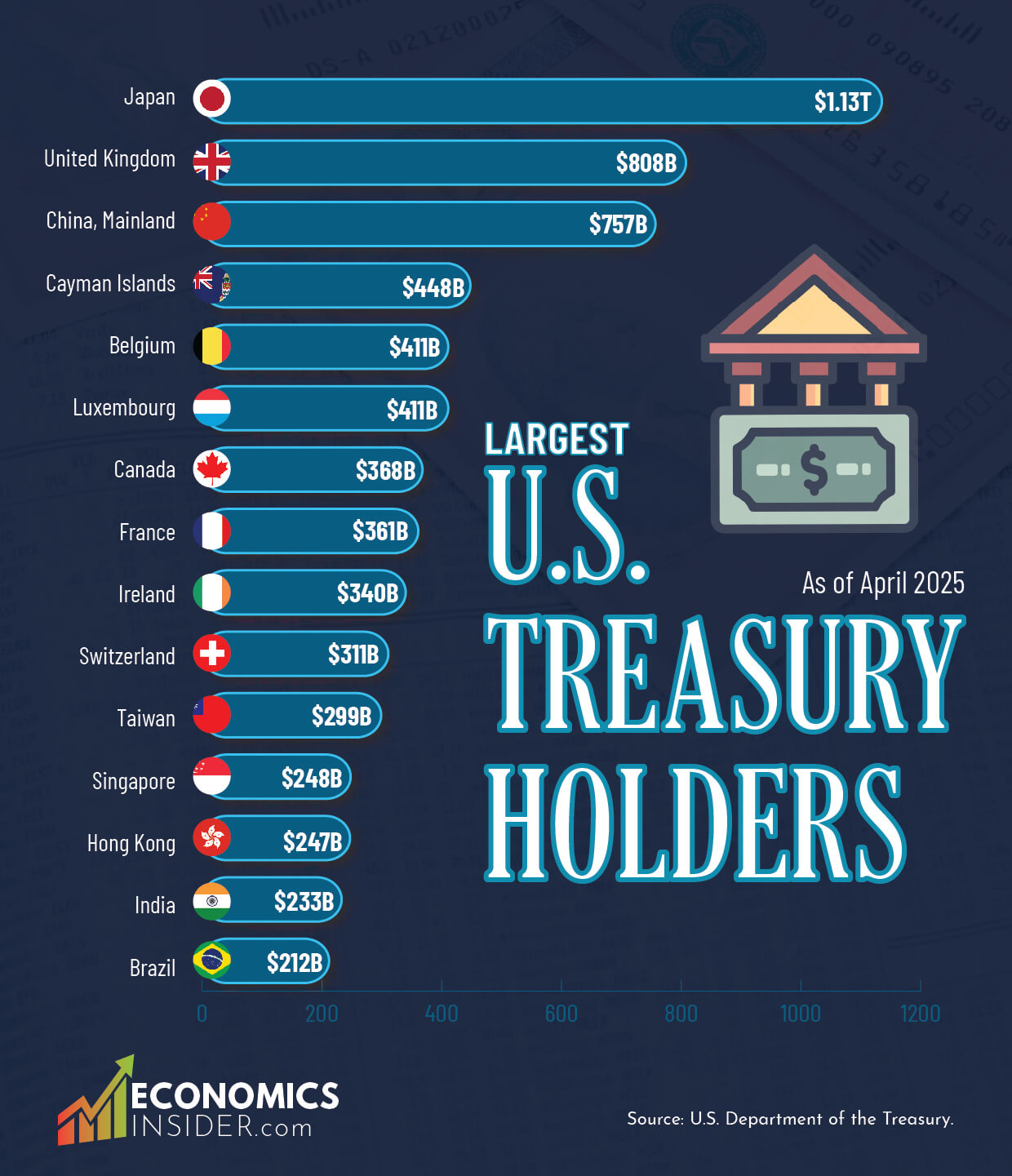
China—since the Nixon accords and the Reagan-Thatcher neoliberal turn—has become integrated with the US economy by an enormous volume of trade, backstopped by China’s holding once-upon-a-time of $1.4 trillion worth of US treasuries in its central bank. This locked China into dollar hegemony, though China wisely stayed away from the IMF loan system and resisted pressure to open its markets too freely to the US, to expose itself to open-ended speculation, or to let its currency free-float.
China had been ridding itself of dollar dependency slowly, but when Trump and Biden came, they started dumping dollars fast.
By July this year, China held only $757 billion. Japan now has the greatest exposure, with $1.13 trillion.
Chinese President Xi Jinping, when confronted with the irrational and perfidious Trump, and the sure knowledge that the US could again and again elect such silly scalawags, accelerated China’s march to greater dollar independence as part of a larger strategy that has now culminated in China’s near dominance—economically, politically, and even militarily.
China’s rise to superpower status was recognized with great alarm going back to the Obama administration, who wanted to disentangle from the neocons’ Middle Eastern quagmires in order to turn American strategic focus toward containing Chinese ascendance. “The China Pivot.” But immediately after Obama took office, the derivatives chickens—fattened on Reagan, Clinton, and Bush—came home to roost in the form of an epic economic meltdown (from which China bailed out . . . . well, the world, basically).
Trump’s main weapon in his international economic arsenal was dollar hegemony—which, honestly, is kinda here for a while longer (said with millennial upspeak). It’s real, and it’s still powerful as hell. But Trump has paired dollar hegemony—in his ill-conceived and ill-considered strategy to secure his legacy as the man who re-industrialized America—using tariffs. For everyone everywhere, because he thinks this gives him “leverage” to make fucking “deals.” Someone in his retinue once convinced him that tariffs magically produce re-industrialization, and he’s become a dog with a bone.
Here’s where the unforced errors begin, because—contrary to appealingly easy pop metaphors that equate governance with business, or stupider still, household budgets—governments are not businesses, and they sure as hell aren’t families.
Re-industrialization—running it as a hypothetical—is also not accomplished by decree. You can’t train engineers, establish supply chains, build factories, then train and hire a new generation of experts, managers, skilled and unskilled workers . . . with Executive Orders. All you can do with EOs is pose for the cameras and fuck things up based on the law of unintended consequences. (See clever Goethe quote above.)
Typically, if a country wants to increase its exports—like Trump claims he wants to do for his mostly imaginary basket of American manufactured goods—it would seek to weaken the value of its currency a bit, to make these goods more attractive abroad even though they are still mostly too expensive.
China, for many years, had American hackles up because it kept its currency relatively weak, wisely ignoring demands from the US to allow the yuan to increase in value.
On the other hand, if a country is seeking to increase interest in its currency as a hedge, for example by selling bonds, the stronger the currency, the greater the demand.
Whatever you cannot understand, you cannot possess.
—Goethe
Lower currency value=better for exports. Higher currency value=better for loans.
It’s kind of a tightrope walk if you want to do both at once. Pin that.
We pointed out that Trump is trying to transfer authority from the Fed to the Treasury and strip the Fed’s “independence.” This, and his gas-and-brake tariff practices, were already undermining international confidence in the dollar as a hedge when the dollar took a nose-dive of 11 percent in the first six months of Trump’s second term.
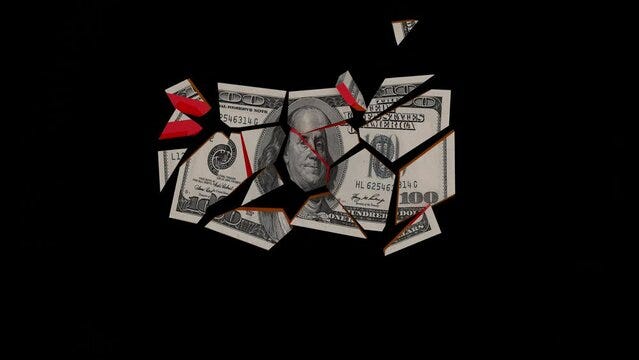
Inflation be damned, because billionaires don’t give a personal fuck about inflation, Trump also wants to lower the Fed’s interest rate—which makes treasuries even less desirable—because . . . well, this would pump up Trump’s personal portfolio. Lowering interest rates provides cheaper loans to the degenerate gamblers in securities markets. When they can get their hands on cheap money, they tend to bid up the market. So . . . Trump holds billions in assets that increase during speculative market spikes, whereupon they can be cashed out and reinvested more conservatively when he tweets out a fucking slump.
That aside, what does the devaluation of the dollar against other currencies, general inflation, and lower interest rates do to those abroad who hold treasuries?
Pretty obvious, right?

Comes a point where your asset is a liability. It’s losing purchasing power, so you’re paying your own debtor to hold that debt.
Still a hedge?
Well yeah, when that’s all you got, but in this situation, folks will look to diversify those hedges.

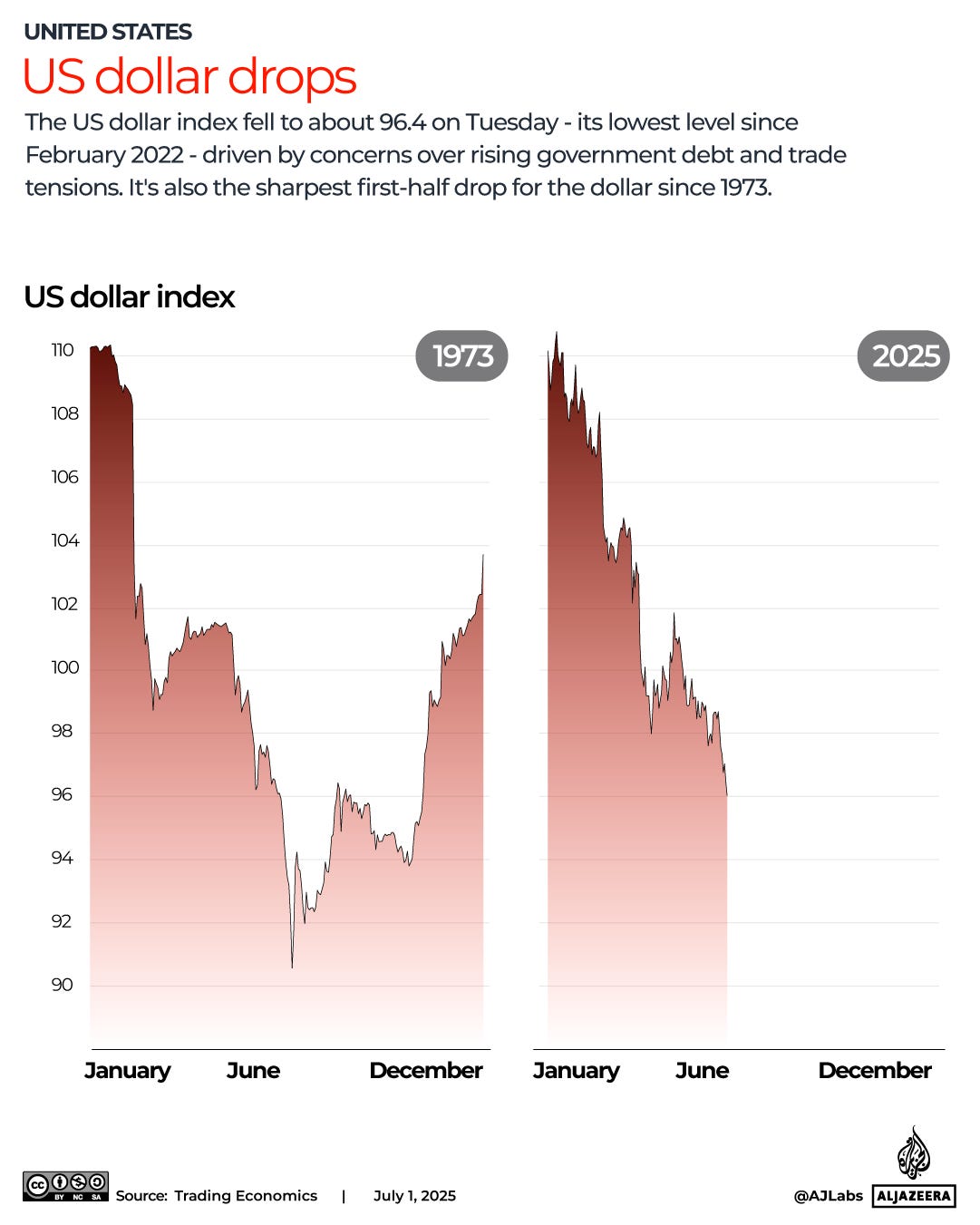
^^^ As Yale economist Dr. Ileosecum Tubu’el said, “Youwza!”
Treasury issues to non-US sovereigns dropped 19 percent between January and May this year. We may not know these numbers much longer, because the Trump administration has adopted a policy of refusing to publish economic data, because it might disrupt whatever anal secretions he’s putting out on Truth Social.
Unfortunately, anti-Trumpers are as time-harried and complexity-averse as pro-Trumpers, and we’re most of us a bit ignorant of monetary mechanics. Which are, admittedly, about as exciting as watching worms breed. A key example—speaking of assets and liabilities—is the Federal Reserve’s (FED’s) balance sheet.
Bear in mind again, that Trump has declared war on the FED, because he wants the economy totally in his hands via the Treasury Department.
Anyone who’s ever made a budget or bought a house (using an inappropriate metaphor) knows that assets are what you have to the good, liabilities are the negatives, and Assets minus Liabilities equals Equity. Add to this room in your memory palace, Liquidity—money you can get your hands on pretty much now.
The FED maintains a balance sheet, with debts owed and assets owned. The FED’s assets include treasuries (what? . . . yeah, the whole thing is like taking out your own tonsils), mortgage backed securities (yeah, those little demons), and student loan debt.
The FED’s kind of a one-trick pony, in that it’s main tool for increasing or decreasing liquidity to hold the balance between inflation and recession is raising or lowering the interest rate for the kind of borrowing that allows the government to print more money.
If I can borrow money for “investment” at 1 percent when inflation is running at 3 percent, the government is paying me—in purchasing power—to borrow. If I have to pay 5 percent interest, that particular incentive does a Houdini and disappears.
(NOTE: In the US, the biggest borrowers are gamblers speculative investors, the very ones who choose our “elected” officials.)
There’s a bunch of stuff here that reads like fucking hieroglyphics about “shrinking the balance sheet” and whatnot, but the main takeaway at this juncture is that in addition to juggling the interest rate, the FED can also choke the money supply by “shrinking the balance sheet”—which means letting its treasuries mature without buying more and allowing its mortgage backed securities (those little demons) to expire.
The FED’s simple formula—which makes sense in a general way, and with some exceptions—is that too much liquidity promotes inflation. This is why Trump hates Fed Chair Powell, who wants to stem inflation, because increased liquidity (cheap ass money) in the US doesn’t actually promote building factories or opening restaurants and shops; it pours money into securities-casinos and real estate (i.e., the Trump family’s two major assets).
And here we come to the question of strategy, or what some presume—wrongly as it turns out—is the Trump “strategy.” For Trump and his administration to have a fucking strategy presupposes (1) that Trump has the mental capacity for any strategy more complex than a grift, (2) that Trump has a staff that has the mental capacity for a strategy more complex than a grift, and (3) that Trump’s staff is subordinated to a strategic coordinator with the mental capacity for a strategy more complex than a grift—which brings us full circle to (1). But Trump chooses his staff one by one, based on bribes, flavor-of-the-day conspiracy theories, people who stroke his ego or give him some Viagra pussy, or people who’ll help him facilitate a particular grift. Crooks, lunatics, clowns, and sycophants.
This lack of either strategic acumen or coordination accounts for all the unforced errors we’re seeing. This is, in essence, Trumponomics—okay, you can quit reading now (not really).
You see, that liquidity, which allows gamblers, rentiers, and money launderers to sock away the green, also affects little things . . . like supply chains . . . like bubbles . . . like inflationary insecurity and popular discontent.
Arcane, Important Shit & Class War
A person places themselves on a level with the ones they praise.
—Goethe
Let’s talk now about the Repo Market and SOFR rate. A repo is a repurchasing agreement. The FEC has a Standing Repo Facility. A repurchasing agreement is when investors or banks need a fast loan, so they put up assets (securities and-or treasuries) as collateral. Fast liquidity, in other words. The interest rate for that financing is called the secured overnight (told ya it’s fast) financing rate (SOFR). This is financial cousin-fucking, since its just financial folks doing it, but without it, there would be a lot more turbulence from mini-liquidity crises.
If the Repo Market posts a sudden spike, then, it’s kind of a sign that something in the system is stressed—the way a fever tells you you may have an infection. This is particularly concerning if FED repo reserve (in the Standing Repo Facility) is dwindling.
On October 1st this year, Trump’s party provoked a government shutdown (still going on as this is written and destroying around $15 billion a week). This has ramified in such a way as to create a lot more liquidity problems, which has dramatically increased the number of repo transactions, which has drained FED reserves.

Given how crucial repos are to the general function of the economy, the prospect of this money running out should give everyone pause, no?
The government shutdown has worsened the problem [repo stress] . . . because while we knew that the Treasury General Account would rise by more than $500 billion back in July to around $850 billion by the end of September. What we didn’t know was that the government shutdown would drag on for weeks, pushing the TGA to over $1 trillion and the Fed’s reserve balances to below $2.9 trillion.
—Seeking Alpha
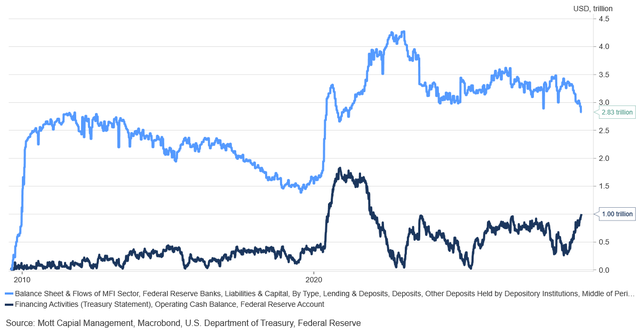
Note the balance sheet falling as borrowing increases ^^^
During the Silicon Valley bank crashes of 2023, they had too much money in treasuries (collateral, which has to mature to be realized, so not ready-at-hand cash), but no access to fast cash. A SOFR that is higher than lender demands—the situation as this is written—says people are in such desperate straits that they’ll pay more than the going target rate for liquidity that is about to . . . well, disappear.
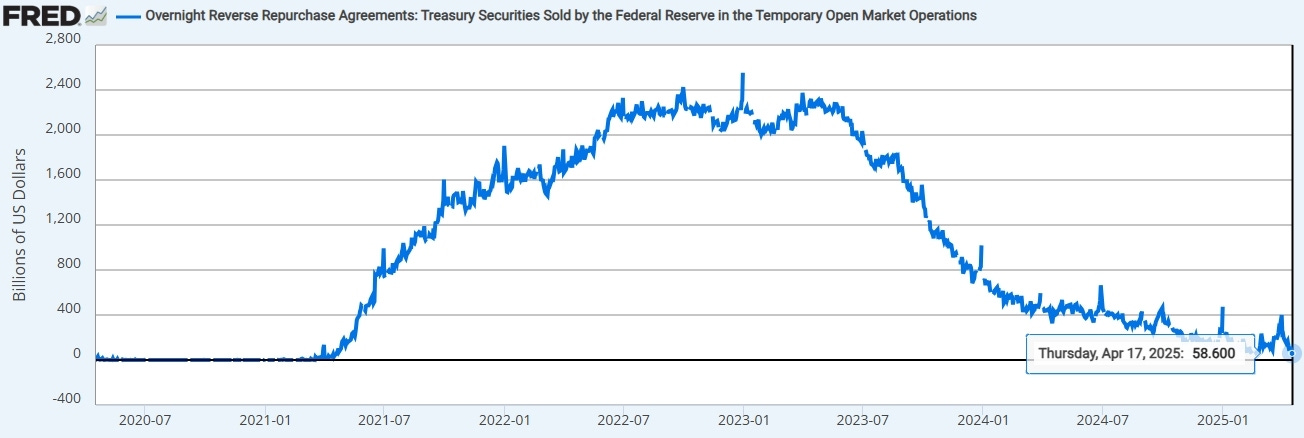
The FED’s Standing Repo Facility, in other words, is nearing empty. It’s being hit harder right now than it has been since the COVID lockdowns. (Told ya that orange sack of shit is a pandemic.)
One might think that during a liquidity crisis—which is what we’re talking about—the best thing to do would be what Trump wants—drop interest rates and flood liquidity into the market. But all “markets” are not equal.
Two in particular are relevant here: the private credit market and the private equity market.
We are now entering into class struggle territory.
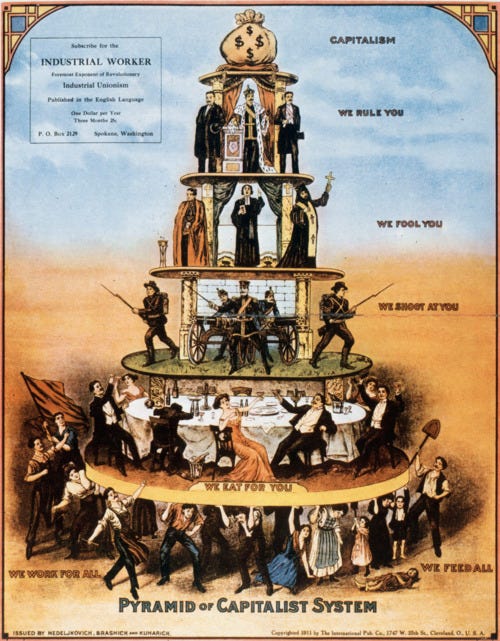
This was described by Jamie Dimon, a haute bourgeois rentier from J.P. Morgan as “the $2 trillion cockroach problem.” (You see how I cleverly inserted that French Marxian lingo in there to discuss class struggle?)
We begin with a story, about a firm called Tricolor (nothing to do with France, and they pronounce it, without explanation, as TREE-klor . . . why? fuck knows). TREE-klor filed for bankruptcy in September this year. It’s described as an automotive subprime lender (red warning light right there). They made usurious loans to people with shitty credit to buy cars. There’s another company called First Brands, that took massive loans to buy up companies that made various car parts. First Brands also went belly up in September. These were multi-billion dollar default-bankruptcies.
These companies borrowed some money from banks, but they borrowed a lot of money from “non-bank financial intermediators,” aka private credit firms. Shadow bankers, and the word “shadow” should give you a little frisson on anxiety. You are entering the darkened halls of the behavioral finance mansion.
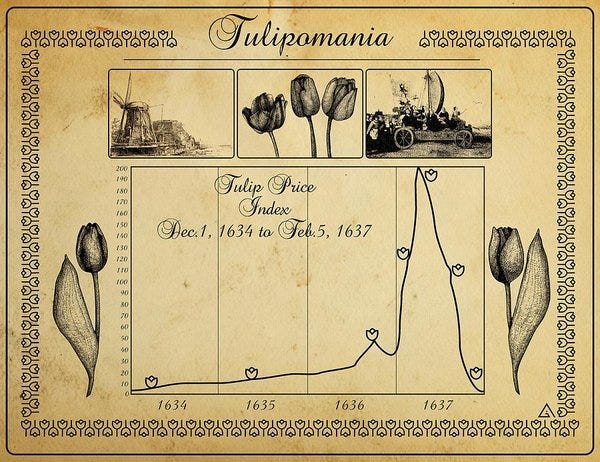
Shadow banking was perfected to evade post-2008 regulations, and it has played a central role in reflating financial bubbles with broad systemic risk. Yay!
The problem is—with shadow banking—no one knows what the fuck is behind the curtain. What can be said with certainty is that it has grown into a multi-trillion-dollar sector. No one knows what kind of ticking time bombs are concealed in those secret portfolios. What we do remember is 2008, when a similar situation prevailed, and when the bombs exploded sympathetically—that what explosives experts call one charge detonating the next one and the next one, sympathetic detonation—they exploded through every sector in the economy, because everyone’s assets had been bundled with the bombs. Sympathetic bombs.

Dimon said that Tricolor and First Brands were those two cockroaches you suddenly see when you sweep behind the refrigerator. You can pray that they’re the first mating pair, but you’re pretty damn sure that they’re not.
It’s not lost on markets that these disclosures arrived just as other credit stories like the Tricolor Holdings and First Brands Group defaults, are still being digested by the system. The biggest banks can absorb a few bad loans without blinking (JPMorgan was hit by Tricolor), but for regionals already battling higher deposit costs and thinner margins, fraud-related losses–or any credit losses, for that matter–cut closer to the bone.
—Mark Malek
In a good horror novel, Tricolor and First Brands would be called foreshadowing.
When the trillion dollar crash comes, it’s not you and me who will get the bailout.
Shadow banking is still mixed up with big banks, hedge funds, et al, which continues to ramify outward. ← So there’s that.
Returning momentarily to liquidity. Increasing liquidity doesn’t translate in America Made Great Again—or even America before our current political miracle. It doesn’t translate into hardware stores or factories or local electrical repair companies. It gets pumped into shit like Private Credit Firms to make a fast buck.
And Private Equity Firms.
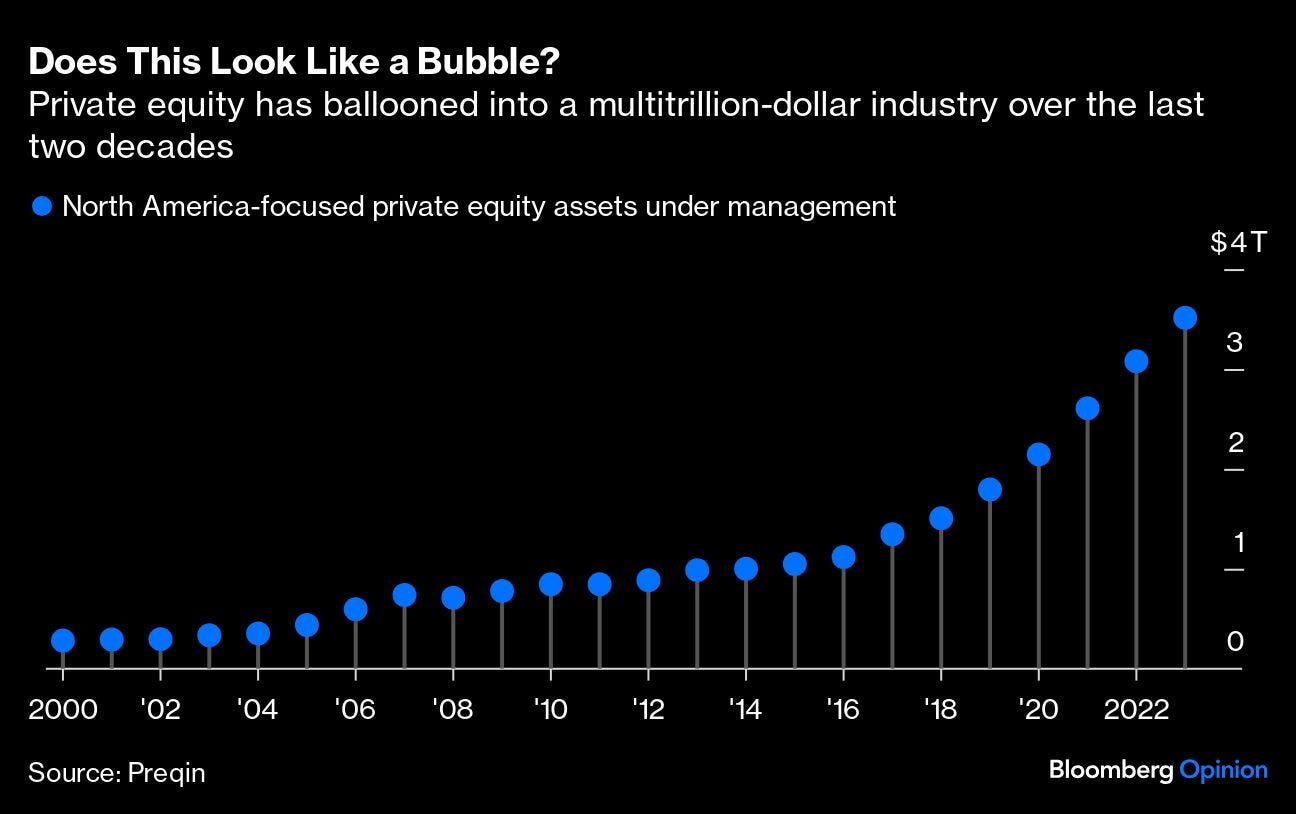
Remember Bain Capital? Mitt Romney’s outfit? Tanked his candidacy because it was outed as a predatory entity? Private Equity Firm. Even after the 2008 debacle, these business-liquidating, job-murdering, town-crushing machines continued to be capitalized, because they’d broken the campaign contribution code.
What do they do? Well, they buy up any enterprise they can find—businesses, hospitals, doesn’t matter. They cream what they can as fast as they can, then liquidate the enterprise by selling it for parts (“asset stripping”). In the last fifteen years, they’ve destroyed well over a million jobs, cancelled as many pensions, and shuttered tens of thousands of businesses. Here are three good articles explaining the mechanics: (one, two, three). They do this using the leverage of cheap money, which the targeted entity’s own assets are put up for collateral (remember that weird term, “leveraged buyouts”?).
Here’s where the increased liquidity goes. Maple City Plumbers or and Rosalita’s Hairdressers are taken over not by plumbers or cosmetologists—God forbid!—but by some slick banker-punk who’d steal the wedding ring off his dead grandma in her coffin. Private equity is a multi-trillion-dollar legal-criminal enterprise; and its bosses should be force-fed corn meal mush for a month, then dropped off naked in a remote Congolese lion and hyena sanctuary.
How bad is shadow banking leveraged? Some as high as x100. (Imagine you own a house valued at $200,000, and you are $20,000,000 in debt. ← Yeah.) So the American economy has been fused to a Ponzi scheme inside a massive, world-destroying bubble. (We can’t just blame Trump here—this is a bipartisan set-up. Our system is not democratic. It’s based on bribes campaign contributions.
You don’t even want to know about “basis trades” and the $1.8 trillion “reconciliation problem,” basis trades in US treasuries, and the Caymans. Read: US debt is held by a trillion-dollar-plus Ponzi scheme.
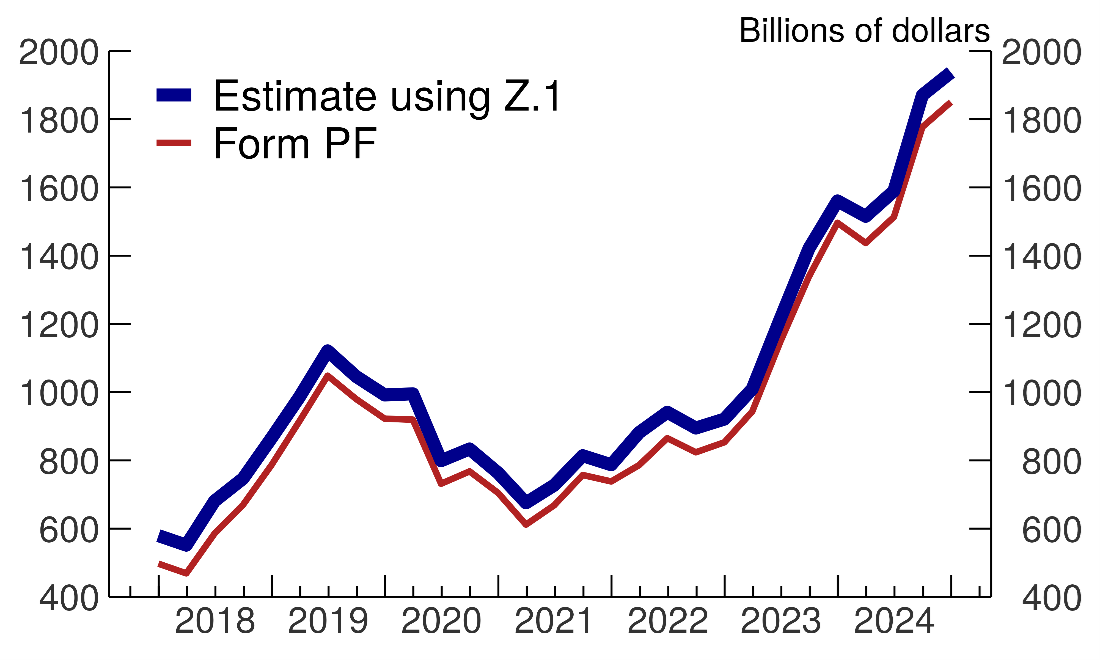
Remember way back nearer the beginning of this outrageously long article, where we said, “The Genius Act transferred stablecoin oversight to the FED from the Treasury, putting it under Trump’s control?”
This isn’t to say that the FED always gets it right, but Trump doesn’t want any agency that’s not under his direct control—even if he has no fucking idea how to run it. He also has issues with agencies publishing reports . . . like the FED’s October 15 report (linked above) that exposes elite legal-criminal enterprises.
Trump’s pick for next FED chair—Stephen Miran of the FED’s Board of Governors—who fully intends to destroy the FED, as part of trump’s effort to supplant the FED for his own gain and that of his fellow legal-criminals.
Trump’s war on the FED to lower interest rates has nothing to do—as he claims (the motherfucker lies as often as he breathes)—but with funneling even more money to the parasitic ruling class, so it can feed more freely on our dying body politic.
Summing up today’s status: private credit market liquidity crunch→illiquid means PCFs have (a lot) more loaned than they have cash→fed prints low-cost emergency money OR they find $ from the “rainy day fund” aka repo facility→ it’s empty, because the FED bought treasuries to fill the US Treasury account to the pay government (because of Trump’s tax cuts)→see repo market crisis ^^^ . . . voila! Trumponomics! (See these informative videos to unfuck clarify this terrible summary: repo market crisis, repo market meltdown, AAA-rated junk—private credit firms, the cockroach problem, private equity crisis, federal balance sheet.
AI—Electrification and Bubbles
There are only four of us here, and one of you bitches farted.
—Goethe
Okay, sorry . . . ^^^ not Goethe . . . this was actually Pam Bondi at a kaffeeklatsch with Christi Noem, Tulsi Gabbard, and Brooke Rollins. (Gabbard responded, “She who smelt it dealt it.”)
In the not-too-distant American past, the twin economic engine of the US was bi-coastal—New York and Southern California. SoCal was a defense industry giant, and NYC was its financial center. Rich people in both places tended toward political moderation, because . . . stability.
Rich kids, though, will do different shit with inherited cash, which was—and this is ridiculous simplification and time-compression—on the East Coast was engage in uninhibited speculative finance, and on the West Coast, creating a devil’s coven called Silicon Valley. ← Seventy years of history right there. These newbies are political chameleons, attaching themselves to whomever is perceived as looking out for their interests.
Remember Trump’s last inauguration?
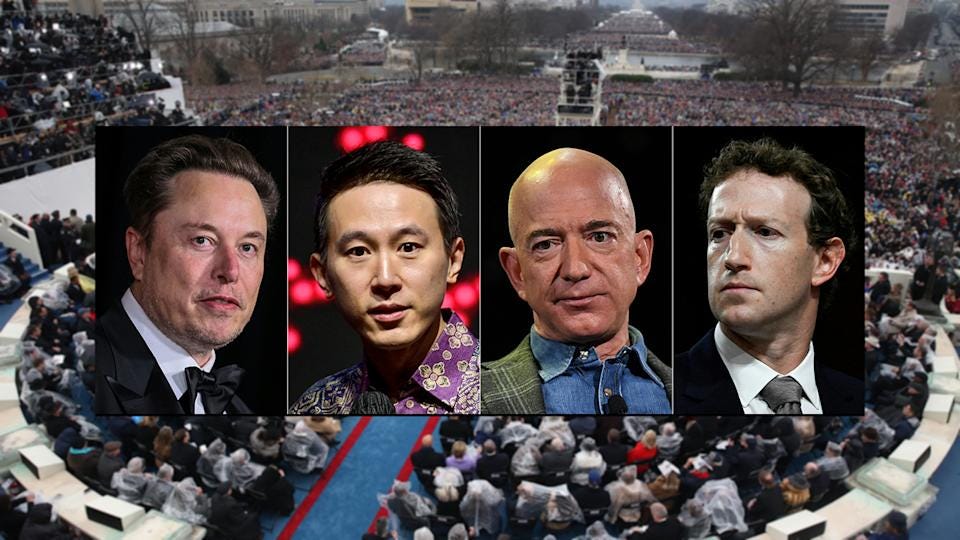
^^^ Where the fuck is an exorcist when you need one?
Returning for a moment to that liquidity thing creating that speculative frenzy thing instead of a productive thing . . . we have all that fictional value money being created for gambling investment. Where is it going?
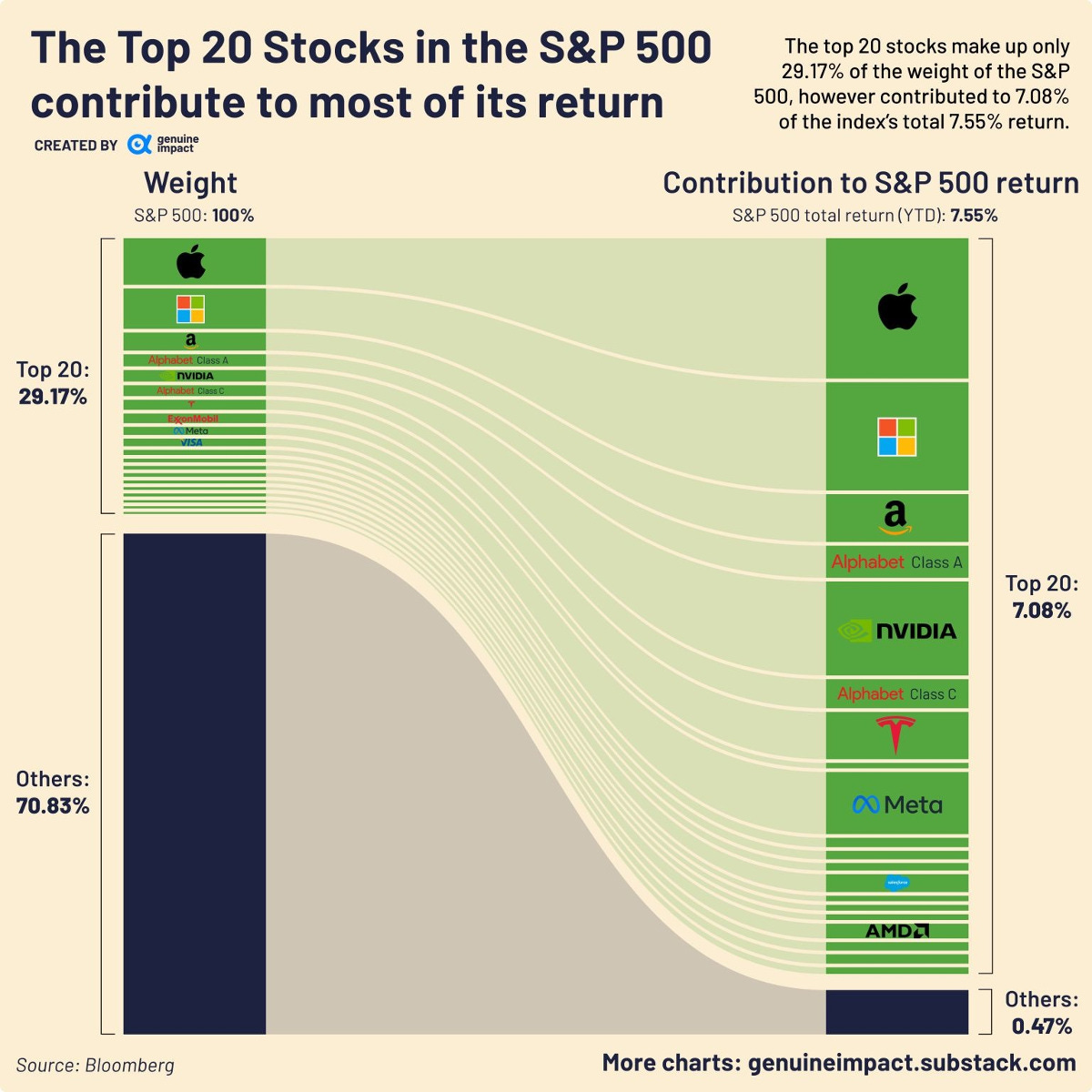
The price-to-earnings (P/E) ratio is the proportion of a company’s share price to its earnings per share (EPS).
—Goethe (not really, it’s Investopedia)
So, speculators borrow a lot of money at as low a cost as possible, then invest it in securities (stocks, bonds, derivatives, tutta quella merda) in the hope of a fast, high return. Companies sell their stock to get cash, but the stockholders can buy or sell the stock, and trends in selling and buying are more a matter of emotion than they are of rational thought, so when a stock is rising, more investors get in on the action, which bids up the price of the stock—sometimes to insane levels (there’s that tulips and condos thing again). ← burbuja
The ratio between the companies’ stock earnings and stock prices is the price-to-earnings ratio, or P/E. We won’t get into formulas or “forward” and “trailing” P/Es. Bottom line, if the PE number is high—say, above 20—you are entering a zone of whoa, fuck me with a Twinkie elevated risk. Your economic Geiger counter should be making ticking noises. Prior to the catastrophic “dot-com bubble” in 1999-2000, P/E ratios were hitting 60. Geiger counters have gone from ticks to a high-static-crackle right now, because AI investment is running at about 43 and rising.
American AI—which is advanced, scalable computing, not actual intelligence—is not yet a profitable reality, except in a few limited applications. It’s a fever dream. One that requires an immense energy infrastructure, because the data centers for this fever dream are massive entropic black holes.
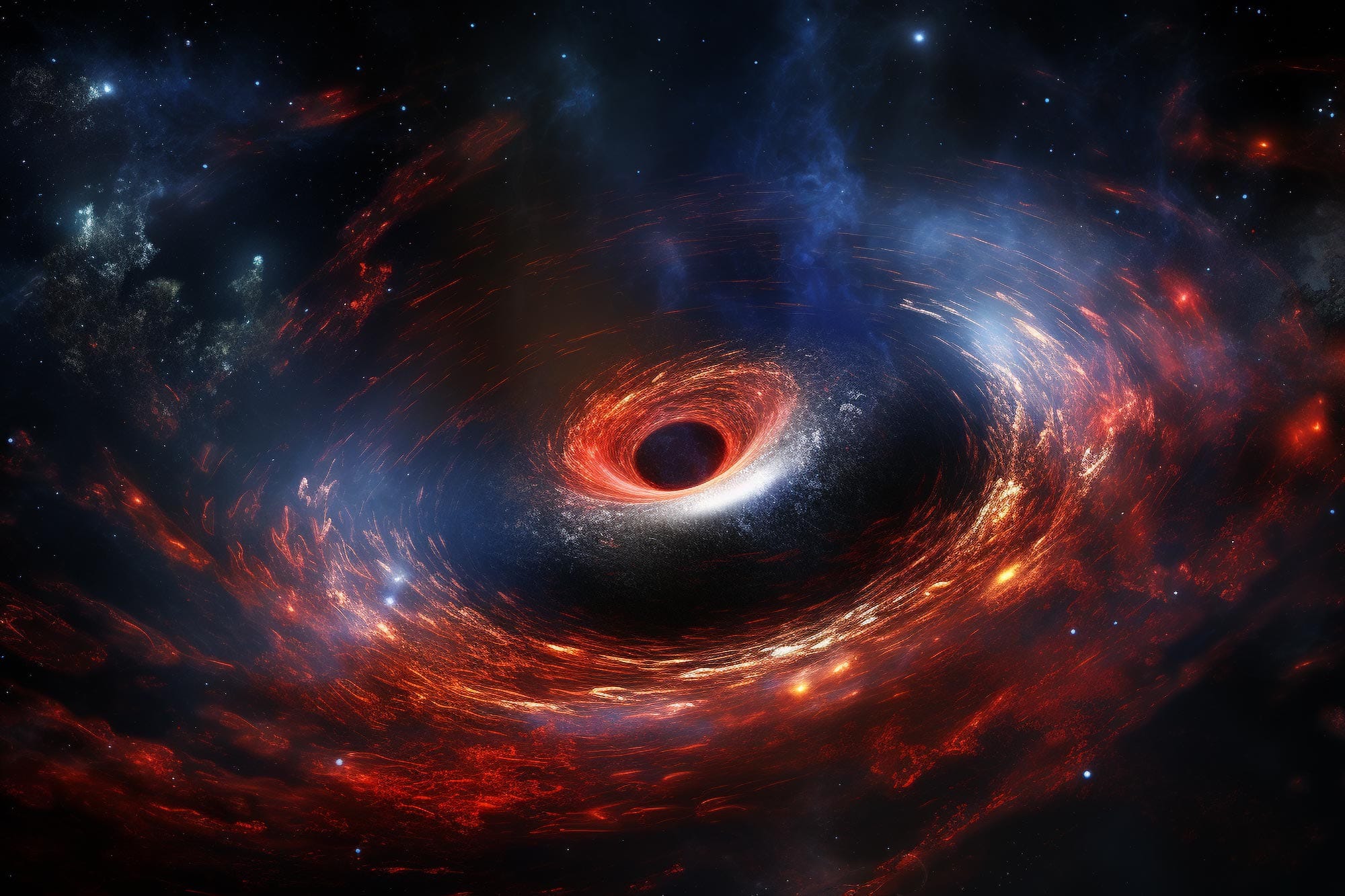
The point for now is that AI’s not a metaphorical city yet; it’s a bunch of uber-rich, geeky fascist dudes who want to build a metaphorical city, with the promise to investors that everything will turnout like a movie with the ghosts of baseball layers where “if you build it, they will come.”
(They prolly won’t. I know I sure as fuck won’t.)
As of right now, AI investment—without which the S&P 500 would suffer the fate of the Hindenburg blimp—is, shall we say, circular.

It’s a bunch of companies investing in each other’s dreams, with only one company reaping any current bennies—NVIDIA, which makes sophisticated tech hardware.
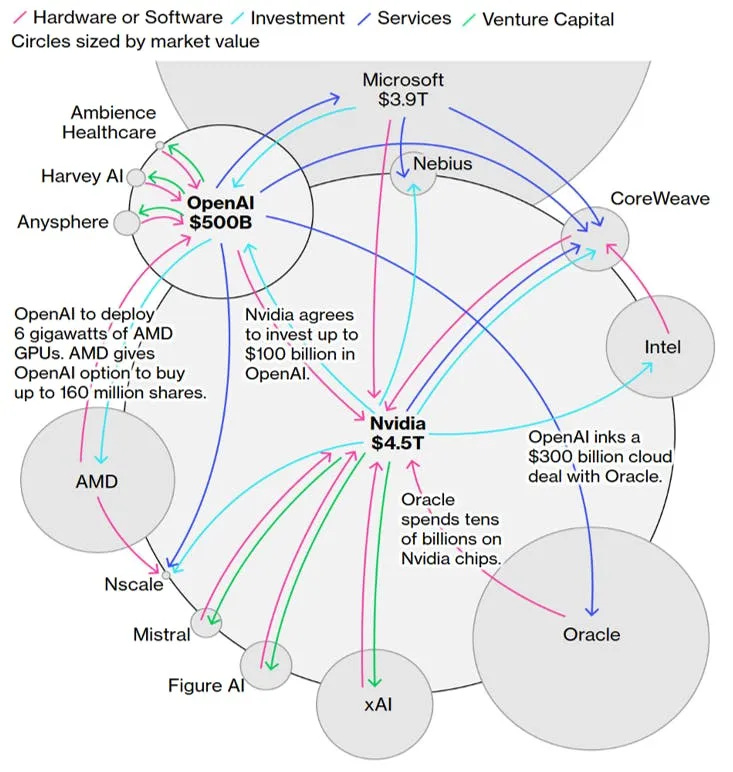
Notice anything? ^^^
The uber-rich, geeky fascist dudes have convinced the Orange Shitgibbon that this is the key to America’s re-industrialized future, and that it will lead to the Lincoln Memorial being demolished to build a Trump Memorial in the shape of his stylized golden head atop a fifty-foot golf tee with a marble statue of a stylized, muscular DT getting blown by a porn star at the base (requesting artwork).
Now, yes, one might think that if a Great Leader were frog-marching the nation into the AI industrial future that he would want to build a resilient, expanded, diversified, and expertly-coordinated energy grid to feed those entropic black holes called data centers, but if the Great Leader’s diminishing popular base is centered in and around regions that are part of the current fossil economy (coal, oil, industrial agriculture), and if his donor base were to include fossil-based industries, the Great Leader—who can neither grasp nor reconcile the contradictions—would, instead of building a resilient, expanded, diversified, and expertly-coordinated energy grid to feed those entropic black holes called data centers, attack every emergent alternative to fossil energy, and double down on supplying those entropic black holes called data centers with resources that are (1) accelerating a global crisis that doesn’t give a fuck about economics, i.e, climate catastrophe, (2) becoming scarcer and more expensive with each passing day, and which will (3) make his newly independent America Made Great Again increasingly dependent on foreign fossil hydrocarbons, from people he seems determined to piss off as early and often as possible.
sTRatEgY
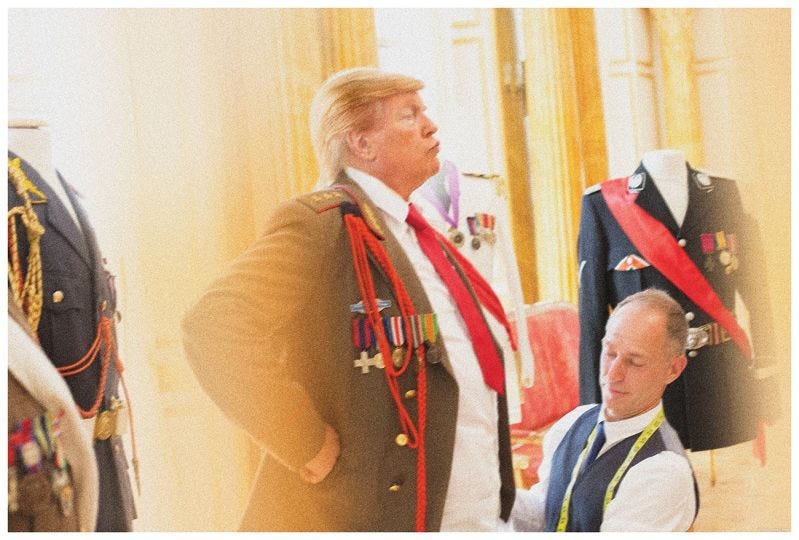
^^^ Everyone need unicorns in their lives.
Summarizing a bit, inflation in the US is the highest it’s been in 40 years. (I was a strapping young lad of 34 then, the same year I was “working” in El Salavdor with some very lovely people who moonlighted as kidnappers and death squads. Inflation didn’t affect me much, because I was on per diem.)
Tariffs are increasing costs and creating supply chain disruption. Peoples’ savings and pension funds are tied up with the securities market, which is inflating a massive bubble. Trump has declared war on his own central bank because he wants to drop interest rates, which can simultaneously accelerate inflation and the bubble (yay). He’s bought into a fantasy project that is already raising energy prices, and which will pretty much inevitably crash the grids which he’s not only not improving, but foreclosing the very technologies that could move toward any improvement, while he increases domestic vulnerability to foreign fuels. (Whew!)
Anyway . . . AI has thusfar only proven to “work” in any meaningful way the way China uses it—to improve manufacturing. It reduces the work force, of course, but China still has a lot of room for domestic development, so it can generate lots of jobs in many sectors without hitting the top of the development curve that the US hit a like 40 years ago. The US, on the other hand, does a bunch of stupid shit with it, like dancing fucking robots, while it tries to figure out applications that might actually maybe someday turn a profit, in the maybe future, sometime perhaps, in a country where manufacturing is like maybe almost 10 percent of GDP, and automating the scarce manufacturing jobs which currently exist would further inflame the peasantry.
What is it called when you have gigillions of dollars gambled invested in a sector based on unfulfillable delusions promises?

Some will point out that this is not like the dot-com bubble, because these outfits are partially capitalized from the companies’ own offshore tax havens in Ireland (and the Caymans, of course), and not just speculative capital.
True, kind of, but they’re using their own capital from offshore tax havens to do that incestuous bootstrapping thing in the graphic above. There’s a reason for the old saying about “pulling yourself up by your own bootstraps,” that is, it’s pretty hard because in order to do so you’d have to suspend the laws of gravity. ←This is a materialist analogy.
So many re-definitions, so little time.
The systemic risk is not direct, but distributed via these companies other assets. It’s not a Ponzi, because they are only jerking one another’s dicks. The twin dangers are (1) the AI bubble’s correspondence to other bubbles (or the Everything Bubble) and (2) filthy entropic black holes data centers scattered all over the country, driving up electricity prices during the worst inflation in 40 years, then turning within five to ten years into stranded assets, more lost jobs, and fistulous abandoned boils across the landscape.
NVIDIA will do okay, but basically as a Chinese asset.
What?
Permit me to explain.
Dollars and Dragons
Yep, time to talk about the old trade war again. Since the preceding article, upon which this one is built, there have been . . . developments.
We just talked about bubbles, and even mentioned the “everything bubble,” which is a combination of overvaluations pumped by cheap money and sketchy credit: AI, the stock market (fluffed by AI), the bond market, crypto, private equity, gold, commercial property, and housing. Fuckloads of assets in a single enclosed space with the same liquidity supply. (Commercial property delinquencies right now are scaring the living shit out of those in the know.)
Degenerate gamblers Investors all doing the the sweaty mambo in the magical dance hall and eyeing the exits in the belief they’ll know when the DJ’s ready to head home.

These all-time high overvaluations have “trickled down” to you and me as inflation (medical insurance, rent, food, electricity, tuition, all that shit), while the skimming payouts have “trickled up,” which we’ll come back to; but first, let’s go back to that dollar thing.
We’re not watching an everything bubble, we’re trapped inside it as it increases altitude.
The bubble is comprised of dollars, which are losing purchasing power, which is a class war thing again. Those with plenty of dollars, watching its purchasing power diminish, will exchange a bunch of dollars for real assets that ride out the valuation waves.
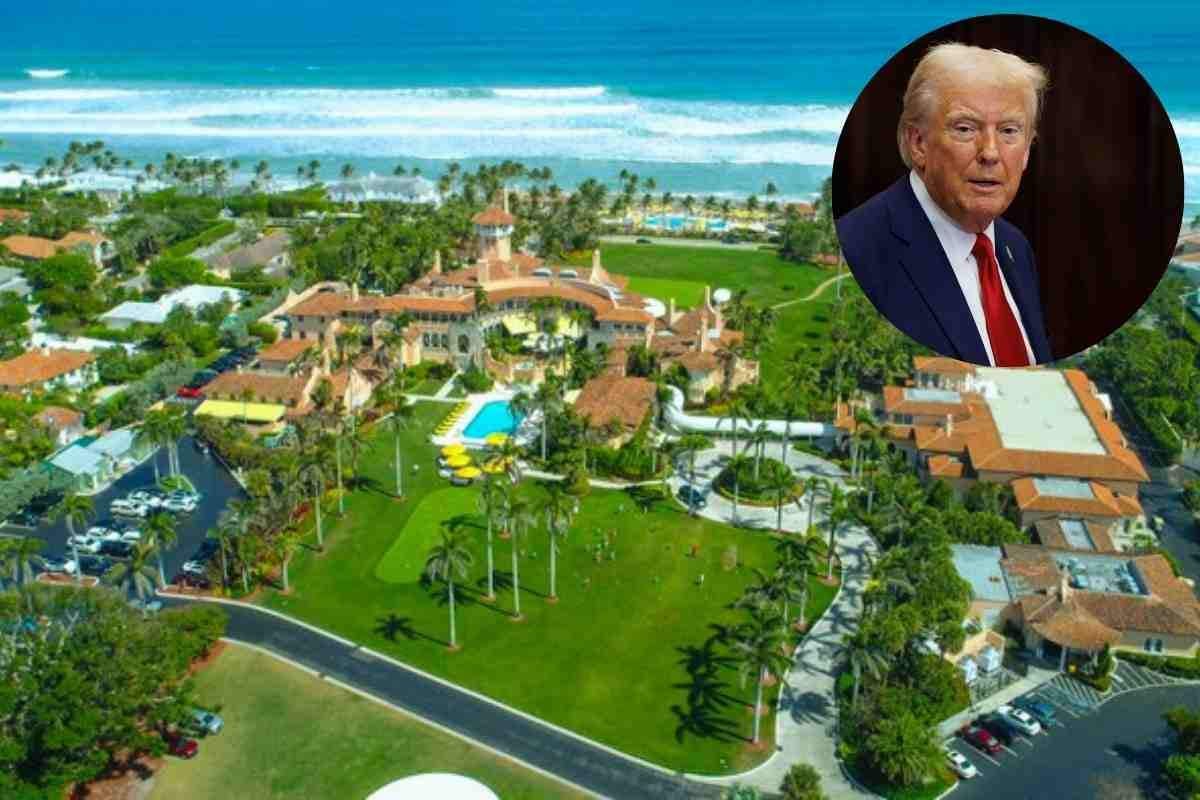
The rest of us have to hold onto dollars, because we don’t have enough to spare dollars to “invest” in real shit (real estate ^^^, gold, what-the-fuck-ever) when most of our income goes into things like eating and sleeping indoors. So what we do save continues to lose its purchasing power, and so, in the words of University of Chicago economist Gözleme Yüzü—”we are double-fucked.”
Inflation is ticking up now that the tariff tax is kicking in. Consumer demand is down. In recent weeks, Amazon cut 14,000 jobs, Target laid off 1,800, Starbucks dumped another 1,000, and GM fired 3,330 electric vehicle employees . . . and more layoffs are in the cards.
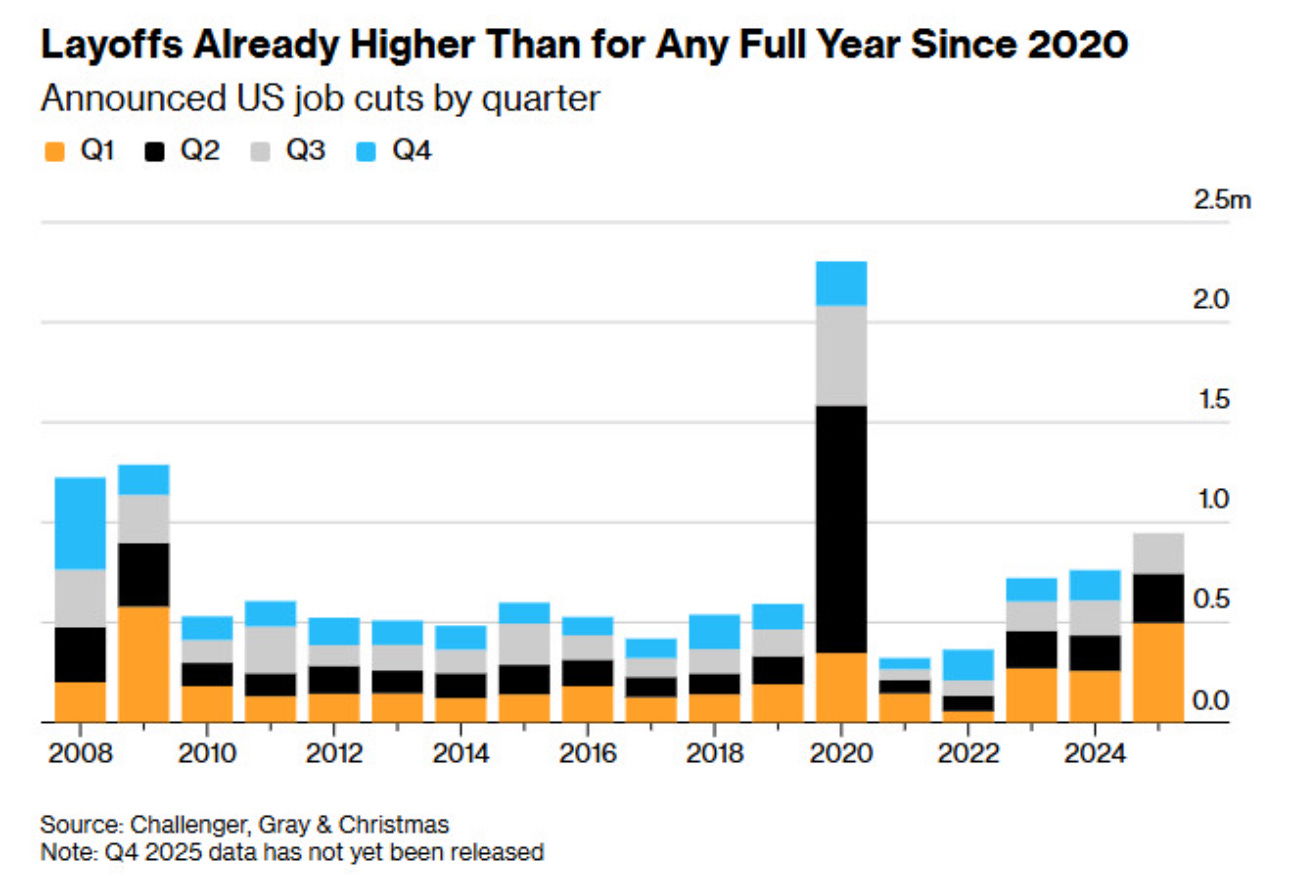
The tariff trifecta is higher consumer costs, companies dial back wages or employment, and higher priced US exports that become—sorry Donald—less competitive. This has made Trump increasingly desperate—another provocation to use lower interest rates as a Hail Mary.
“Pour some fucking money on that shit!”
The Asshole-in-Chief knows it’s all going down the toilet (as an asshole should know, eh?). He knows he’s lost control. His main hope right now is that he can hold off the worst until the Christmas shopping season, then find another Hail Mary before the midterms. Not. Going. To. Happen. (Didya catch those November 2025 elections?)
The new Affordable Care premiums are hitting now, farmers are day drinking, the warehouses are running out of pre-tariff stocks, federal workers who took they buyout have received their final checks, and people are using their credit cards to get through the government shutdown. All this shit is rolling downhill and headed like an avalanche for the small business/retail sector.
But AI stocks are going up. And Trump has a fucking ballroom that looks like a nineteenth century Romanian brothel.
Going back now to interest rates, the demand for dollar assets (let’s pan out internationally now) goes up with higher rates of return, and lowered rates reduce the desirability of dollars as an asset. Lowering rates, which is what Trump wants the FED to do (and which Chairman Powell has done, a bit), will dial down the relative value of the dollar, reducing demand, but ostensibly making it more desirable for foreigner to buy American-made stuff—which would make sense, if the cost of production inside the US were competitive with other big manufacturing countries, but it’s not, so there’s that. We’ve been here before, amirite?
So many dilemmas, so little mental horsepower.
Trump’s re-industrialization sTRatEgY has not proven a failure. It’s been a massive success . . . for China. Okay . . .
. . . it’s just fucking structurally improbable—in the world bequeathed to us by neoliberalism—for the nation issuing the world’s hegemonic currency to retain or rebuild its industrial base. (← Much longer story.) Dollar hegemony’s benefits come with that liability, but this is a really really complicated idea for The Donald. Once you open the borders to manufacturing capital, it will seek the cheapest labor, and your role defaults to becoming the world’s bank and consumer of last instance.
That toothpaste is out of the tube, Donny boy, and lays desiccated as a salted slug on the side of the sink.
The Story
Know thyself? If I knew myself I would run away.
—Goethe (really, he said that)
This is a story about how a 78-year-old brat can throw hissy-fits and fuck up multi-trillion-dollar supply chains.
The dollar system is now a debt system. For the first time since the pandemic—the one that was mismanaged by the first Trump administration—the national debt is now ripping past $38 trillion. Now, while the currency hegemon might have a lot of trouble recovering a manufacturing base, this system does allow the hegemon to get away with Himalayan ranges of debt, because it can export its inflation. (I know, I keep hammering on this.)
We posted this graphic earlier.
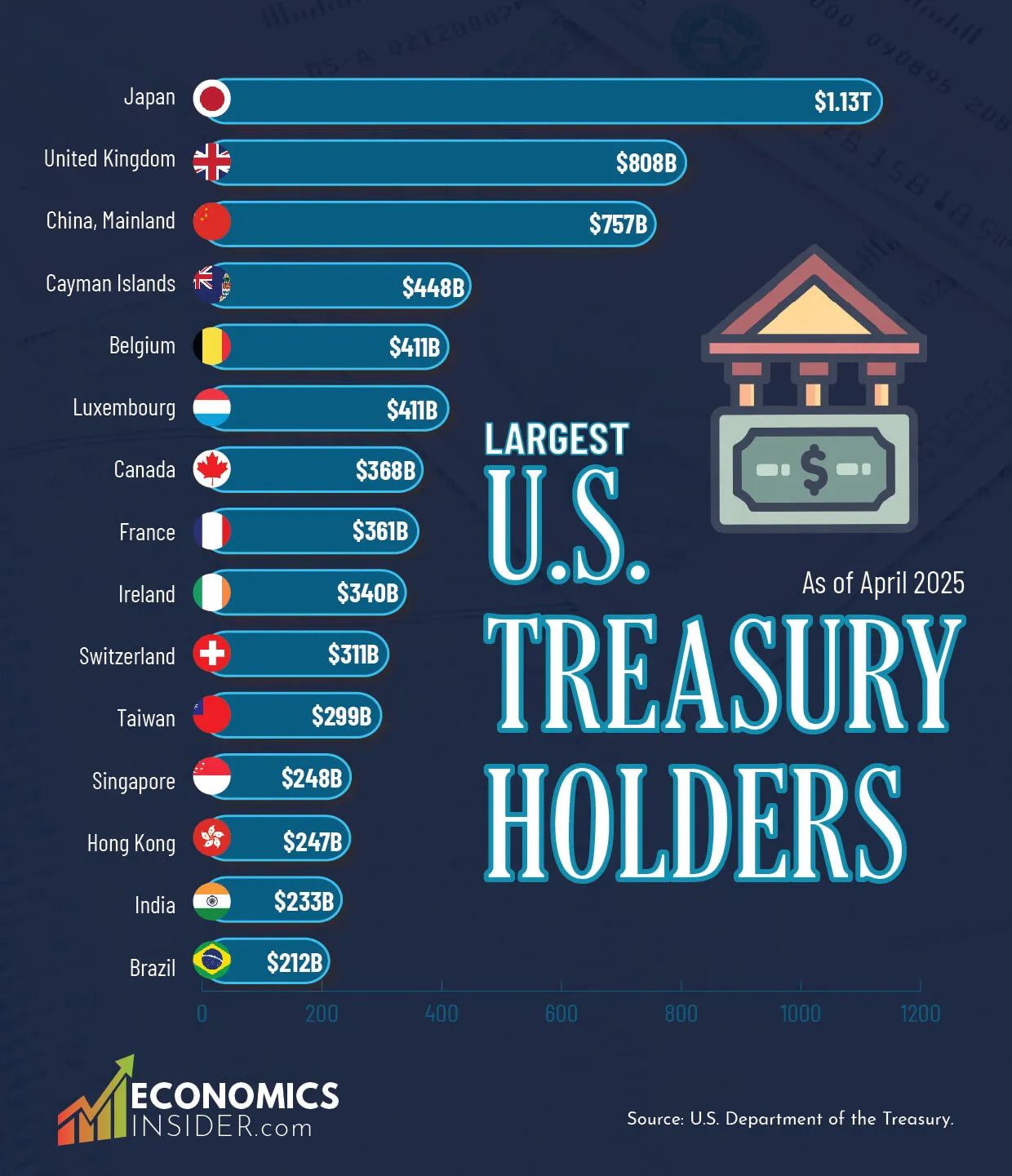
^^^ We’ll be talking about the UK and this entrapment later . . . Japan is hosed.
Bear bear in mind that the majority of treasuries are held domestically.
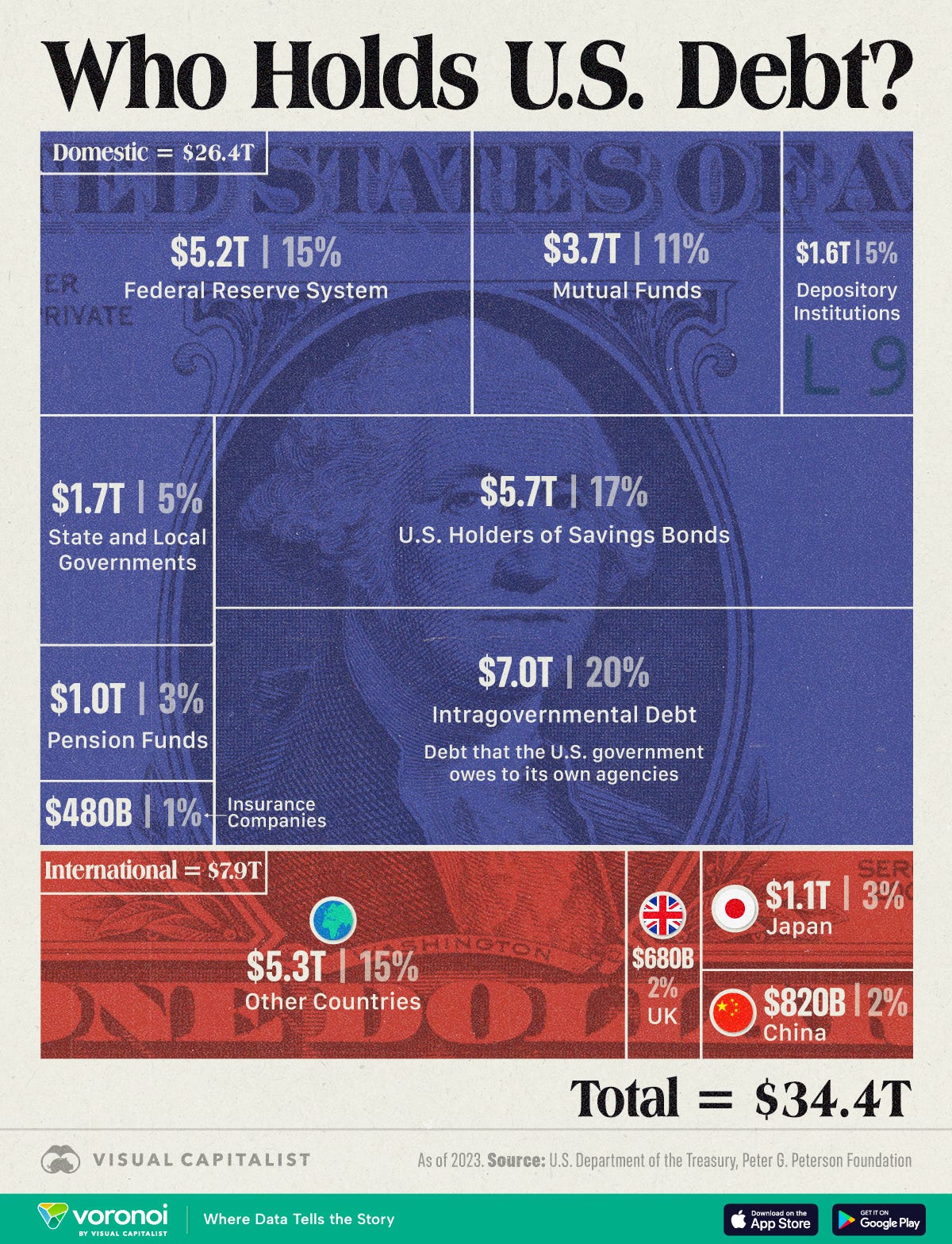
In other countries, these assets are critical hedges against currency speculators and other predatory vermin, as well as against the I’m-stupid-as-fuck contingency (Argentina, e.g.). Trade in dollars is not the same thing as debt, obviously, but there can be some overlap. (I might pay you for hamburgers every Tuesday for the next ten years with a treasury bond. I mean, it’s conceivable.)
The point is, exposure to US debt is a lot more substantial at home than abroad, except that we owe it (kind of) to ourselves (no, you’re not getting any of it, and neither am I). The real issue becomes dollar devaluation, which we’re seeing right now. Earlier this year, Trump said he wanted to devalue the dollar to improve exports. Tariffs were pat of that sTRatEgY. Back then, some economists (not the brightest) said, “Oh, that’s a pretty good idea.”
Well, it might be if the sTRatEgiStS were tying the devaluation to what are called fundamentals (the real economy apart from degenerate gamblers speculators). Guess what happens when a Chief of State hires a Treasury Secretary whose claim to fame is having lost his hedge fund $4 billion.
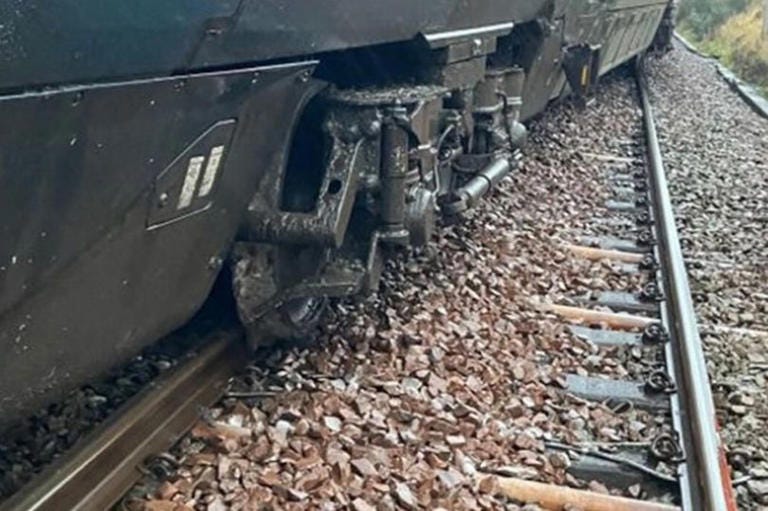
Devaluation has to be done carefully, especially if the strength of the currency is based on its perceived stability. When the dollar dropped by 11 percent in the first six months of Trump’s term, the phrase “what the fuck” was heard in about a hundred languages. (Okay, they’d been saying that ever since the tariff lunacy started to become clear, but there was a reiteration of what-the-fuck by July in response to the precipitously falling dollar.)
People started getting a clue. Trump had taken some bad acid. Worst of the worst, and there were a lot of worsts, he went after Canada, Mexico . . . and China.
That’s right, our three biggest trading partners.
All three bucked, but they were each in a different relative position vis-a-vis the US. Mexico was the weakest, and largely had to capitulate. Canada was also weak, but had a few cards to play if they mobilized nationalism and bore some pain while they pivoted their trade to Europe and Asia (which they appear to be doing very well). China, however, had been preparing for this for some years, and when it came out into the open, it was ready to live up to it’s nickname.

After all the sturm and drang that we covered in the August article, the trade war culminated in the October 30 summit between Trump and Xi Jinping in South Korea, at the end of Trump’s glitzy “Asian Tour.”
Short version: “TACO” Thursday. (Trump always chickens out.)
Trump’s Asian tour was a spectacle of manipulation—a charm offensive by Asian leaders who recognize Trump’s incurable narcissism and used pomp and flattery to hold him off. Behind the scenes, they were all saying, “Okay, how do we cut free from this turtle-brained mothefucker before his ignorant, incompetent ass drags us down with him.”
Trump did his little dance on red carpet runways, basking in the attention like a coked-up prom queen, while Asian leadership started crafting their long games.
All Trump’s “wins” now are available on Fox. In the real world, China worked him like a show dog. Sit! Good boy, he’s such a good boy! Here’s a little ego treat!
The meeting between Xi and Trump, which, subtracting interpretation time, lasted all of around 45 minutes, was not a “12 out of 10.” It was not a win, as much as a carefully planned truce, with China pulling the strings throughout Asia—a truce during which each side will endeavor to improve its strategic position.
Meanwhile, China has already moved to sign multiple bi-lateral free-trade agreements with other ASEAN nations hit by US tariffs. (Yeah, the US wants to as well, with a “poison pill”—longer story. Some countries are now on the horns of a dilemma.)
As I noted in that first article I did on Trump and international affairs, Trump plays checkers, the Russians play chess, and China plays Go.

Trump’s ego won accolades at home from the people who already kiss his sag-nasty ass.
“All hail Trump! He’s so tough, he’s so smart, his dick is as big around as a beer can!” ^^^
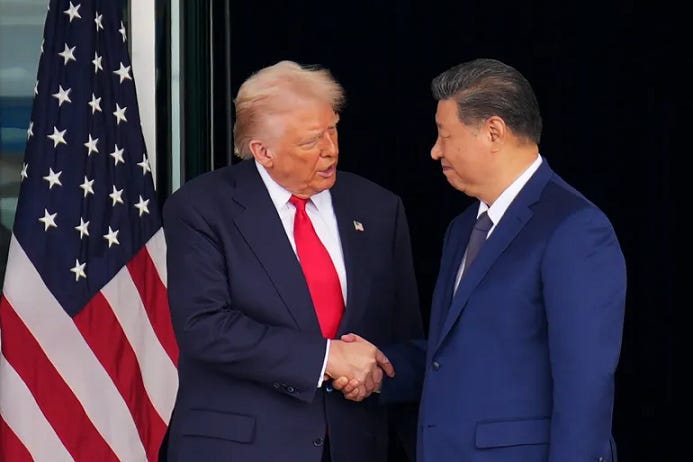
“My dick is as big around as a beer can.” ^^^ “You’re a fucking moron.” ^^^
China bought sufficient time to further improve their hand before the next meeting scheduled for April 2026. The measure of this is the fact that China hawks on both sides of the aisle had to be put back on their blood pressure meds when the meeting concluded.
The truth is, the aggressive China containment policy in effect since 2018, has failed utterly, and instead of containing China, it has isolated the US.
Xi began preparing for this meeting then, and by the time the 2025 tariff foolery began, China had already take enough preparatory measures to weather the storm quite nicely.
Since the tariff campaign started in earnest when Trump retook office, China’s GDP has grown by 4.8 percent, and it has diversified and expanded its export markets by around 4 percent overall, with a surge to 8.3 percent in September in advance of the summit in Korea. Chinese trade with the US is substantial, on or about 2.5 percent of GDP, but it’s not critical. This is not the case with American dependence on rare earths. China has the US (and the world, for that matter, by the proverbial short hairs).
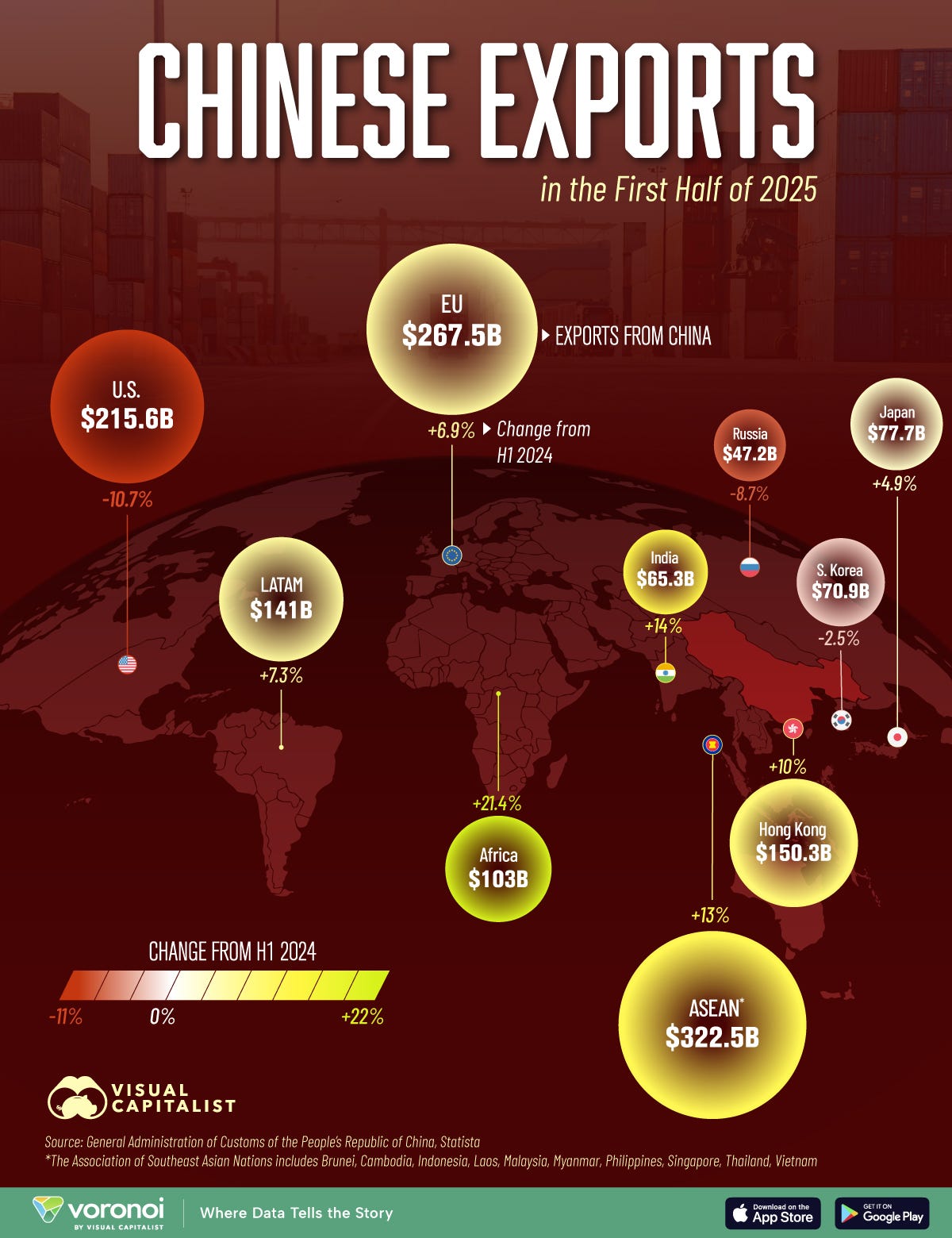
In the “deal” for US soy, China committed to buying 12 million tons this season, with a provisional promise to buy 25 million tons each year for the next two. China needed the soy anyway, and their boycott was painful—an exercise of political will that can be repeated if necessary.
The provision is that Trump keeps his word—a short sell for the Chinese, because the Orange Shitgibbon is genetically incapable of telling the truth or keeping his word. This tendency is exacerbated by the fact that, in spite of the fact that he can still shit his own name on the floor (but no longer in cursive), his condition—SBMARD—has worsened (Synaptic Big Mac and Ritalin Disorder).
(By November 1st, Trump’s ventriloquist dummy Scott Bessent was already dissing the Chinese in a Financial Times interview, possibly to throw the pissed-off China hawks a rhetorical bone. So that took, like, one day. The “poison-pill agreements” floated through ASEAN probably have China’s fingerback on rare earth trigger already.)
Our boy backs out or pivots, the deal evaporates.
And he will.
This is a small reprieve to US farmers, but not enough to pull them out of crisis. The shortage of markets was just part of the equation. Tariffs and inflation have increased production costs, i.e., tariffed feedstocks for machinery production (steel, aluminum copper, e.g.), tariffs on fertilizers, and debt dollars flooding the market only to hemorrhage purchasing power. If Trump reneges and pulls some other shit—which is a 110 percent probability—Brazil, with its seasonal advantages, can ramp up soy production quite rapidly. US Farmers haven’t forgotten that the Chinese soy boycott was created by Trump in the first place.
(I think we’ve mentioned . . . inflation is now at its highest rate in 40 years.)
Trump’s China-hawk Commerce minister—yes, Nutlick—who had massive ties to China before he was selected by Trump and confirmed by the Republican milk-liver Senate to fuck up the Commerce Department, was the architect of something called the Bureau of Industry & Security (BIS) Affiliates Rule (“50% rule”). This rule sanctions any entity in which 50 percent of its ownership is by anyone on the US restricted entities list; but the definition of “aggregate” here is expanded out beyond direct ownership to input entities in such a way as to give the US a free hand in arbitrarily slapping on sanctions. Here’s a good video tutorial on this rule. Long story short, this “rule” is what triggered the Chinese lockdown of rare earths to remind Trump and his clown cabinet who held what cards in Trump’s unnecessary and destructive trade war.
The 50% rule is what led the Dutch, in avoiding Nutlick’s trade restrictions, to seize Nexperia, a Chinese automotive chip maker in the Netherlands that employed hundreds in Netherlands, Germany, and the UK.
Nexperia controlled 25 percent of the world’s supply of legacy chips, and pretty much all of Europe.
The problem was that Nexperia sent 70 percent of its products back to China for final processing. The same China from whom they’d just seized Nexperia. ← Smooth move, y’all.
China retaliated with a big fuck-yourself to Nexperia’s new Dutch “owners,” and shut down the legacy chip pipeline. So what the Dutch government—if it could be called that—accomplished was shutting down Nexperia during an ongoing European economic and political crisis. Just days ago, Financial Times warned that Volvo and Volkswagen were on the verge of shutting down multiple plants. Volkswagen has already lost €1.3 billion so far in 2025. (More on Europe as we move along.) American, Canadian, Mexican plants are facing similar shutdowns. Some US automakers are saying three weeks to shutdown.
Go Nutlick! Go Dutch! Go Trump!
Europe is still in turmoil over the Nexperia blunder. (That’s what you get when you bow down to the Golden Calf Shitgibbon.)
One key agreement coming out of The Meeting was that in exchange for a one-year rare earth reprieve, the US will delay Lutnik’s 50% rule. (On this, the Chinese had a firm win.)
The problem for anyone associated with Nexperia is that this is a fait accompli ← that’s the French term for “Oh shit!” when you drop your phone in the port-a-potty.
The Truce also lowered reciprocally-raised port fees. (TACO, TACO, TACO—Tacos all the way down.) And Trump shaved ten percent off of tariffs on Chinese goods—which even with the tariffs are still cheaper than the US could manufacture . . . even if they had the factories . . . which we don’t. ← So there’s that.
The great tariffs gambit in the name of punishing countries that took advantage of America, of pushing for non-trade policy change, and of re-industrialising the US begins to crumble. It was ill-conceived policy, driven by nostalgia and a simpleton’s view of the world; and reality—of supply chain complexities and the fundamental shift in the balance of global power—ultimately renders them a costly fancy. Trade wars don’t create winners, but some lose a lot more than others.
Amidst a wide range of walk-backs by the U.S. on tariffs (Trump’s signature economic-cum-foreign policy tool; his “favourite word”), together with China also rescinding the reciprocal measures; a cessation of the fees to be levied on Chinese-made ships (and China’s reciprocal response); US walk-backs on extending sanctions lists (which catalysed the rare earth exports licensing measures); and a resumption of agricultural trade, China has agreed to “suspend the implementation of relevant export control measures announced on Oct. 9 for one year and will study and refine specific plans”.
What this means is that the measures can and will come into effect in due course, after implementation consultation with stakeholders. This is per my earlier expectation. In effect, China holds the governor even tighter, and the U.S. knows this.
No change to the semiconductor restrictions. I suspect this is of considerably lesser interest to China these days, as its own indigenous ecosystem has made sufficient strides for all to be quietly confident that limited access to U.S. technology will not be an impediment to AI sector growth.
—Warwick Powell
At the heart of this kerfuffle is a chip war, which is an AI thing. Whether one believes AI is actual intelligence (I don’t), the technology is part of an arms race—figuratively in economics and literally in making armaments. The US is ahead in technological design, and China is far ahead in the applications. In the US, its used to make weapons, turn students into lazy fucking cheats, create deepfake porn, and run up ridiculous stock valuations. In China, it’s used to make weapons, improve infrastructure, and streamline industrial production.
American train ^^^ (top speed 150 mph)
Chinese train ^^^ (top speed, 280 mph)
The top American chip designers are in the US—NVIDIA and AMC. Why did I emphasize designers? Well, because they don’t actually make the chips. What they own is intellectual property. The vast majority of chip manufacturing is with one company, TSMC, located in (drum roll please) Taiwan—Taiwan Semiconductor, TSMC . . . get it? (Yeah, Samsung makes a few, too, but they’re not even in the same league.)
So . . . strategic bottleneck? Make a note: it would take ten years and hundreds of billions of dollars to replicate TSMC, because advanced chip making is not lining up a bunch of drill presses and mills in a rat-infested warehouse and hiring a bunch of high school dropouts. Current Trump-plans to establish a facility in Arizona “in a few short years” (as if some years are only six-months and others fifteen) is one-percent plan and 99 percent wish-casting.
(Many people think that China’s secret weapon is rare earths. China’s real secret weapon is 3.57 million STEM graduates a year in a country that doesn’t allow grade inflation. In the last ten years, China has produced more STEM grads than the total population of Texas.)
The designer-stock behemoth is NVIDIA. NVIDIA is now over-valued at more than $5 trillion—more than the GDP of Germany.
Think—China’s GDP is $19.4 trillion, the US, $30.6 trillion. Is one company’s real value one-sixth of the entire US? Of course it’s not—this is what is known in the trade as an MFB, or massive fucking bubble. We are back to swapping a tulip for a four-bedroom condo again. Since the Trump stupidities began, NVIDIA’s market share in China went from 95 percent to . . . well, zilch, zero, zip, and some other z-words that mean nada goddamn thing. The danger here is that this could shake the irrational faith of greedy, credulous investors.
Just to remind us of the context, China wants NVIDIA products because they’re the best out there. The ludicrously simplified version is, the smaller the better. Let’s just measure the sophistication of the “chip” by the size of the “metal–oxide–semiconductor field-effect transistor” in nanometers, the smaller the better. (Does that help?) Okay in 2001, the best was 130nm. In 2020, it was 28nm. By 2022, the best was 3nm—which remains the best out there. NVIDIA just announced the “Blackwell chip,” which I think is going to be 3nm. Whatever . . . techies are welcome to explain and correct.
And these aren’t really chips, but complex processing units—again, just trying to simplify for myself and others as a way of getting the outlines.
The Agreement will open the way for NVIDIA to start selling H20 and MI308 units again into China. These are good, but Trump’s export restrictions required them to be dumbed down (41% fewer cores, and 28% lower performance). NVIDIA wants to sell the good version now. Which is good for NVIDIA, because they’re trying to stave off an AI bubble burst. (For now, the China hawks, like Jefe Gusanito Marco Rubio, are saying noooooooooooo.)
The trick is, NVIDIA has to kick back 15% to Trump’s baksheesh criminal enterprise government.
During this truce, China and the US will be preparing for the next confrontation, but China has the advantage, especially in technology. Huawei and SMIC have already patented 3nm-class tech, and all that remains is development of the production process, where they’re catching up quickly. Beijing can close “the innovation gap” faster than the US can innovate, because (1) the state is stable and not in the hands of economic vultures and whackadoodle dipshits, (2) China has the supply chains—especially rare earths, and (3) China has all those STEM graduates—41 percent of all its tertiary graduates.
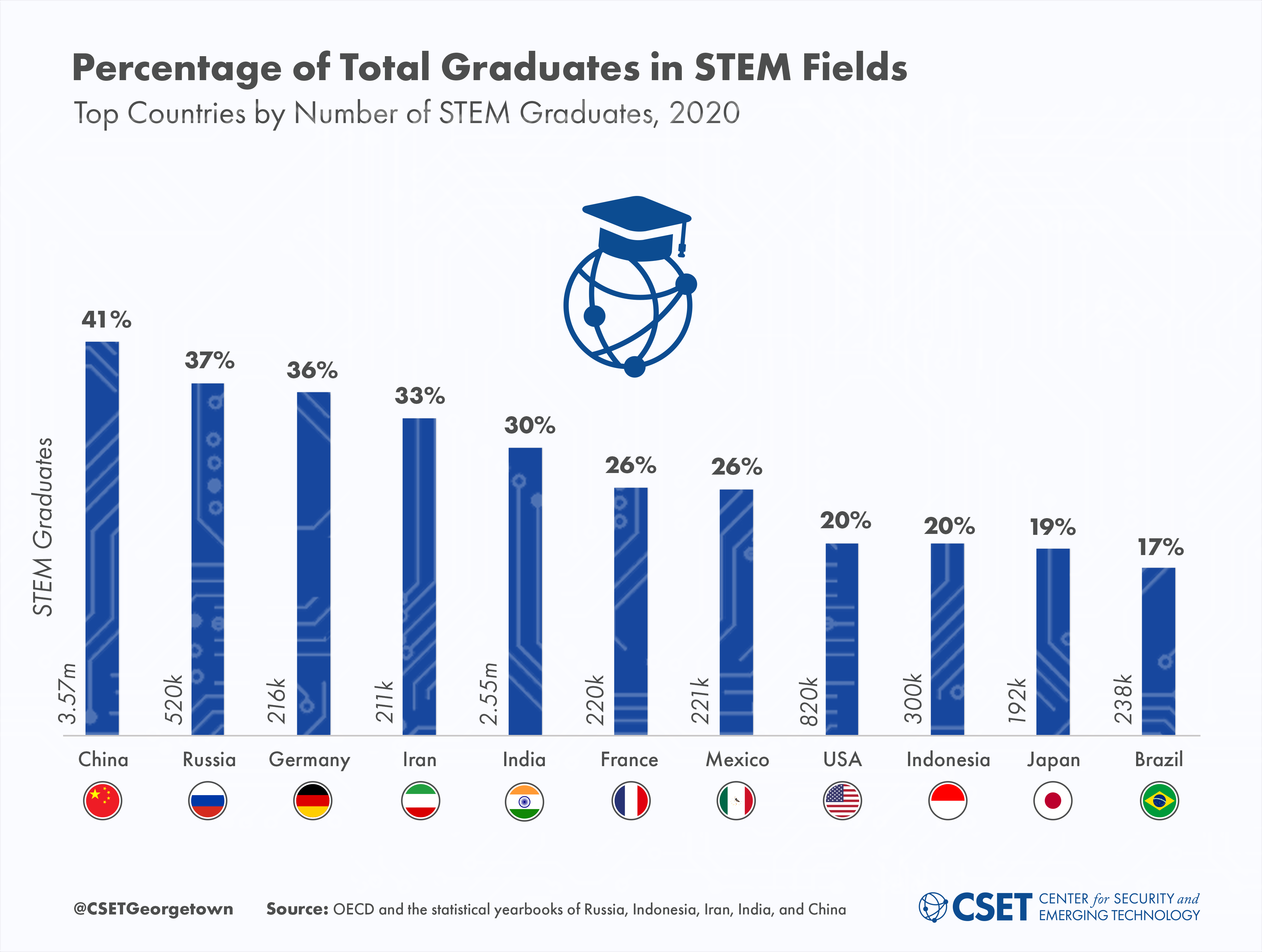
NVIDIA is already facing its next crisis as China has ordered its own industries to avoid the dumbed-down NVIDIA chips, a bit of arm-twisting that will be passed from China to NVIDIA to the US government.
Trump is scaring off the best STEM students in the US (foreigners), and attacking his research universities while he bankrupts America’s research universities because they acknowledge the existence of carbon molecules, a belief he calls Marxism. (A substantial portion of the Federal Reserve’s non-treasury assets are student loans, just FYI, but he hasn’t put this together yet either.)
China Won
“Overcapacity in China is not a failure; it’s a strategy.”
—Najma Minhas
The October truce is a tactical ceasefire in a larger war that China has already won. Since 2018, when the war began in earnest, China set upon a strategy to increase growth in every strategic sector, even if it reduced profit.
Let’s get military nonsense out of the way. China has ramped up its own weapons R&D and manufacturing by a factor of six. It’s already known by the American military establishment that a war with China would be impossible to win. The munitions required for a hypothetical engagement in the Strait of Taiwan already exceed the US’s total inventory. The Center for Strategic and International Studies has also shown that US industrial capacity for a wartime “surge” are inadequate to the task. Ain’t gonna be no war. Shelf that shit (and that silly Bigelow film, A House of Dynamite).
Since the trade war started, China has signed hundreds of trade deals with Southeast Asia, South America, Africa, and the Middle East.
To offset export reductions to the US, it increased exports to Africa by 42 percent, in South America by 13 percent, in Asia by 14 percent, even in Europe by 7 percent. Chinese exports since the trade war have risen; since the Trump tariffs, they have surged.

They are still shipping Chinese goods to the US via trans-shipment, wherein China produces high-value components, then leaves final assembly to Taiwan, Thailand, Malaysia, Singapore, and Vietnam, where the labels go on.
It has signed trade agreements with most of Africa for tariff-free access to Chinese goods.
China dominates the world market in EVs, shipbuilding, wind energy technology, and solar panels.
China, through the Belt and Road Initiative, has dozens of large scale projects that not only use Chinese feedstocks, but are financed with Chinese loans.
China is now the number one trading partner with Africa, ASEAN, South America, and the strategically-critical Gulf States. We can safely say the petrodollar era is coming to a close, as Venezuela, Saudi Arabia, and Russia are all trading in yuan.
In China—as we’ve noted, but it needs reminding—policy directs capital, using subsidized credit, highly developed low-cost energy grids geographically concentrated with industry, energy discounts, tax discounts, and strategic loans.
In 2020, 25 percent of China’s trade was settled in yuan. By 2025, that number rose to 35 percent ($6.2 trillion). Fifty percent of cross-border trade—with Russia, North Korea, Mongolia, Kazakhstan, Kyrgyzstan, Tajikistan, Afghanistan, Pakistan, India, Nepal, Bhutan, Myanmar, Laos, and Vietnam—is now settled in yuan.
Yuan trades—which inoculate nations against US sanctions—have quadrupled in the last three years.
In 2024, yuan trades momentarily surpassed the Euro, and given Europe’s current situation, this will become a permanent reality within two years.
China’s deposits, loans, and bond sales have quadrupled in three years to $480 billion.
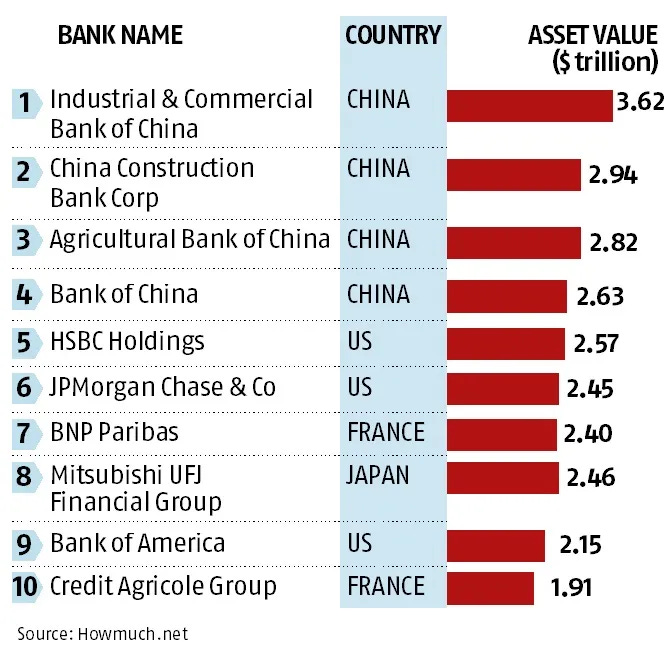
Many of those loans have been passed through the strategic Belt and Road Initiative, who in turn buy Chinese feedstocks to build airports, seaports, highways, and railways.
China has swap lines with 40 central banks, the US has five.
Yes, the dollar is still dominant, if size alone determines domination (it doesn’t). The yuan may only be 3.5 percent of global payments, 6 percent of trade finance, and 2.18 percent of global exchange reserve, buy four years ago, those numbers were 2 percent, 2 percent, and one percent. It ain’t all about size; it’s about defensive capacity, position, and momentum.
The four preconditions of internationalization are a (1) large enough economic footprint—china has with 17 percent of global market, (2) a big market in treasuries (like for bank reserves)—china isn’t there yet but it’s getting there fast, (3) a stable currency—the yuan is all of that, and (4) “network effect,” or a lot of people who have already started using the currency and have become comfortable with it—done. China’s strategy is to build material assets abroad—big things, like infrastructure and factories—to give foreign investors things in which they can invest using the yuan (BRICS and the Belt and Road Initiative). Of course, we haven’t spoken of speculative instruments, and China is expanding its capital markets, but (wisely) not allowing the productive sector to be over-exposed to speculative risks.
American too-big-too-fail banks, however, hold more than $203 trillion in dollar-denominated derivatives (a big chunk of the Everything Bubble).
So the numerical dominance of the dollar is, to a substantial degree, a dangerous illusion, and dollar is bleeding purchasing power like a stuck pig. Investment in yuan is investment in solar panels or a port. Investing in dollars is far more frequently sending your money to chase fictional value across a speculative minefield.
This speculative exposure exists alongside an insane level of debt, likely as high as $40 trillion by the time I go to press with this; and the same situation prevails in the UK and Europe. While Trump is tilting at China, we are looking at what, at some point, and soon, will be currency defaults. This mad money printing started in 2008 to bail out speculators who should have gone directly to the wall, and they’ve been kicking the can down the road ever since. Initially, this world-historic inflationary potential was fenced off within the speculative economy, but it’s leaked now, even as Trump’s government runs the presses like chimps on ketamine. When the bubble pops, we can count on our misleadership to bail the speculators out again, pouring gasoline on the fires of inflation (during a period of stagnation)—then the defaults will hit.
In 2008, the world economy—and the US in particular—was bailed out by China. That won’t happen this time. China will bail out BRICS and let the rest stew in their juices. After a brief period of hardship—because they’ll be hammered, too—we’ll be living in a new world order, where the US will become a stagnant economic backwater.
What can we count on Trump to do? Well, he’s already doing it. He’s lining his pockets with the Stablecoin scam, and when that scheme hits the end of its life expectancy, he’s going to let everyone else go straight to hell. And not even the Democrats, joined at the hip with speculators, will be able yo do the right thing.
What might be the kright thing? Allow me to speculate . . . hmmm . . .
. . . let Wall Street die in the conflagration, deny them Chapter 11, erase the value, bail out the public from the bottom up, re-stabilize the entire banking system to more closely resemble China, build a giant bonfire in Washington to burn the excess, and imprison out top 10,000 speculators with roommates named Butch, Bakha-Bakha, and Rollo.
China has already won. Those who play checkers think victory is jumping a piece and taking it off the board. Those who play chess think victory is trapping the king. Those who play Go know victory is all about staking out positions.
There are still hyperventilating commentators who claim that China want to replace the dollar system with yuan, and that this signals victory. This is, in the words of Harvard economist Dr. Smegma Bilgewater, “horseshit.” China is fine with dollar reserves (some of my best friends are dollars) just not dollar hegemony. The yuan is not seeking hegemony, but a strong place in . . . the multipolar world. It has already accomplished the first step toward that goal.
Trump is jumping his own pieces in Europe. China is talking control of the big board one location at a time. Russia is playing chess against the United States, with the king being Ukraine.
Russia-China-Europe
“I gagged on my toothbrush.”
—Goethe (okay, I lied again)
In other developments at The Meeting, Trump hinted at backing off the blacklisting of Rosneft and Lukoil, Russia’s oil giants. As this is written, this seem very unlikely. The intent of the sanctions is to pressure Russia to settle the Ukraine war so Trump can claim credit and demand a Nobel Peace Prize (his white whale); but it’s going to work about as well as my chicken-wire canoe.
The country most damaged by the latest sanctions would have been Germany, so the US granted an exception. (When you look at Trump’s actual tariff regime in detail, it’s riddled with exceptions.)
Obviously, Russian energy is a geopolitical issue, and this issue involves Europe in a big way, which is interesting, because basically everything the EU leadership is doing right now—joined at the hip with its American ringmaster—is contrary to Europe’s own interests.
We need a dab of historical context. Listen for the bells . . . one, two, and three, that mean bi-polar, uni-polar, multi-polar.
During the Cold War, the world was (DING) bi-polar: The US v. the Soviet Union. The post-Soviet neoliberal world was (DING DING) uni-polar. The US enjoyed a few years of unprecedented global dominance, secured by its powerful military and the hegemonic petro-dollar.
In the background, however, neoliberal financialization was already doing what it does—serial speculative crashes followed by society-crushing bailouts. Let’s think here about the Asian financial crisis of 1997.
China, even as heavily linked as it was to the affected economies, survived the crisis, maintaining an annual growth rate at or above 8 percent in the years during and after. It’s a complex story (see the preceding link), but the crux of it was that China refused to let its currency, the RMB or yuan, be convertible for elite degenerate gambling . . . capital account transactions . . . currency speculation.
“Experts” in the West chattered about it, but most missed the significance. China, for all its missteps before and after, was tooling up for the future, and they recognized the dangers of unchecked finacialization as a fundamental weakness in the West. Since then, China has played a long game, and the result—now accelerated by Trumponomics—is transition into a (DING DING DING) multi-polar world.
In the uni-polar world after the collapse of the Soviet Union, Europe—already joined to the US since the end of World War II—maintained a relatively high standard of living, supported by strong social democratic social programs, in part because its military expenditures were comparatively low. The US and Europe chose, even afger the fall of the Soviet Union, to continue with the North Atlantic Treaty Organization (NATO), a military “alliance” that meant the US would maintain a strong physical presence in Western Europe (which continued eyeing the East). (We have a son in the Army who is stationed in Stuttgart right now.)
What connects Europe to China is Russia . . . geographically.
And energetically.
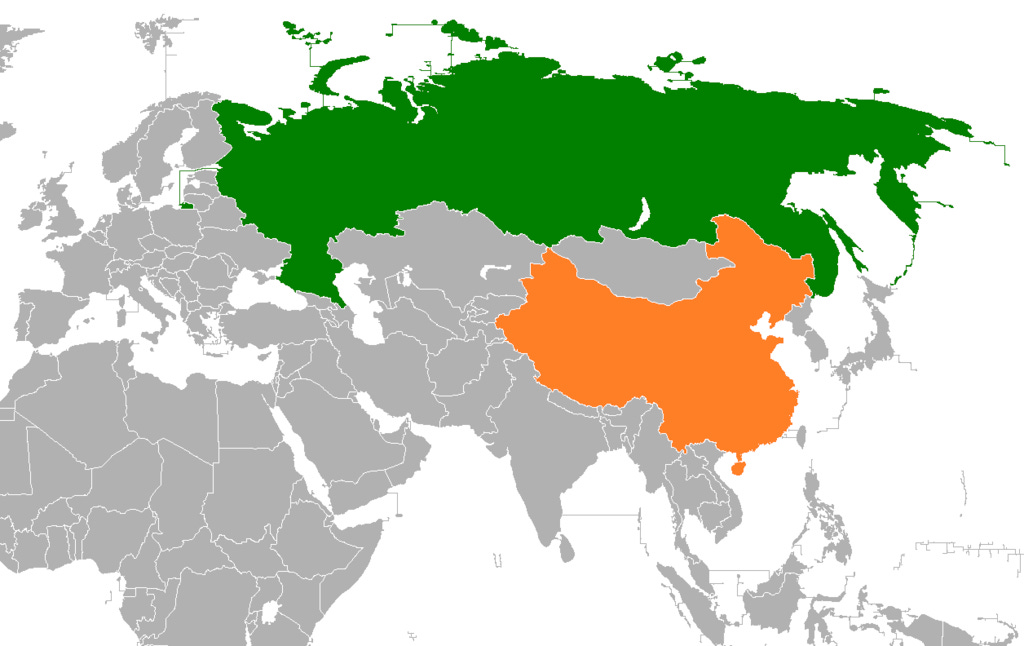
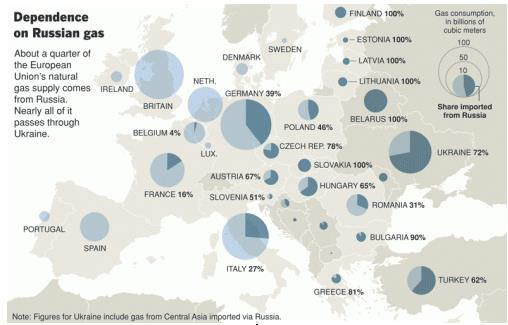
2012 figures ^^^
When the Asian Financial Crisis hit, China-Russia trade amounted to around $8 billion a year. Last year, it was $200 billion. When Russia was caught in the 2008-9 financial crisis, China began loaning money to Russia. This was a steady drip—like an IV—until 2013, when China opened the stopcocks. Trade had already been increasing steeply between the two countries since 2003, but in 2013—during Obama’s “pivot” to containing China—China began bankrolling Russia’s industries and military. China has been Russia’s biggest trading partner since 2010. In this process, China became Russia’s customer for oil, mineral fuels, and agricultural products. In return, Russia imports Chinese machinery, clothing, and chemicals.
Russia and China are co-members of the BRICS economic alliance and the Shanghai Cooperation Organization (SCO). They trade and conduct currency swaps in yuan and rubles. They have a trans-border oil pipeline, to which they are adding additional ones.
Energy excursus
During the Reagan administration, one key strategy to break the Soviet Union, in collaboration with the Saudis, was to flood the market with cheap oil and dry up Russia’s development revenues. It actually worked.
The Trump administration has fallen on a kind of child’s version of energy war to break up BRICS, but BRICS is not the Soviet Union (it’s not even a nation), Trump’s US is not Reagan’s, the petro-dollar is disappearing, and the China-Russia compact has secured positions throughout the “global south.”
By Trump’s lights (haa!), BRICS is a threat to dollar hegemony (yes, the same dollar Trump has massively devalued). One of several problems with this notion is that many non-BRICS countries are diversifying their central bank reserves, precisely because of Trump. Another problem is that whatever pressure the US can apply (the Rosneft/Lukoil sanctions, e.g.), those pressures are not commensurate with what these countries will lose if they quit using Russian hydrocarbons. We’re talking about the two biggest countries on earth, the fourth most populous nation on earth (Indonesia), the biggest nation in South America, three other oil giants (Iran, United Arab Emirates, and Saudi Arabia), along with South Africa and Ethiopia.
(The current Trump claim that Modi has agreed not to purchase Russian oil anymore is utter drivel . . . even if this were pretended, Russia shares a border with China, and China shares a border with India, which spells “trans-shipment.”)
Trumponomics—sanctions and a demand that everyone in the world pay five times more for US energy (even as expensive shale-oil in the US has peaked and headed into its irreversible decline).
We’ll wait with bated breath for the world’s response.
See this short video on “oil contango.” Summary: tariffs slow economy→weak demand for overproduced domestic oil (which is losing money)→”oil contango”→grim employment outlook.
sTRatEgY.
End energy excursus
China and Russia are, for the foreseeable future, inseparable. This has implications for the whole world, because the whole world depends on Chinese trade—including the US—and in Europe, it matters because, until recently, Europe thrived on the relatively cheap energy it bought from Russia.
(1) The world depends on China.
(2) Europe depends on the US and Russia.
(3) China and Russia are one.
This ^^^ is pretty complicated stuff for one Donald J. Trump.
Along comes February 24, 2022, during Biden’s term, when Russia—and we’ll leave aside the contentious interpretations of causes (see my earlier piece)—invades southeastern Ukraine. The US/NATO (mostly the US) rushes into the breach with hundreds of billions in weapons—a boon to the US weapons industry, but it eventually leads to today’s critical arms shortages—one reason the rare earth restrictions brought Trump to his knees. Europe goes along with the US, in spirit, but continues to rely on Russian fuel, especially natural gas.
In September 2022, Baltic Sea saboteurs blow up the Nord Stream underwater pipeline that pumps natural gas from Russia to Europe. At present, it “appears” that “renegade” members of the Ukrainian military committed the act of economic sabotage, which ended the supply of 1.942 trillion cubic feet of gas per year, headed for Germany, and from there to the rest of Western Europe—40 percent of the total. Ukrainians were mad at Russia, so they . . . fucked over Europe? Many people—including this author—suspect a US hand in what was a technically-sophisticated, clandestine, deep-water operation that would have been impossible challenging for independent Ukrainian operators acting alone.
Natural gas prices in Europe jumped 300 percent; and household energy bills across Europe went up by 45 percent, because they had to pivot to waaaay more expensive trans-Atlantic American liquefied natural gas (LNG). In fact, this one act raised gas prices worldwide. (Oh yeah, it also released hundreds of thousands of tons of methane—our most potent greenhouse gas.)
Increased reliance on US LNG also increased Europe’s subservience to dependency upon the United States.
Russia diverted its natural gas to China and other Asian markets.
Europe’s energy crisis inflamed its economic crisis, which has exacerbated a political crisis. Let’s get some background. I’ve dropped in a few images to help.
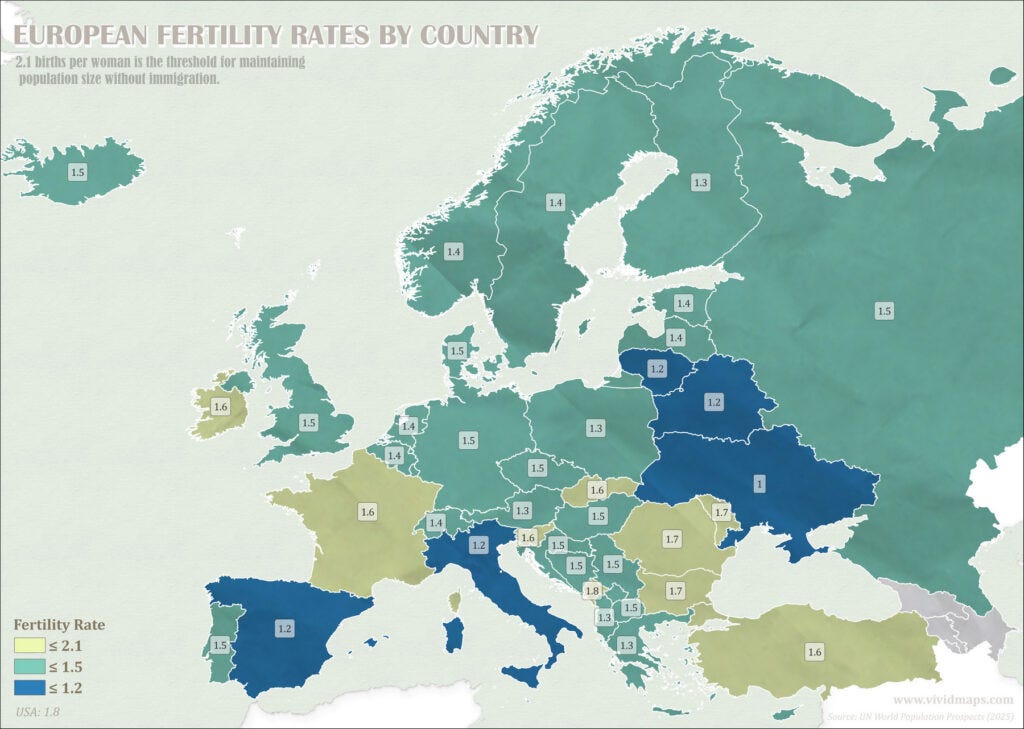
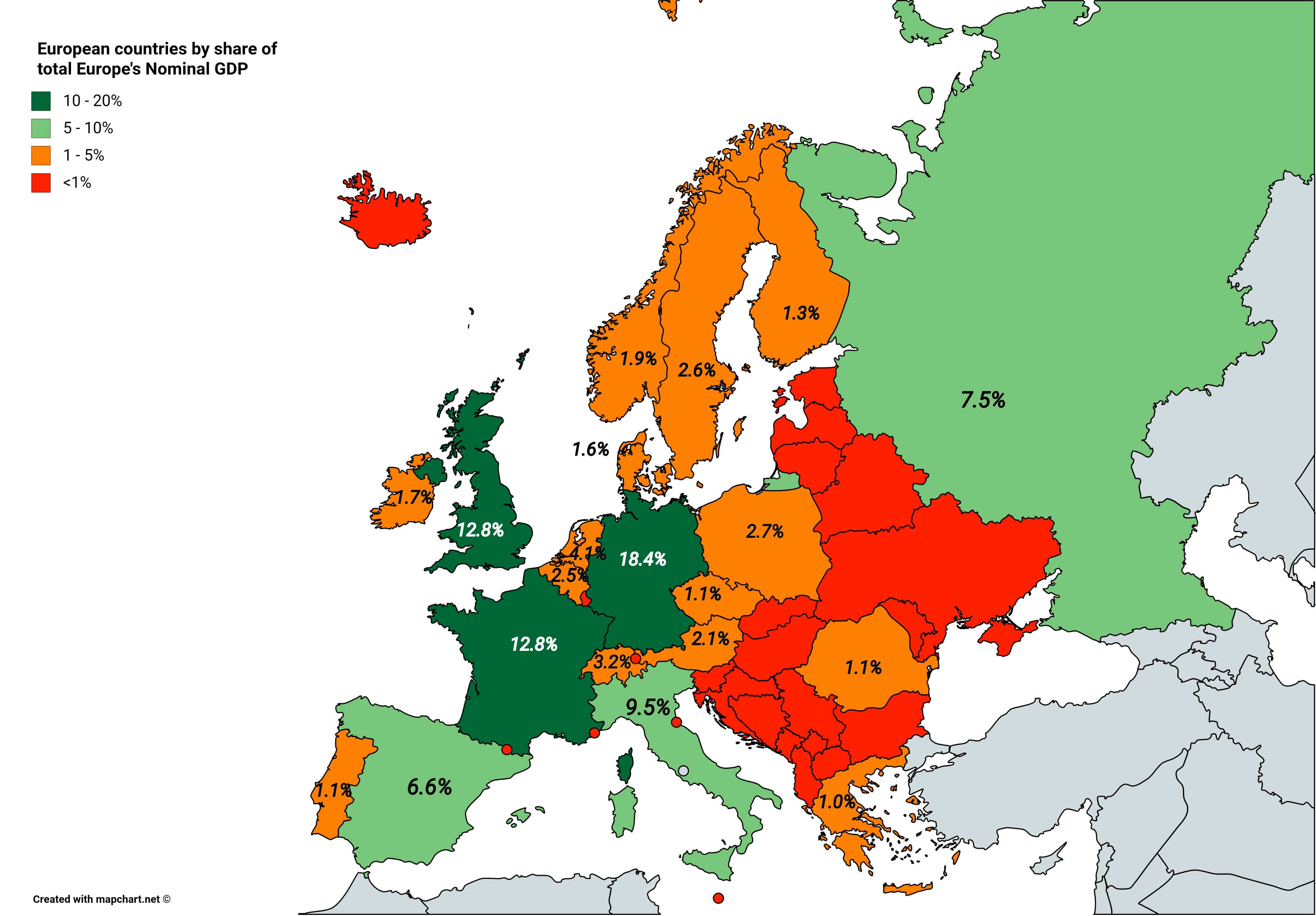
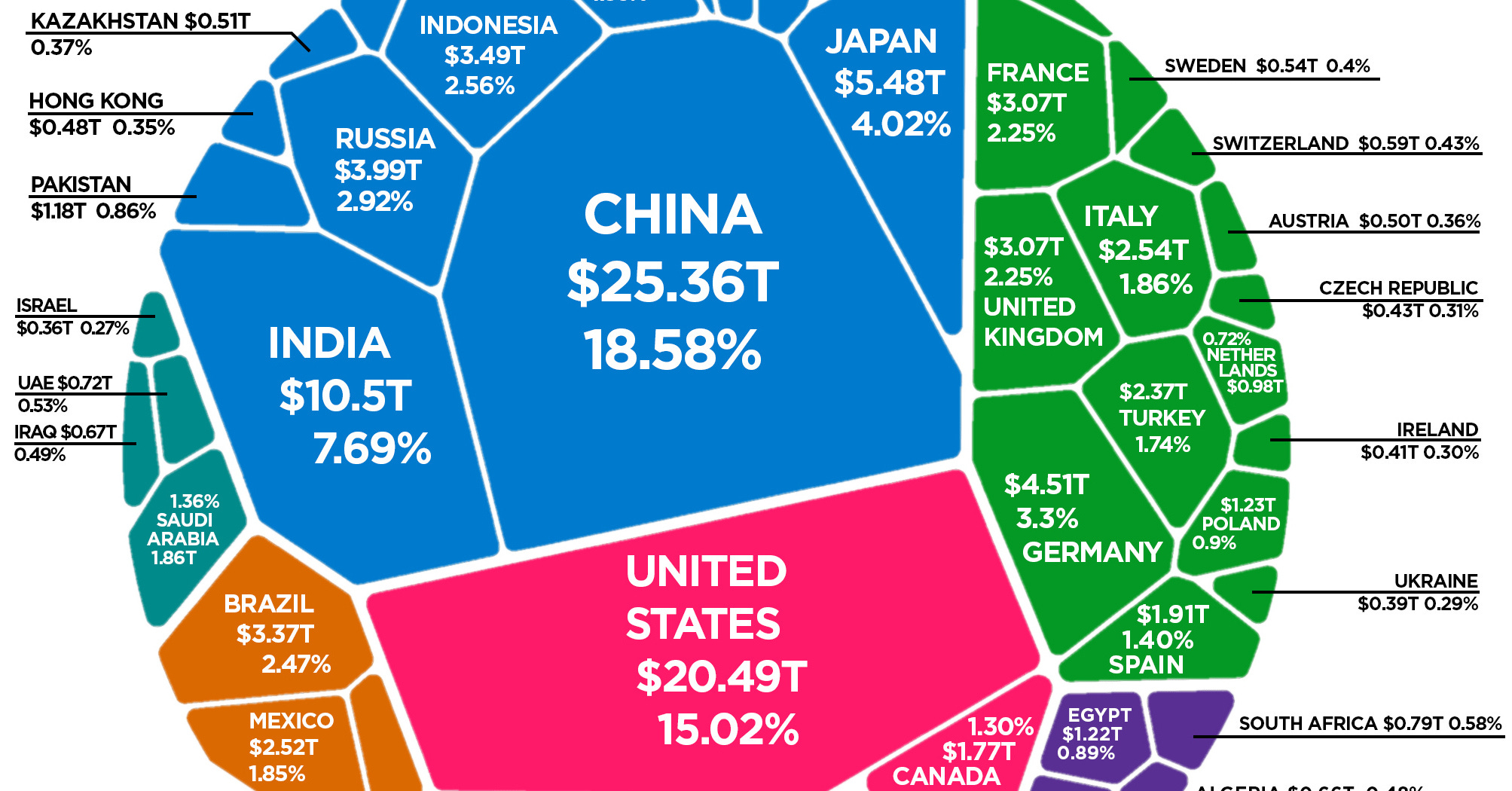
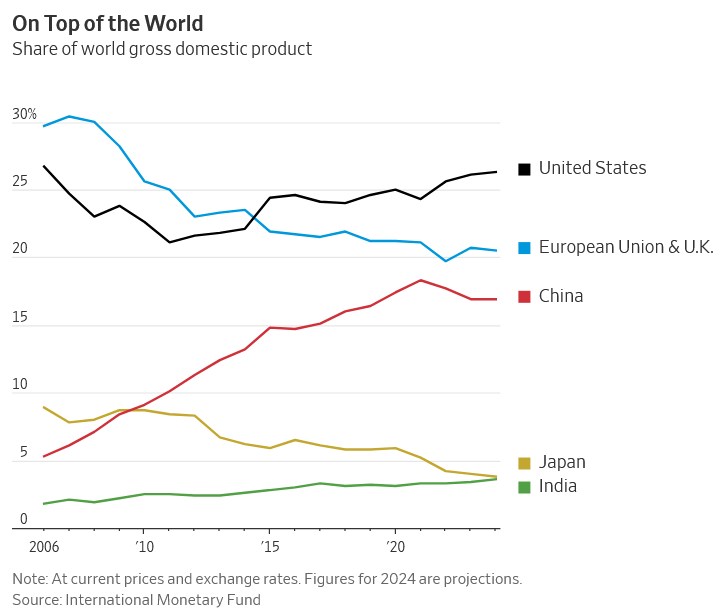
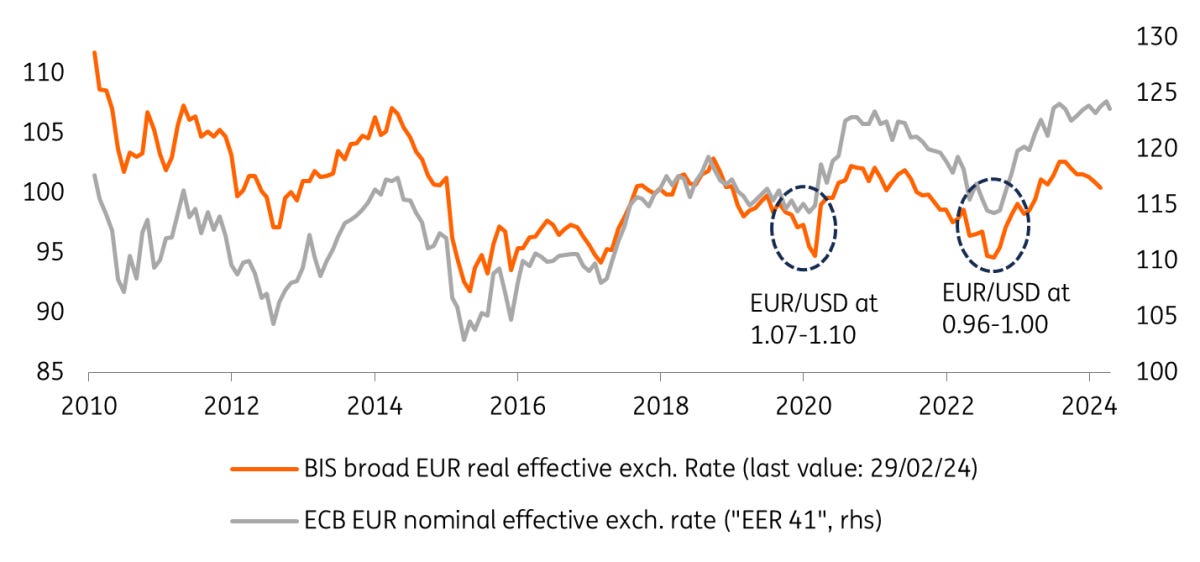
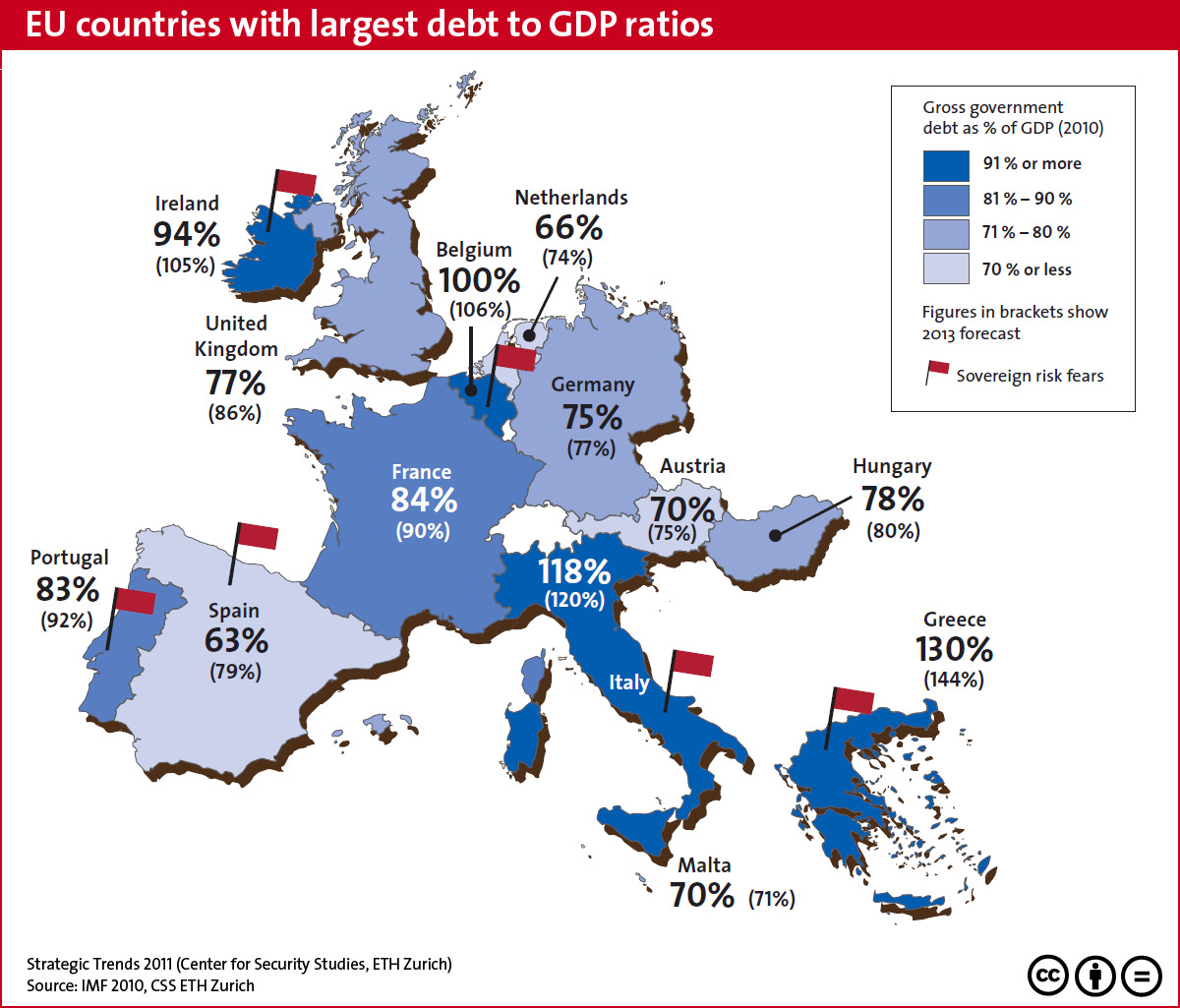
Europe is getting older. Birth rates are down. The ratio between old folks and young folks is shifting to the right.
This means the number of non-working people who need pensions and social services is increasing, while the productive labor pool is decreasing. Putting financial oligarchs at the top of the decision tree Neoliberalism was the organizing principle for the formation of the European Union, Neoliberalism—as a form of capitalism—demands “growth.” Like, a grow-or-die thing.
Just a reminder ^^^
A key neoliberal strategy for balancing budgets is “austerity,” without any such thing for oligarchs, of course. “Austerity” is a euphemism for cutting social services, repressing labor to keep wages down, and so on.
Austerity pisses people off. Quite a bit, actually.

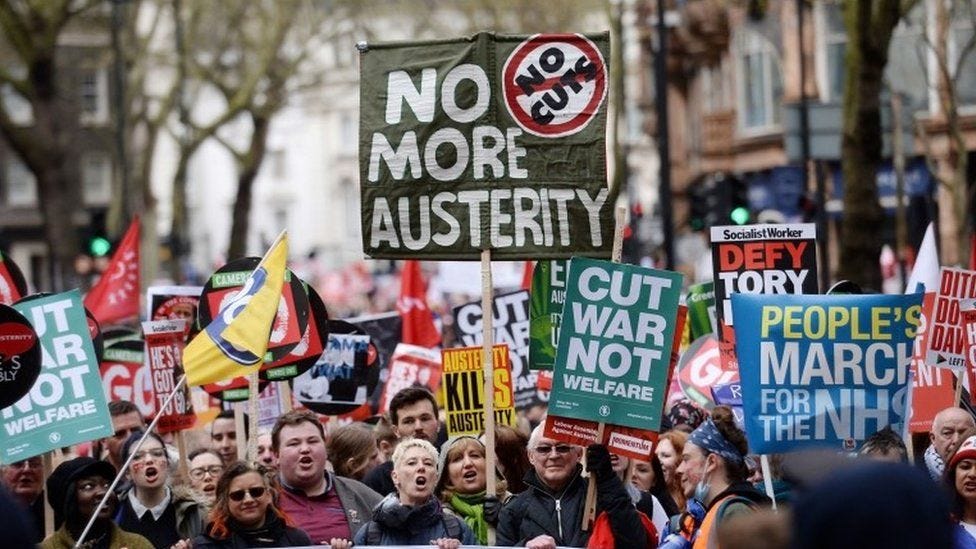
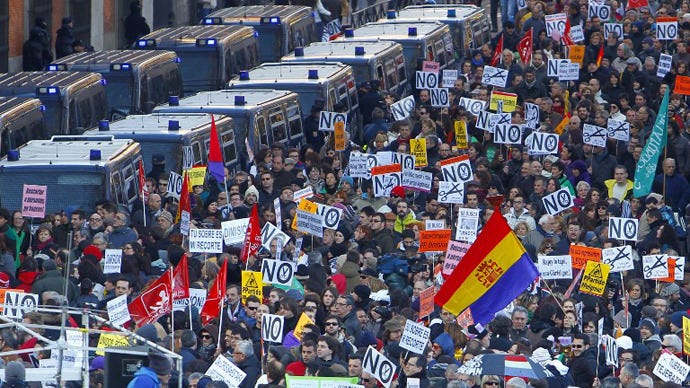

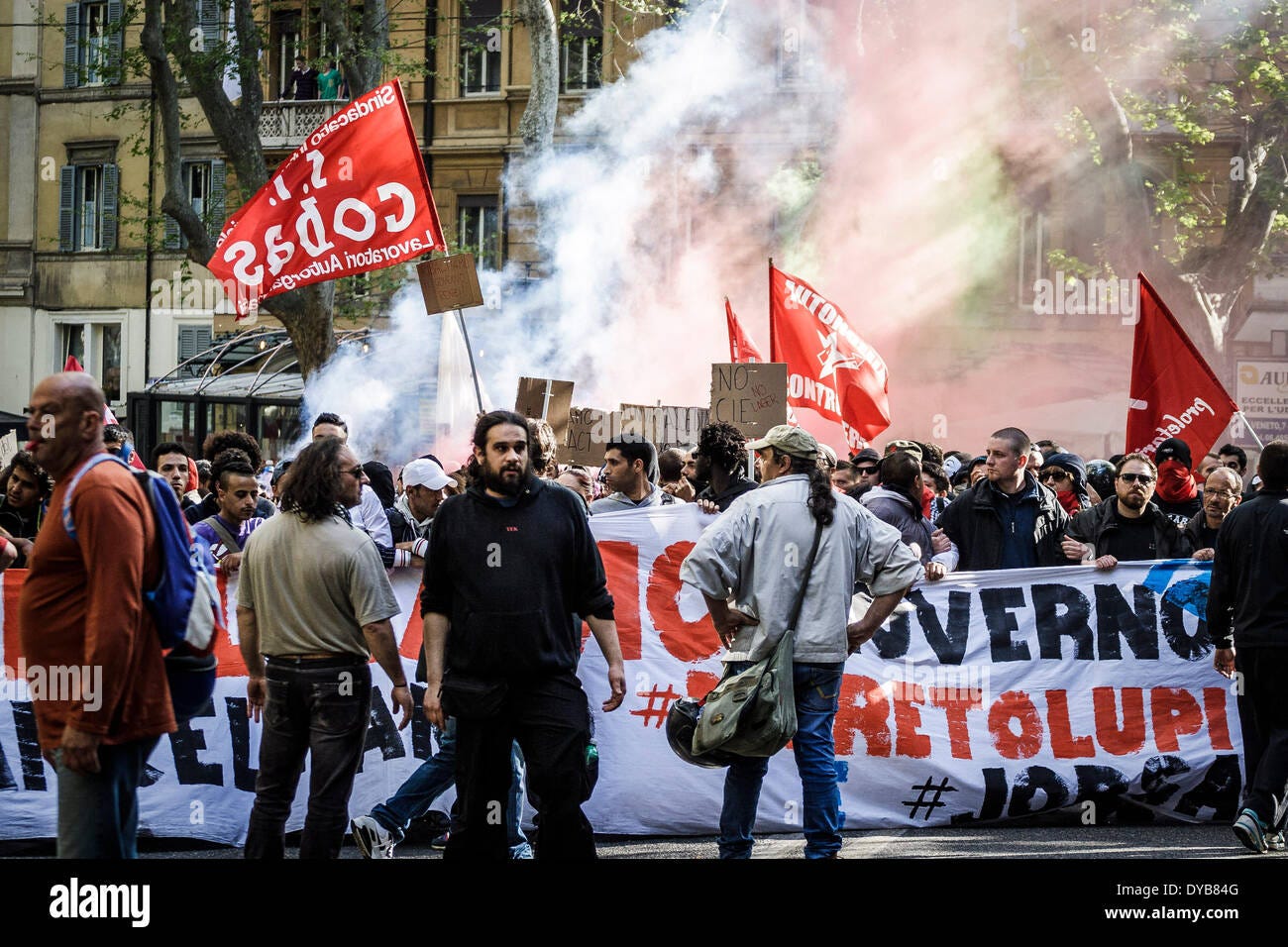

Austerity—contrary to its claims—doesn’t enhance real-economy growth (making actual stuff); it makes parasites financiers richer, and time has proven now that it always leads by and by to depressed real-growth, because is privileges parasites financiers over the real-economy—see Europe right now—which leads to less tax revenue, which leads to more government debt, which is “corrected” by more austerity.
This pisses people off even more.

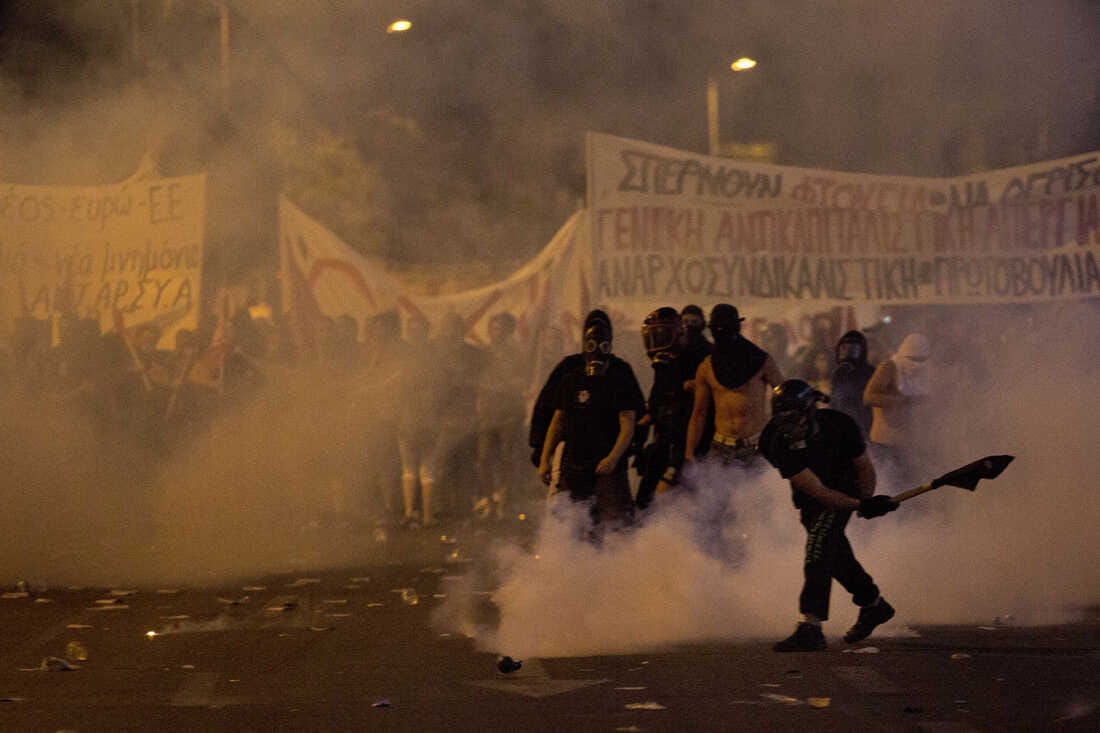
To maintain growth, EU member countries need cheaper labor to replace the diminishing pool of people young enough to work. So countries have to increase in-migration from poorer countries who have “strange ways” by European lights, to do the work that wouldn’t otherwise get done, because (1) there’s a shortage of young people and (2) what young people there are are unaccustomed to working for the slave wages immigrants will accept.
This creates opportunity, but not for universal brotherhood or sustaining the social safety net. It creates opportunity for right-wing demagogues to inflame xenophobia, demonize immigrants, then blame whoever is in power for destroying their way of life with in-migration. (The people in power do bear the blame, but not for the immigrants who are doing all the shit that no one else wants to do during a demographic labor shortage. By the way, most of Europe’s immigrants are from Northern Africa, the Balkans, Turkey, and Ukraine—the latter of which are also flooding through Europe now to escape the war that Europe seems determined to sustain for as long as humanly possible.)

(Hmmm, economic control by corporate oligarchs, right-wing authoritarianism, scapegoat populations . . . where have we seen that?)

So, an economic crisis becomes a political crisis, which is always the way, which is why dirtbag lefties like moi meme use the term political economy as a way of exposing the ideological bewilderment intended by ruling class propagandists who try to separate “economic science” from “political science,” neither of which is a science, and neither of which ever exist apart from the other.
Now, the European Union, while supposedly comprised of 27 sovereign member states, has a common currency controlled by a common central bank and a supranational body that determines economic, social, and security policies, which means that if these nations are really sovereign, I’m a Tibetan ballerina.

Me, just yesterday ^^^
Some states in the EU are more equal than others, i.e., Germany. Germany is the dominant partner, in part because it has the most physical industry to power the real economy. It makes automobiles, guns, machines, farm and construction equipment, medical equipment, and legal drugs. It’s wanted to get into green tech, IT, and AI more; but right now China dominates green tech, and the US and China dominate IT and AI.
As we noted above, everything—especially industry—needs fuel, and if fuel costs go up, then general prices go up, then the demand for higher wages goes up, then retail prices go up . . . and become less competitive in wider markets, which leads to fewer orders, which leads to profit loss, which leads to shutdowns, which leads to unemployment, which leads to the collapse of the retail sector, which leads to more unemployment, which leads to decreased government budgets, which leads to more fuck the working class austerity.
It’s an ugly spin-down; and because of decreasing growth, we begin the austerity shit again, and the politics gets uglier, too. Because the EU economy is locked into the common currency and the same central bank and the same ship of fools called the European Commission, when shit goes sour for Germany, the sour shit infects Europe like a cholera epidemic, with the intra-European colonies weaker EU states catching the worst of it.
Leaders need to divert that anger and panic away from themselves. In addition to siccing the natives onto immigrants, EU leaders have found another boogeyman: Russia.
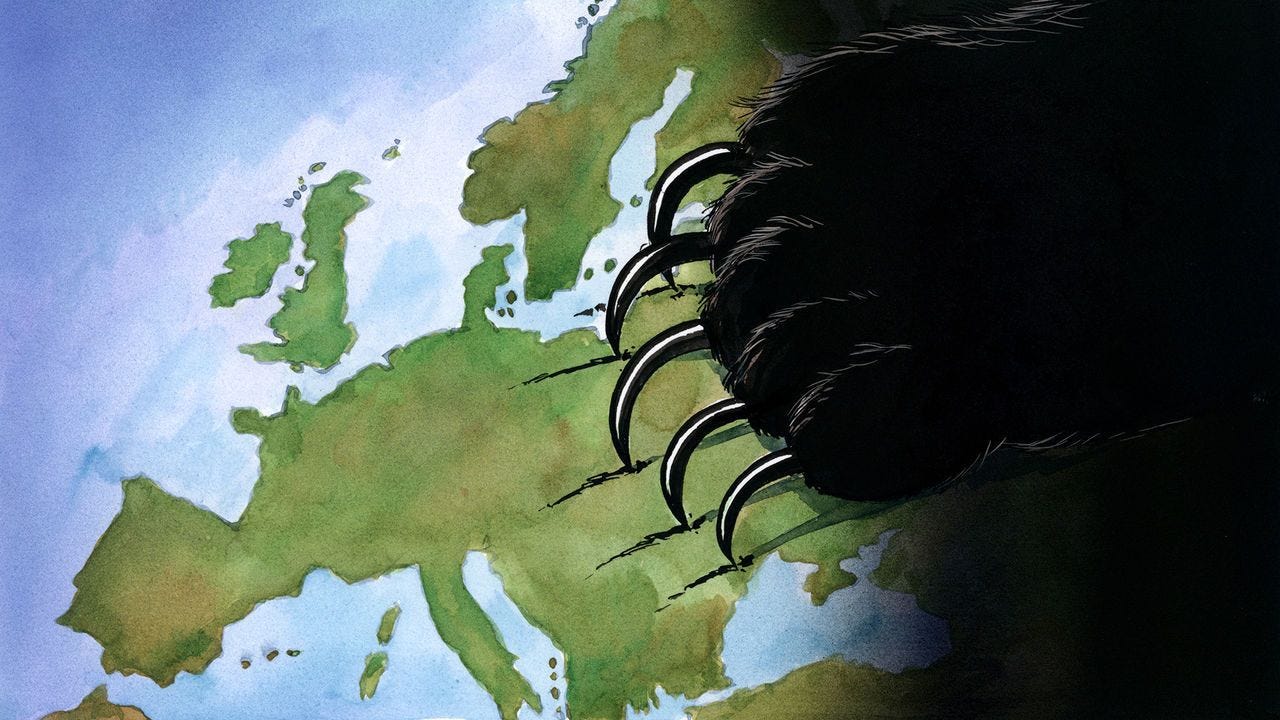
Russophobic depiction ^^^
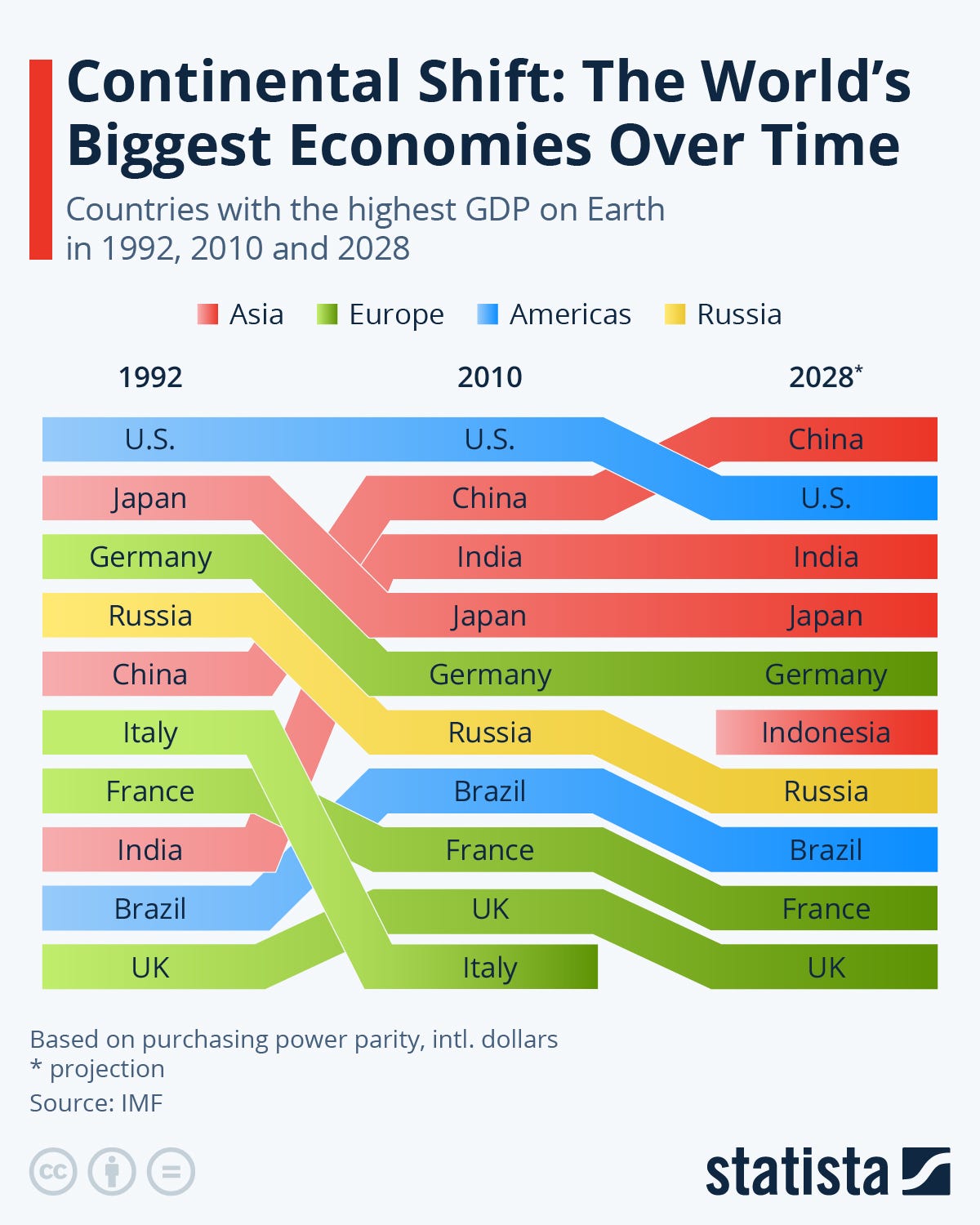
^^^ Reality
The USA/Europe provoked that country for three-plus decades by expanding NATO eastward and pretending they didn’t know why this might bother the people at whom the expansion was aimed. Putin finally said, “Fuck it, I’ll be your devil,” and started pushing back in Southeastern Ukraine.
In 1998, George Kennan, one of the architects of the First Cold War, warned that “expanding NATO would be the most fateful error of American foreign policy in the entire post-Cold War era.” Russian warships are now in Venezuelan waters for a “joint military exercise.” Moscow sells advanced weapons to Caracas, and provides military advisors.

“You fuck with my backyard, I fuck with yours.” America no longer strikes fear into the hearts of the world.
(How would the US respond if a hostile country stationed missiles less than 300 miles from Washington? The distance from DC to Rochester NY? This is what the US NATO in the Donbas would represent for Moscow.)
No one is saying the war in Ukraine isn’t brutal, or that Russia is some moral paragon. What I’m saying is that it is easy and convenient to tell Europeans that the Devil—Putin—is an evil geopolitical mastermind with designs not only on Ukraine’s Donbas region (app. 20,000 square miles, conquered over three years of intense ground combat), but all 3,933,000 square miles of Europe, presumably by drafting, say, a quarter of its 146 million people to fight for the next 100 years.
Yes, this is as preposterous as it sounds; but it’s the narrative that continues to (sort of) unite Europe, as propagated by EU leadership who’ve sworn to fight the war against Russia to the last Ukrainian . . . with US weapons. In Europe right now, with all its problems, anyone who says, for example, “perhaps Zelenskyy should consider a settlement,” is denounced as a goat-fucking Putin-puppet who should be hung with piano wire and devoured by feral pigs.
Oh, and ignore that Nord Stream thing . . . it’s for the cause. Also, ignore that you’re economy is rapidly descending into the tank for lack of Russian feedstocks, and ignore that the sanctions on Russia have substantially harmed Europe while they’ve strengthened Russia. Yes, I said that.
War excursus
Russia already holds a 120,000+ square mile belt across southeastern Ukraine, and it adds to this by tens of grinding square kilometers each day, over 20 percent of Ukraine’s recognized land mass—an area the equivalent to Malawi or North Korea. The Ukrainian Army base in Volcha is being cut off as this is written. Petrovsk has just fallen under Russian control. RF troops are on the outskirts of Kupiansk and Mynrhohad. Borovka is encircled, and Konstiantynivka isn’t far behind. The Ukrainian government routinely lies about effective counterattacks, which have nearly all failed, to keep their own people and the Europeans on side.
Trump’s withdrawn threat to send Tomahawk Cruise missiles to Ukraine was just another instance of him talking directly out of his ass. Every military analyst knows that Tomahawks are nuclear capable. If one is launched at Russia, Russia has no way of knowing what kind of munition is coming its way. The launch signature alone is reason to scramble air defenses and launch a counterattack proportional to a nuke—like the annihilation of Kiev. No one is going there.
Trump doesn’t exercise synthetic thinking. He is conceptually dis-aggregated and one-dimensional. That’s why he put himself in a double bind with Russia and China, that he’s only now begun to dimly realize. He’s not cutting off arms shipments to Ukraine because he wants peace. Like very other politician, he attends closely to the profits of military-industrial complex, which is now the core of the US manufacturing economy.
Trump’s wants to cut off of arms shipments to Ukraine (and proxy-Europe) because the US arms inventory—between shipments to Ukraine and Israel—has been diminished to critical levels and will take years to catch back up. This is why China’s restriction on the supply of rare earths was such a potent threat. China mines 70 percent of rare earths, processes 90 percent, and produces 93 percent of the world’s “permanent magnets,” required for everything from smart phones to missile guidance systems. They’re necessary to produce Tomahawks.
Bottom line—which contradicts the Washington-Brussels-Kiev nexus, which has lost its collective fucking mind—Russia will not lose, and the nexus cannot win. The only sane settlement, which the nexus has taken off the table, is to cede the Donbas, sign a treaty that forbids NATO expansion into Ukraine, and stop the goddamn slaughter.

Yeah, I know . . . this one’s not funny. ^^^
End war excursus
If Putin is the devil, the devil appears to be a hell of a lot smarter than European (or American) “leadership.”
The effect of post-2022 sanctions on Russia were profound. Russia itself called it a general crisis. But the short-term effect and the long-term effect were quite the opposite. The sanctions forced Russia to turn inward in an emergency effort to increase its own autonomy—which is exactly what happened—and to tighten its relation with China—also exactly what happened. So, Russia is, in many respects, now stronger than it was before the sanctions. Kind of like China after the US started a trade war to “contain” it.

^^^ There may be a pattern here
Europe needs Russia—that’s just a fact—and Europe needs China—also a fact. Look—
—In 2008 Europe was caught in the financial meltdown, then it had the “sovereign debt crisis” (2009), then the pandemic (2020), then the debt surge and RFN chronic inflation (right fucking now).
How’s Europe responding?
Well, they’re correcting the deep structural flaws in the neoliberal system and returning autonomy to the member states.
^^^Total lie.
They’re cutting programs more aggressively in order to bankrupt themselves via re-militarization, further alienating Russia and China, and kowtowing to the moron who is running the US and all its allies directly into a deep, poisonous, slime-filled ditch.
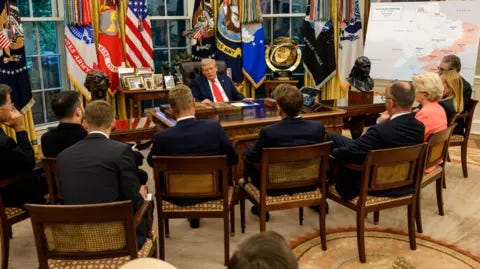
^^^ Normal human beings would find this sooo humiliating. Think Xi would do take one of those chairs?
The Euro’s currency has been like a fish.
When it was first cooked, it was delicious. It sped up cross-border transactions by simplifying them and served as an international hedge with enough backing to make it worthwhile.
After a couple of days in the fridge, the flavor had transitioned from delicious to tolerable enough to eat when you had nothing else and were in a hurry.
Eventually, you open that fridge and exclaim, “Ghorfah! Yooorp! Eerrp! Fuck is that smell?”
The problem, it turned out, was that there was no fiscal policy to go with the pretty new money. Some people have compared it to you opening a bank account with twenty of your neighbors. ← True. But this is the bourgeois analysis, which always leaves a few things out.
It doesn’t take into account that the neighbors are on a grotesquely unequal footing. So, when the Greeks had a debt crisis that ramified through the European Union, the Greeks got the blame (and the punishment). Punishment for what? you may ask. Well, they rejected austerity. But given Greece’s comparative lack of power and its enslavement commitment to the common currency, it got fucked like Peewee Herman’s fist in a smut cinema.
On the day we formed a government, we had completed five years of languishing at the bottom of austerity’s barrel, with a population that was engulfed in a humanitarian crisis. We had suicides; we had deaths of despair; we had people who went untreated because they couldn’t afford medicine; we had a reduction of pensions and wages by 40 percent.
Due to the faulty architecture of the eurozone, following the bankruptcy of the German and French banks, Greece was the country whose state went bankrupt. It began on Wall Street, then it moved on to Dubai, then it went to the French and German banks.
The European sovereign debt crisis was blamed on Portugal, Italy, Greece, and Spain (with the epithet PIGS), all junior partners in the EU. It should have been blamed on the Euro.
Taking Greece as an example, Greece—as described by Yanis Varoufakis in the pull quote above—was heavily in debt. Not household debt—that was fairly low—but government debt. If Greece had not joined the Union and kept the drachma as its sovereign currency, they could have devalued the currency a bit by printing more, which makes it products more desirable abroad, in addition to attracting tourists for the domestic economy, and encouraging foreign investment. The tax base goes up, the rate of debt accumulation goes down.

But nooooooooooo!
Can’t do that if you don’t have a sovereign currency, and as a junior partner, you’re at the mercy of the senior partners, who will inevitably put their own interests above the juniors. The priority after the 2008 crash—from 2010 on—was to bail out the biggest banks (in Germany, France, and Italy).
As in the US, this meant shifting the burden of bailout/recovery onto the weakest members of society, or in the case of Europe, onto the weakest partners. The stress, so-applied, forces the weaker partners to rely on debt—the same way Americans had to hit their credit cards after the 2008 bailouts that did jack shit for regular people except drown a lot of them in a sea of underwater mortgages, which dragged the whole economy down into greater precarity.
In the EU, what the senior partners imposed on the junior partners was what Varoufakis called “financial blackmail.” We’re the bank, here’s your usurious credit card, sign for it and use it, or we’ll close your goddamn banks. The senior partners spun this as a “bailout” (of those nasty PIGS).
When Varoufakis was Finance Minister of Greece pleading his case against austerity before the EU, German finance minister Wolfgang Schäuble told him angrily, “Elections cannot be allowed to change economic policy in the Eurogroup.”
Sovereignty. Yay.

Me, again, today ^^^
Welp, the unrest has spread since the bad old days of 20-teens. Only the debt crisis is hitting the big-three now—Germany, France, and Italy.
The European Central Bank had one responsibility only—to stabilize prices across the Eurozone. On the one hand, that means letting the bad little PIGS go hungry.
Financially, the absence of political leadership during the sovereign debt crisis led the ECB to become Europe’s de facto crisis manager. (Might as well have been, because the European Commission is comprised of dummkopfs.) The ECB then bailed out aggressively and in the process took on tons of risky assets (worthless government bonds, e.g.) alongside the magma balloon of government debt. (Yeah okay, they’re dummkopfs, too. Not a good look on the ostensible carrier of Western civilization.)
Member country debts have headed into the stratosphere, as growth stutters to a halt, and people riot in the streets. Yo, wanna buy some bonds?
The explosives are assembled, and all the fuse needs to ignite is a default.
What shall we do?
I know, let’s fucking re-militarize! All we need to finance it is a big healthy dose of . . . more austerity.
^^^This pisses people off . . . we mentioned that, right?
“To rule is easy, to govern difficult.”
—Goethe
Ursula Von Der Leyen, President of the European Union has called for Fortress Europe, which will be built after the EU “turns Ukraine into a steel porcupine.” ←Fuckin-A, she said that, in English, just like that . . . swear to God.
Just as in the US, the neoliberal-financial-technocratic nexus has expended more energy attacking the left than it did the right—the latter of whom they vastly underestimated. (Just look at how hard America’s neoliberal-technocratic Democrats worked behind the scenes to try and defeat New York City’s social democratic Mamdani.) This created a BMFV (big motherfucking void), into which stepped the lying, xenophobic, nationalist demagogues as the sole remaining critics of the lying, toothless, neoliberal-technocratic order.
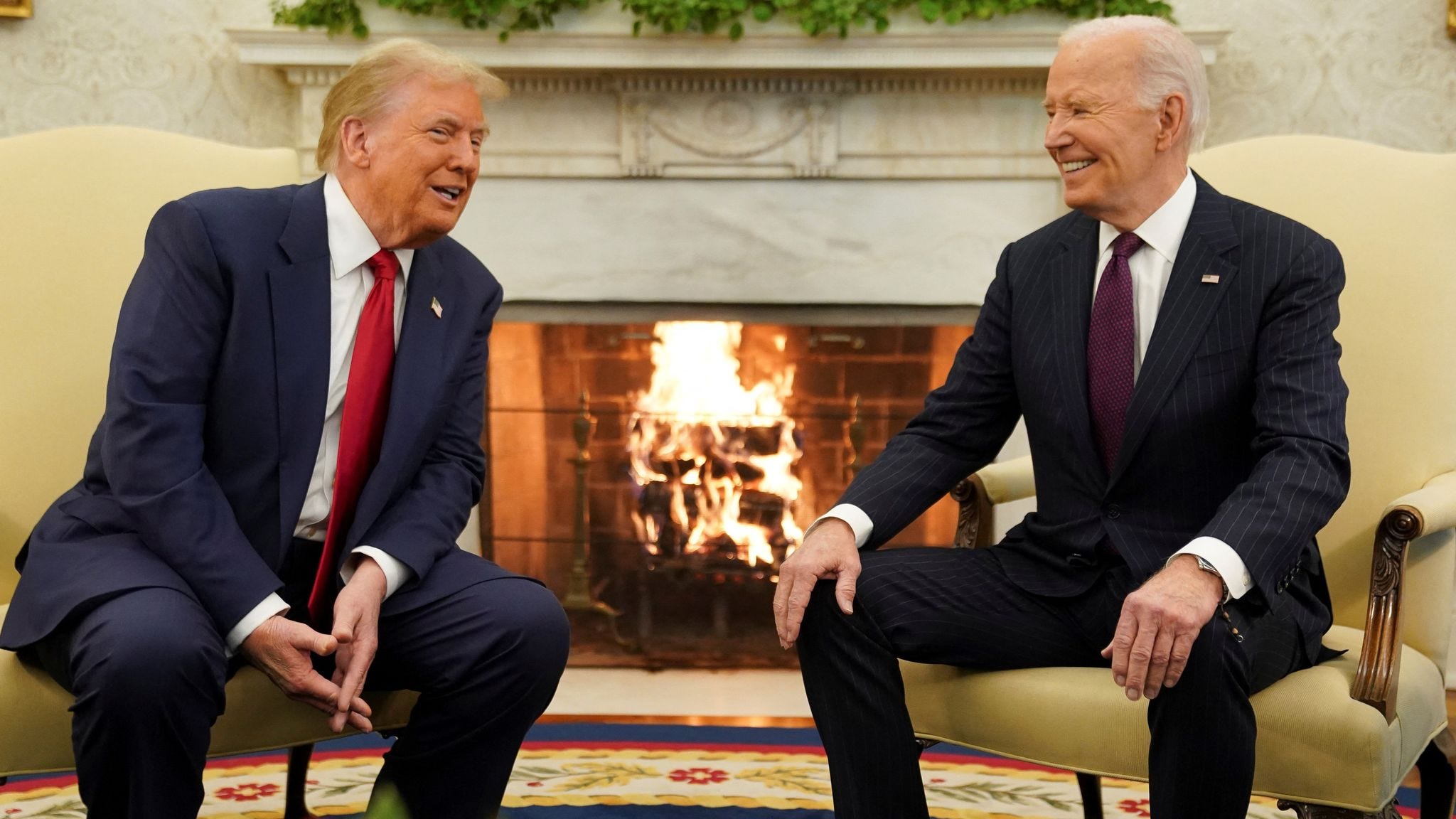
“I shit myself.” ^^^ “Yeah, me, too.” ^^^
In the UK, this led to Brexit. We may have forgotten there was once a left-Brexit argument; but the right-Brexit they got failed to inform the electorate that leaving the EU didn’t get them off the hook with the US, or that the City of London financial hub is still a fully owned subsidiary of Wall Street.
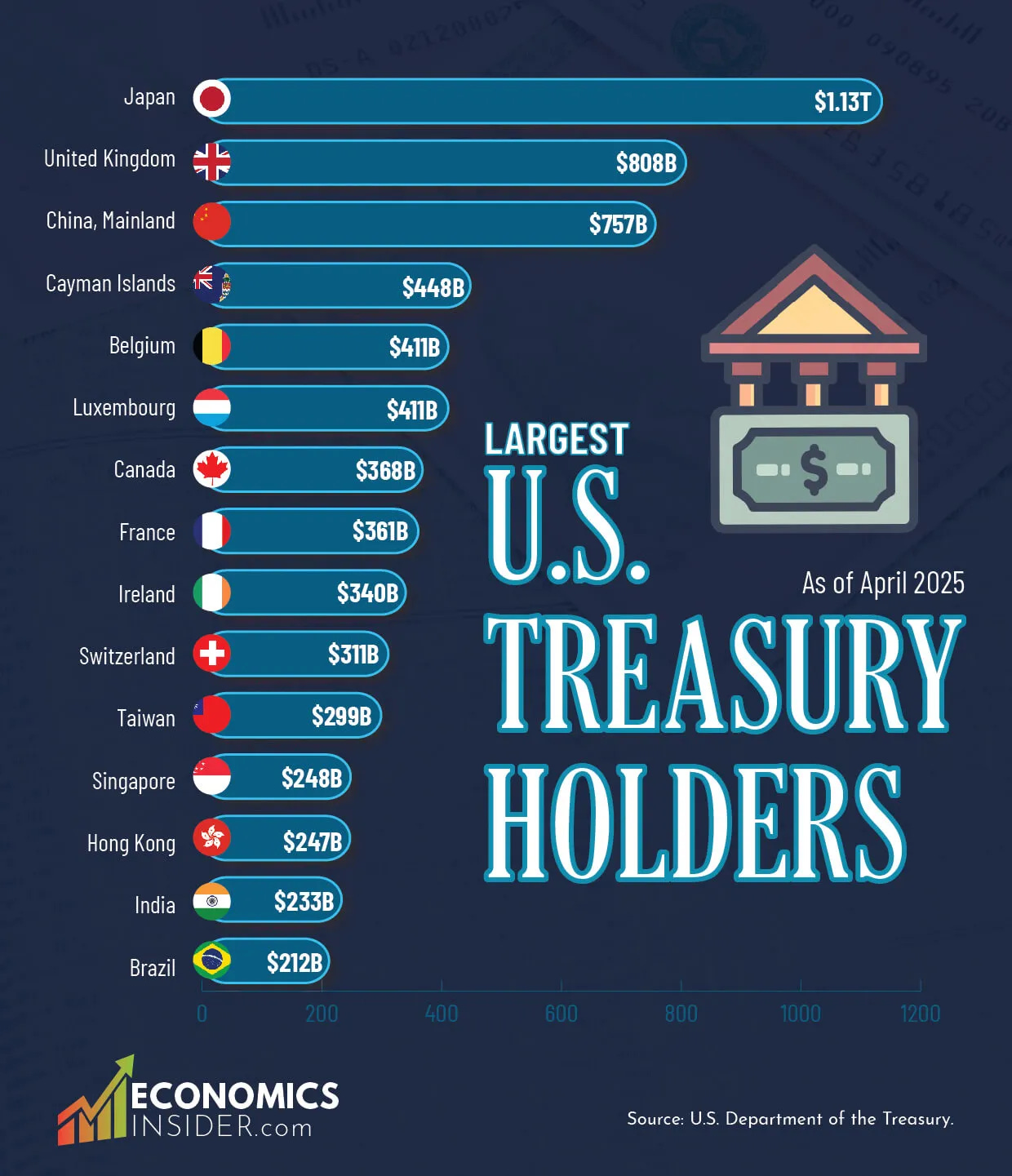
^^^ This again.
UK excursus
Before Trump’s trade war, the UK was no economic powerhouse. Productivity has steadily fallen. Growth has been anemic. The government and its programs are ridiculously underfunded. They’re in debt up to their eyes, and there’s no such thing as Sterling hegemony. They’re changing leadership as often as my cousin in Colorado changes his underwear. Rich Brits are leaving like rats off the Lusitania.
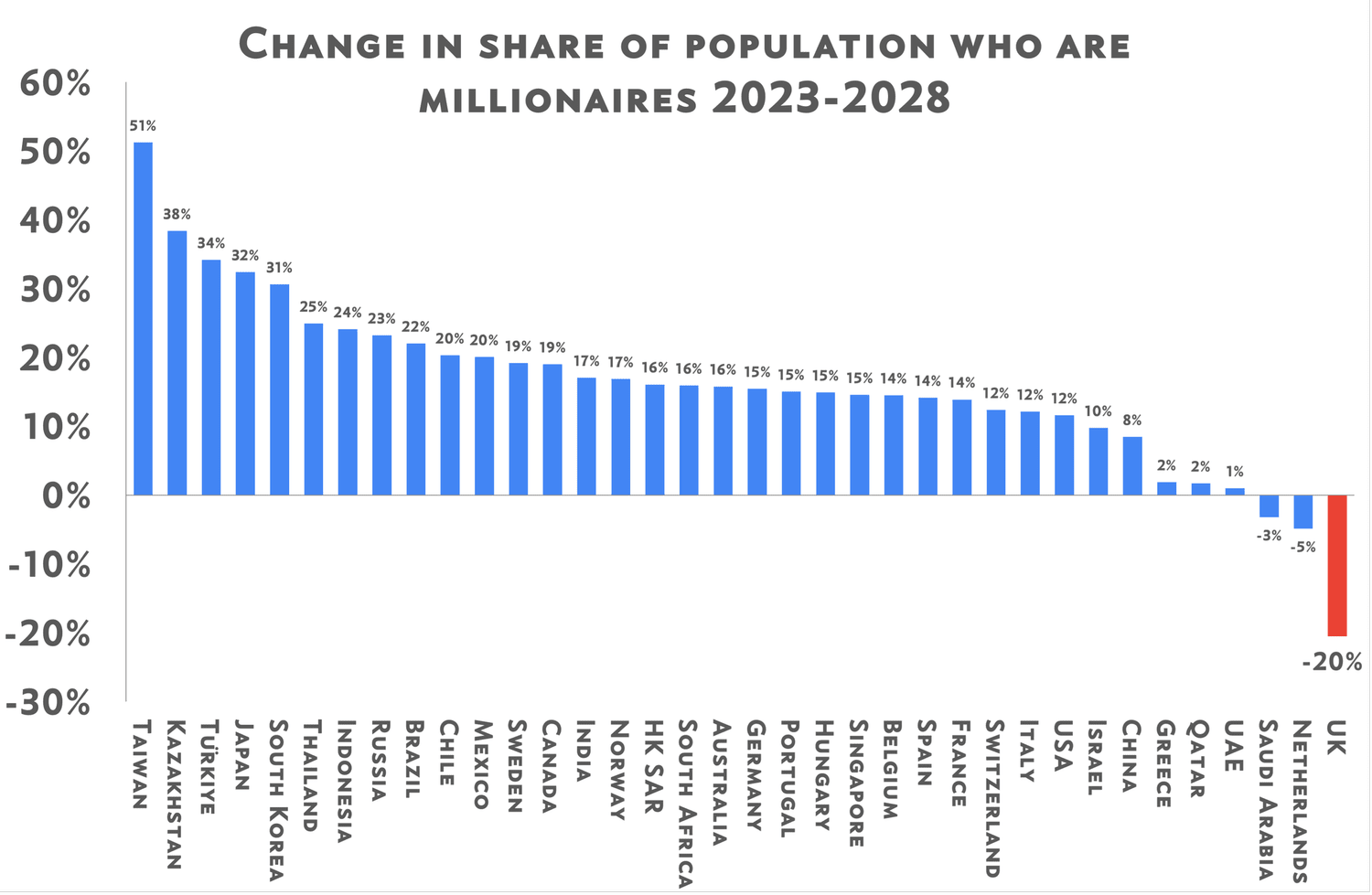
The tax base is shrinking, and debt’s making up the difference. Consumption is falling. Their bonds are about as desirable as overcooked broccoli. Energy prices are rising, and industry is collapsing. Their exports to the EU, the US, and the world are falling. Now the fucking Duke of Mar-a-Lago has roped them into a self-destructive trade war, and the only way they know how to respond is by beating up old ladies who object to genocide and putting them in jail.

Many reckon the UK to be “the first domino to fall in the West.”
End UK excursus
The attempt to contain China and Sanction Russia, then, had the same result in both Russia and China, who are now coordinating heir actions. Tariffs and sanctions forced both countries to accelerate their independence from the American sphere. This was a massive strategic miscalculation by Washington . . . and the EU, who has joined Washington’s folly.
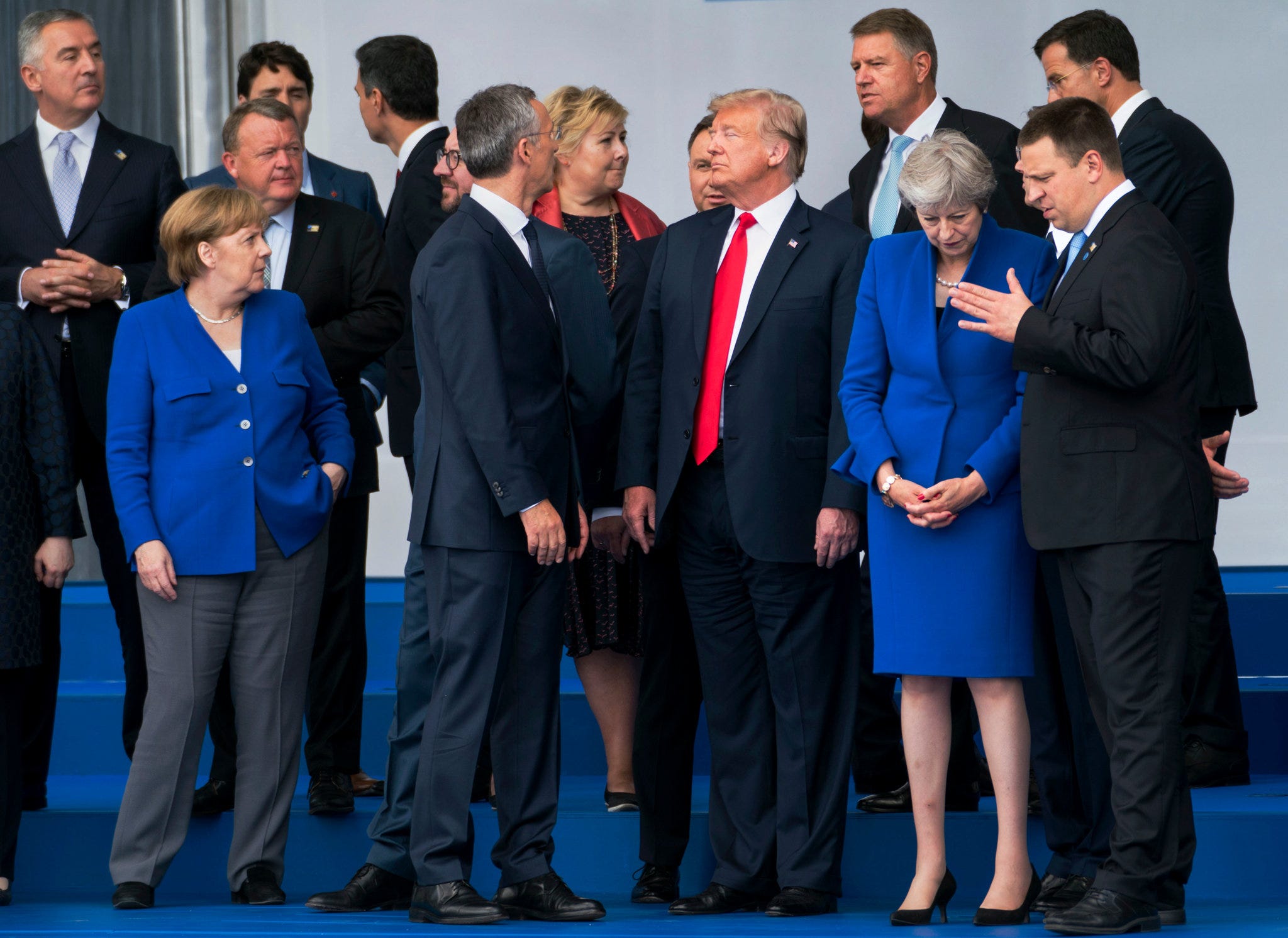
We’ve all know someone who is self-destructive. We’ve seen them persevere down the trail of havoc. Many people running many governments right now are those very folks—intent on torment and destruction.
The Nexperia debacle is just a compounding of the stupidity that caused the EU energy crisis. As Trump levers Europe away from the two trading partners that might conceivably rescue Europe’s economy—Russia and China—European countries are now in political turmoil.
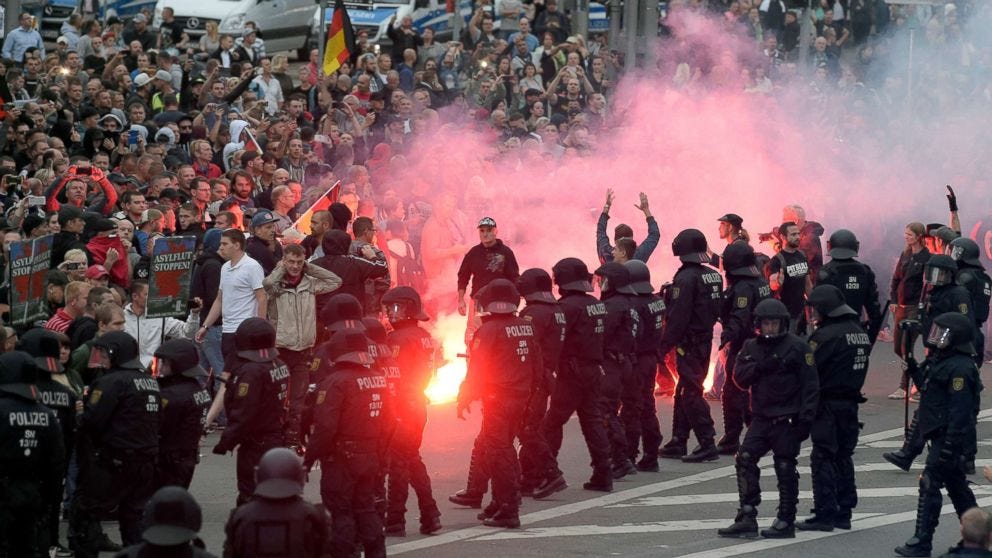

In the August article, I pointed out that the so-called European “deal” with Donald Trump remains totally unspecified and in many respects delusional. Nothing since that article has changed my view about that.
What Trump has done, in removing predictability from international politics, is left dependent Europe floundering even as it’s been pulled into the Second Cold War, a war which is going very badly for the Atlanticists. As to prediction, there seems little doubt that “the West”—which was once Western Europe, North America, and Australia—is fragmenting, as Trump lunges and stumbles like a drunken behemoth away from any alliances whatsoever. Given the condition of the EU—bankruptcy, increasing isolation, productive collapse, war, and political instability—I wouldn’t give the Union long odds of surviving the next decade.
Fractures are already appearing as Europe tries to strong-arm Turkey, Slovakia, and Hungary into ending Russian oil imports.
Russia, on the other hand, in its partnership with China, is in a stronger position now than it has been since the collapse of the Soviet Union. The war is not a mere distraction, and its outcome is inevitable. Russia has already won. It will annex the Donbas. It will continue to fight until it has a guarantee of no NATO expansion into Ukraine.
As to sanctions, they can hurt at first, but then Russia (and everyone else) adapts. In thinking about the Ukraine war, we have to recognize that China can guarantee Russia’s viability indefinitely. It likely already is. Trade and transport are only monitored on borders or through transactions, say, on the dollar/SWIFT system. China shares a 2,615.5 mile border with Russia—the distance between New York and San Francisco. Trucks, trains, planes, yuan, and rubles can pass across this border by dual agreement without the world knowing.
Gettin’ Pretty Near the End
This could go on indefinitely. I haven’t talked about India, Japan, Australia, Canada, and we haven’t even discussed the genocidal state of Israel, which is rattling through its own series of crises and dragging Israel’s allies down with it; but I hope I’ve given enough of an outline to judge the coherence, efficacy, and probable outcomes of Trumponomics.
The state of the US economy can’t be determined by growth and contraction figures—these are too general and too incomplete—but by where and how we are either resilient or vulnerable. The way to characterize it now, I think, is precarious.
What is the state of our infrastructure? Our public management systems? How high is household debt? What inflationary pressures are the bottom 80 percent feeling? Do we have strategically coordinated fiscal, monetary, and industrial policies, developed by the best in their fields, instead of ambitious crackpots and brown-nosing flunkies?
As this is written, we are still in the longest government shutdown in US history.
Trump’s tax cuts for the super-rich still far outpace his taxes on everyone else tariffs, and the debt is ballooning.
SNAP benefit suspensions are lengthening breadlines throughout America.

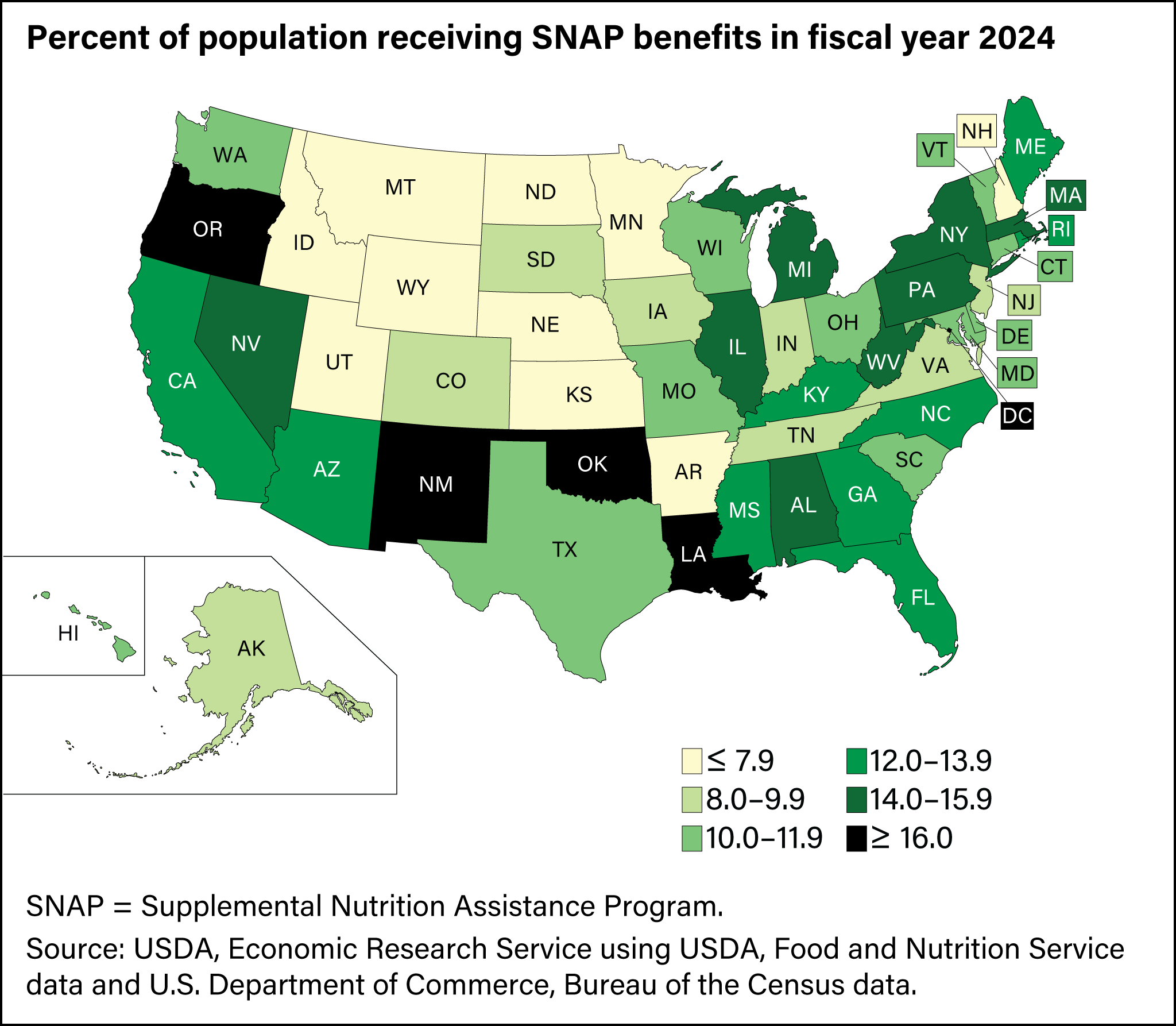
Government layoffs and furloughs have closed offices and cut off income for 1.4 million government employees and contractors, including the 1,400 who safeguard nuclear weapons facilities.
Troops and air traffic controllers are working without pay.
Airlines are cancelling flights for lack of controllers.
Thanksgiving and Christmas approach.
Retailers are nervous because people have no money to spend, or are holding onto what they can.
24 million people just lost their health insurance.
65,000 children have lost access to Head Start.
Major American banks are holding half a trillion dollars in bond losses “hold-to-maturity securities” (2023 Silicon Valley Banks writ very fucking large).
Without spending by AI companies who are on the cusp of a bubble, US GDP would fall more than a whole percent overnight. There are no real returns in sight for US AI.
The US has debt amounting to 123% of its GDP. The interest on that debt is $1 trillion a year.
Yes, dollar hegemony lets us do this (for a while), but what is being done with the borrowed money?
It’s paying bond-holders, who are inflating more bubbles, and stashing the money in the fucking Caymans; meanwhile the tax base is shrinking, and the debt will have to march on into unknown territory.
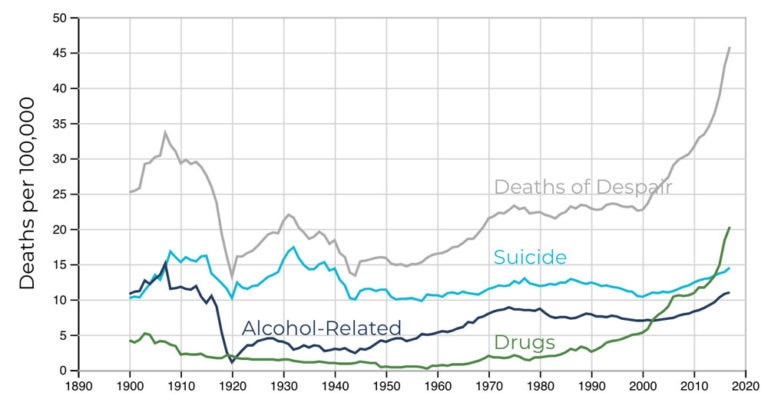
Inflation proceeds apace. How much more are you paying for groceries? A car? Consumer goods?
Industry has not been reshored; and, after this experience with Trump’s tantrums and sheer stupidities, no intelligent foreign investor is going to put up the money to build anything in the US.
All Trump has accomplished is a big fucking mess.
Trump is a lumpenbourgeois ensconced in a culture that’s lost its bearings—inevitably postliberal, because “democratic” capitalism has entered its Nietzschean end-game. There a surfeit of commentary on what all this means, and what is to be done, but I’m more interested for this discussion in how this chaotic interregnum has destroyed even our capacity to interpret it.
New wine in old wine skins.
Trump is the excrescence of this epistemological crisis. The smartest people around, for example, can’t put their finger on a phenomenon like the rise of China. They have nothing in their interpretive toolbox that fits; and so as their inadequacies become obvious, the people turn to the guy who discounts those inadequacies and asserts his own performative, and ultimately vacuous, confidence into that void—the void within the void.
For us, by that I mean Americans, the struggle to topple the Trump regime will continue. 90 percent contingency (including power’s blindness to the good and self-destruction) with 10 percent strategic intuition and tactical agility.
I continue to insist—even as once-a-soldier—that our best weapons are peaceful resistance, humor, political maneuvering (even and especially against the Democratic establishment), and ridicule. Never underestimate ridicule. It’s efffective and just, especially as it becomes dangerous.
Be not afraid.
The deed is everything, the glory is naught.
—Goethe
Peace.
Wow....I will be at this article more times in an attempt to understand about the minutiae of the Amygdala-lizard gangster planet we live on, but it opens the gate. And the intense sarcasm is a really big help (and a necessity)! Thank you, Stan!
Also would definitely be interested in reading your analyses of the financial system of Canada, Israel, and anywhere else.